 (+035) 527-1710-70
 NEWSLETTER


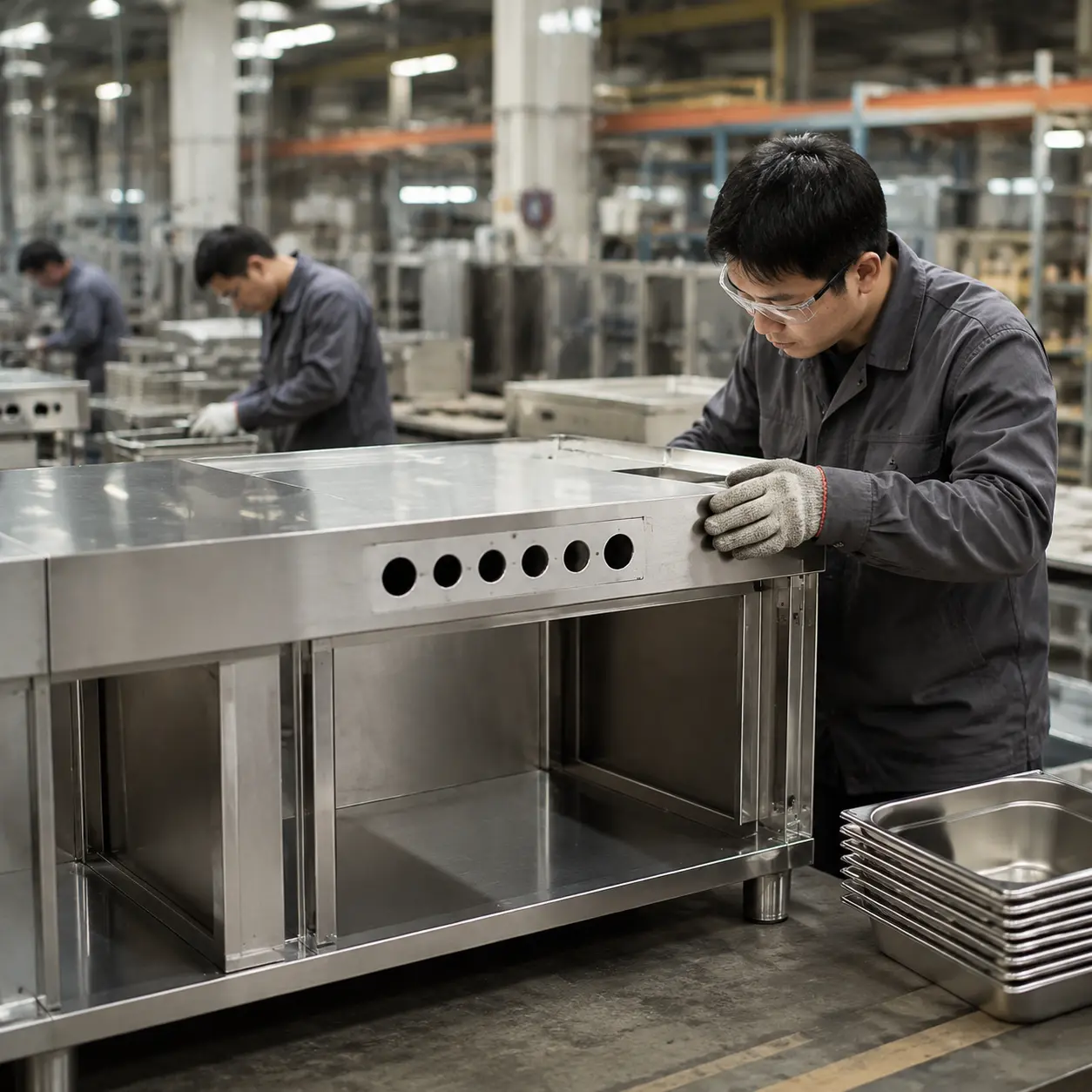
Direct answer: Choosing a commercial kitchen equipment manufacturer vs trading company depends on how much product customization, category consolidation, technical verification, and after-sales coordination your project requires. A manufacturer may offer closer access to engineering, production, OEM/ODM changes, and replacement parts for the equipment it actually makes. A trading company may simplify buying across multiple unrelated product categories and factories. Neither supplier type should be approved from the business description alone. Importers should compare documented capacity, temperature control, utilities, compliance, maintenance access, warranty procedures, and landed ownership costs before placing an order.
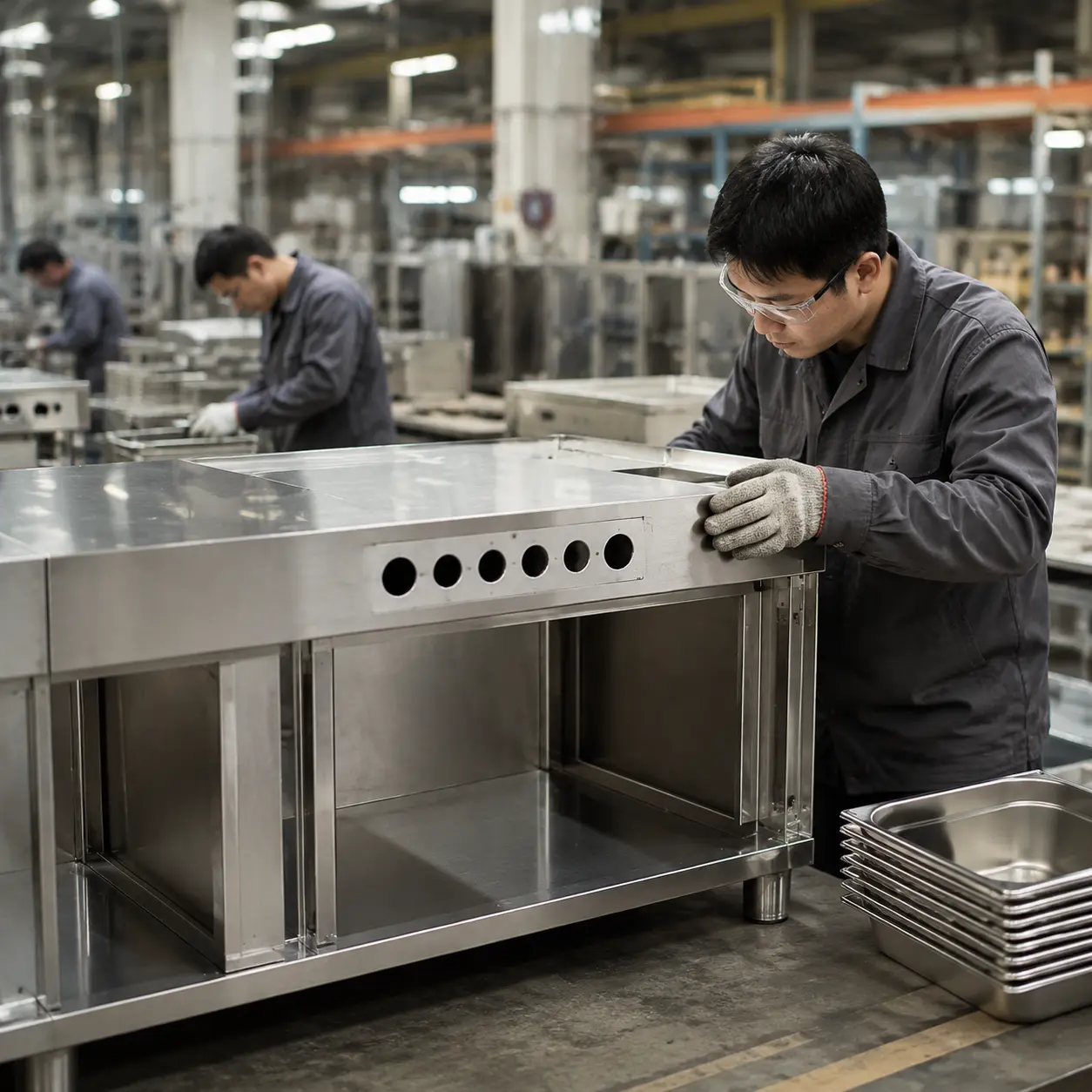
Commercial kitchen equipment for foodservice buyers
Commercial Kitchen Equipment Manufacturer vs Trading Company Comparison Table
| Comparison dimension | Commercial kitchen equipment manufacturer | Trading company | Buyer consequence |
|---|---|---|---|
| Product scope | Usually concentrated around equipment that matches its production processes and engineering capabilities. | May source cooking, refrigeration, prep equipment, smallwares, and supplies from several producers. | A broader catalog can reduce purchasing coordination, but product consistency may vary by source. |
| Capacity verification | May provide engineering input, production details, test methods, and configuration changes for equipment it makes. | Often depends on information received from each underlying producer. | The buyer must establish who can substantiate hourly output, recovery time, and operating limits. |
| Customization | May support changes to dimensions, controls, branding, voltage, plugs, panels, or accessories, subject to engineering review. | Can coordinate customization but may have less control over feasibility, minimum quantities, and revision timing. | Unclear revision ownership can create samples that differ from production orders. |
| Compliance documents | May control technical files for self-manufactured products, although every document still requires scope verification. | Must collect documents from different producers and match them to each exact model. | A certificate that does not identify the quoted model or destination requirement may not support import approval. |
| Quality control | Can potentially address material, assembly, wiring, testing, and packaging within one production system. | May inspect several suppliers through its own staff or third-party services. | Buyers need a written inspection plan regardless of supplier type. |
| Parts and warranty | May have closer access to drawings, bills of materials, and production parts. | May centralize claims but relies on the original producer for technical answers and parts availability. | More handoffs can extend diagnosis and replacement timelines. |
| Order consolidation | May need partner factories for products outside its production range. | Often structured to combine different equipment categories into one buying program. | Consolidation can simplify logistics, but the quotation must identify each product’s actual maker and warranty route. |
| Total ownership cost | Potentially stronger technical access, but freight, tooling, minimum quantities, service, and installation remain separate cost questions. | Potentially lower coordination effort, but margins, multi-source parts, and additional handoffs affect cost. | The initial unit price does not establish the true installed or lifecycle cost. |
Capacity and Temperature Control: Manufacturer vs Trading Company
Capacity labels such as “high output” are not sufficient for commercial buying. Request the test product, portion size, starting temperature, batch or continuous operating method, ambient conditions, and time period behind every claim. For ovens, fryers, griddles, refrigeration, and hamburger shop equipment, also ask how quickly the machine returns to its setpoint after loading. Temperature-control documentation should identify the controller type, adjustment range, sensor position, operating tolerance, and any independent limit device where applicable.
A manufacturer with engineering access may be able to explain how heater power, burner configuration, airflow, insulation, compressor selection, or control logic affects output. A trader can still provide reliable answers, but those answers should be traceable to the producer and exact model. Conditional recommendation: choose the manufacturer route when menu-specific output or control changes are essential; consider a trading company when standard models are acceptable and each capacity claim is supported by model-level documentation.
Heat Recovery, Energy, and Fuel Input
Heat recovery means different things across equipment categories. A cooking appliance may need fast temperature recovery after food is loaded. A dishwasher may use recovered heat to support water heating or manage exhaust. Refrigeration equipment must remove heat and recover cabinet temperature after door openings. Therefore, compare recovery time and energy or fuel input under the same operating conditions rather than comparing wattage or burner ratings in isolation.
Request rated voltage, frequency, phase, connected load, plug or hardwire requirement, gas type, inlet pressure, and any conversion limitations. Ask whether quoted electrical components change for the destination market. Conditional recommendation: work closer to a manufacturer when utilities or recovery performance require engineering changes; use a trader when it can submit complete, producer-approved utility sheets for every machine.
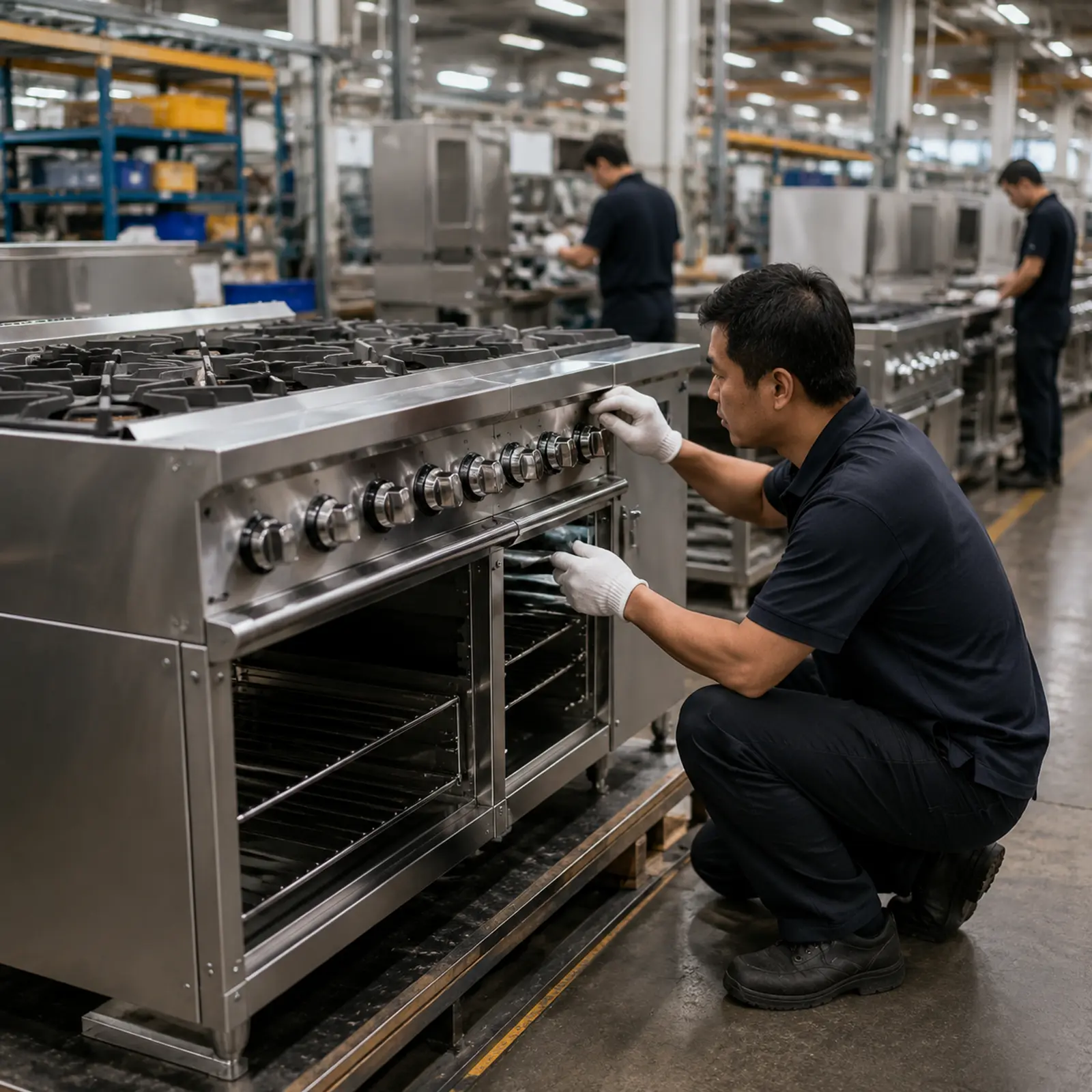
Commercial kitchen equipment for foodservice buyers
Footprint, Installation, and Kitchen Workflow
Nominal width and depth do not show the full space requirement. Importers should obtain overall dimensions, net and packed dimensions, door swing, control access, ventilation clearance, service clearance, drainage position, water connection, gas entry, electrical entry, and caster or leg configuration. Confirm whether dimensions include handles, rear guards, faucets, hoods, or external condensing units.
A manufacturer may be able to modify sheet metal or connection positions, but even a small change can affect tooling, testing, packing, and compliance. A trader may combine machines from several sources, increasing the need to check counter heights, stainless finishes, and utility alignment across the line. Conditional recommendation: select a manufacturer for coordinated dimensional changes; select a trader for standard equipment packages only after reviewing a scaled layout and utility schedule.
Cleaning, Maintenance, and Spare Parts
Evaluate whether food-contact parts are removable, whether grease and crumbs can reach hidden areas, and whether refrigeration condensers, filters, burners, heating elements, probes, motors, and control boards are accessible. Ask for cleaning instructions before buying; inappropriate cleaning methods can damage finishes, insulation, electrical parts, or seals.
For maintenance, request exploded diagrams, parts lists, error-code guidance, wiring diagrams, and recommended spare-parts packages. Clarify whether parts are identified by stable numbers or only by photographs. Conditional recommendation: favor manufacturer involvement when your local technicians need detailed diagnostics and long-term parts matching; consider a trader when it maintains a documented parts system and accepts responsibility for coordinating claims across all supplied brands.
Compliance and Destination-Market Documentation
Compliance must be checked by model, configuration, and destination. Do not treat a company certificate, logo, or unrelated test report as proof for every product. Ask for the issuing organization, report or certificate number, model list, applicant and manufacturer names, issue date, and any configuration limitations. Organizations such as NSF provide testing and certification services for commercial food equipment, but buyers still need to confirm which requirement applies in their market.
Manufacturer access can make technical-file corrections easier, while a trading company may need to gather separate files from multiple sources. Conditional recommendation: choose the route that can provide verifiable, model-specific documents before the deposit—not the route making the broadest certification statement.
Total Ownership Cost and Quotation Completeness
Compare unit price together with tooling, logo application, samples, export packing, inspection, inland transport, freight terms, duties, installation, commissioning, filters, water treatment, ventilation, gas conversion, local labor, warranty parts, and technician travel. Define who pays when a machine arrives with the wrong voltage, missing accessories, or transit damage. The quotation should also state model numbers, quantities, materials, utilities, included accessories, exclusions, lead-time basis, packing, Incoterm, payment terms, warranty process, and quotation validity.
Conditional recommendation: request a manufacturer quotation when technical control and repeat production are priorities; request a trading-company quotation when multi-category consolidation is more important, then normalize both offers into the same landed-cost template.
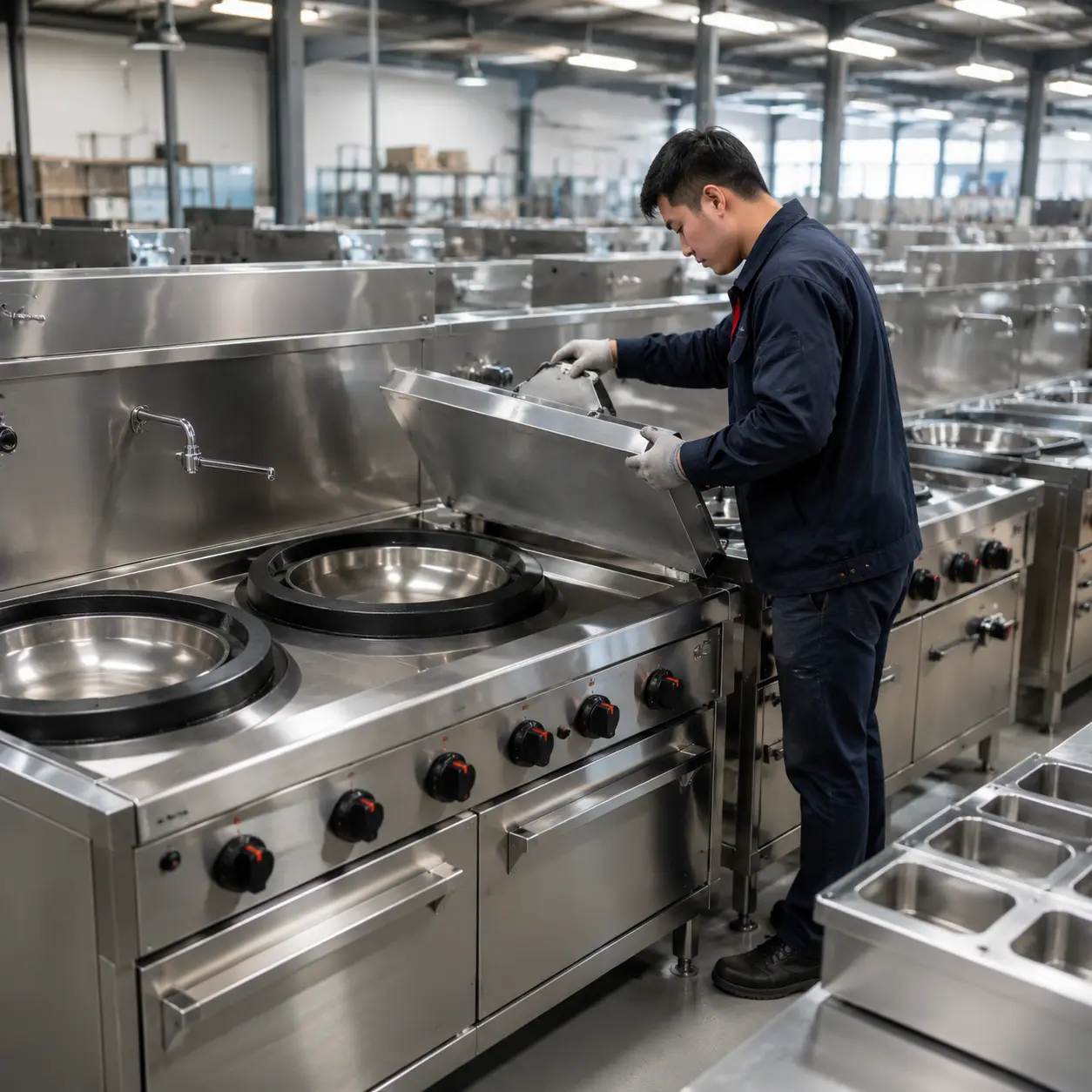
Commercial kitchen equipment for foodservice buyers
Conditional Recommendations for Importers and Distributors
- Choose a commercial kitchen equipment manufacturer when the project requires menu-specific capacity, OEM/ODM development, dimensional changes, destination-market electrical configurations, repeatable production, or closer parts coordination.
- Choose a trading company when the order contains many unrelated product categories, standard specifications are acceptable, and reducing supplier coordination is worth an additional commercial layer.
- Do not choose either by label alone. Audit which products are self-manufactured, which are outsourced, who owns technical decisions, and who handles warranty claims.
Guangzhou Yifeng Metal Technology Co., Ltd. describes itself as a commercial kitchen equipment manufacturer and exporter with R&D, design, sheet-metal processing, laser cutting, bending, laser welding, manufacturing, and OEM/ODM support. These are company-stated capabilities and should be assessed against the products in your project. Buyers can review the Guangzhou Yifeng Metal manufacturing background, browse commercial kitchen equipment products, or compare commercial kitchen equipment. To obtain a usable offer, send your menu, target throughput, utility conditions, destination country, layout limits, required documents, quantities, and service expectations when you request a commercial kitchen equipment quote.
Commercial Kitchen Equipment Manufacturer vs Trading Company: How to Make the Final Buying Decision
In the commercial kitchen equipment manufacturer vs trading company decision, the right supplier depends less on the label and more on the evidence behind the offer. A manufacturer may provide clearer control over design, fabrication, OEM/ODM development, and replacement parts. A trading company may simplify access to multiple brands or product categories. In either case, the importer should compare documented performance, destination-market compliance, installation requirements, and after-sales responsibility before approving a purchase.
Guangzhou Yifeng Metal Technology Co., Ltd. presents itself on its website as a commercial kitchen equipment manufacturer and exporter. Its stated capabilities include R&D, design, sheet-metal processing, laser cutting, bending, laser welding, equipment manufacturing, and OEM/ODM support. These are website statements and should be confirmed against the specific models, factory records, and documents included in a quotation.
Commercial Kitchen Equipment Manufacturer vs Trading Company: The Practical Decision Matrix
| Buyer concern | Manufacturer | Trading company | Buyer consequence |
|---|---|---|---|
| Specification control | May be able to confirm materials, fabrication details, utility configurations, and production changes directly. | Must obtain the same information from the underlying supplier and pass it to the buyer. | Choose the party that can issue a model-specific, signed specification rather than a generic catalog page. |
| Menu and throughput changes | May support engineering adjustments or private-label development, subject to technical feasibility and order volume. | May offer more brands but may have less control over modifications. | For expansion or private label, require a written development scope, sample approval process, and change-control terms. |
| Product range | Often strongest within its own manufacturing categories. | May combine equipment from several suppliers in one proposal. | For a complete opening package, compare coordination benefits against the risk of inconsistent warranties and documentation. |
| Parts and warranty | May identify original components and production records more directly. | Support depends on the trading company’s relationship with the actual maker. | Buy only when the responsible warranty party, parts channel, and response process are written into the order. |
When a Commercial Kitchen Equipment Manufacturer Is Usually the Better Fit
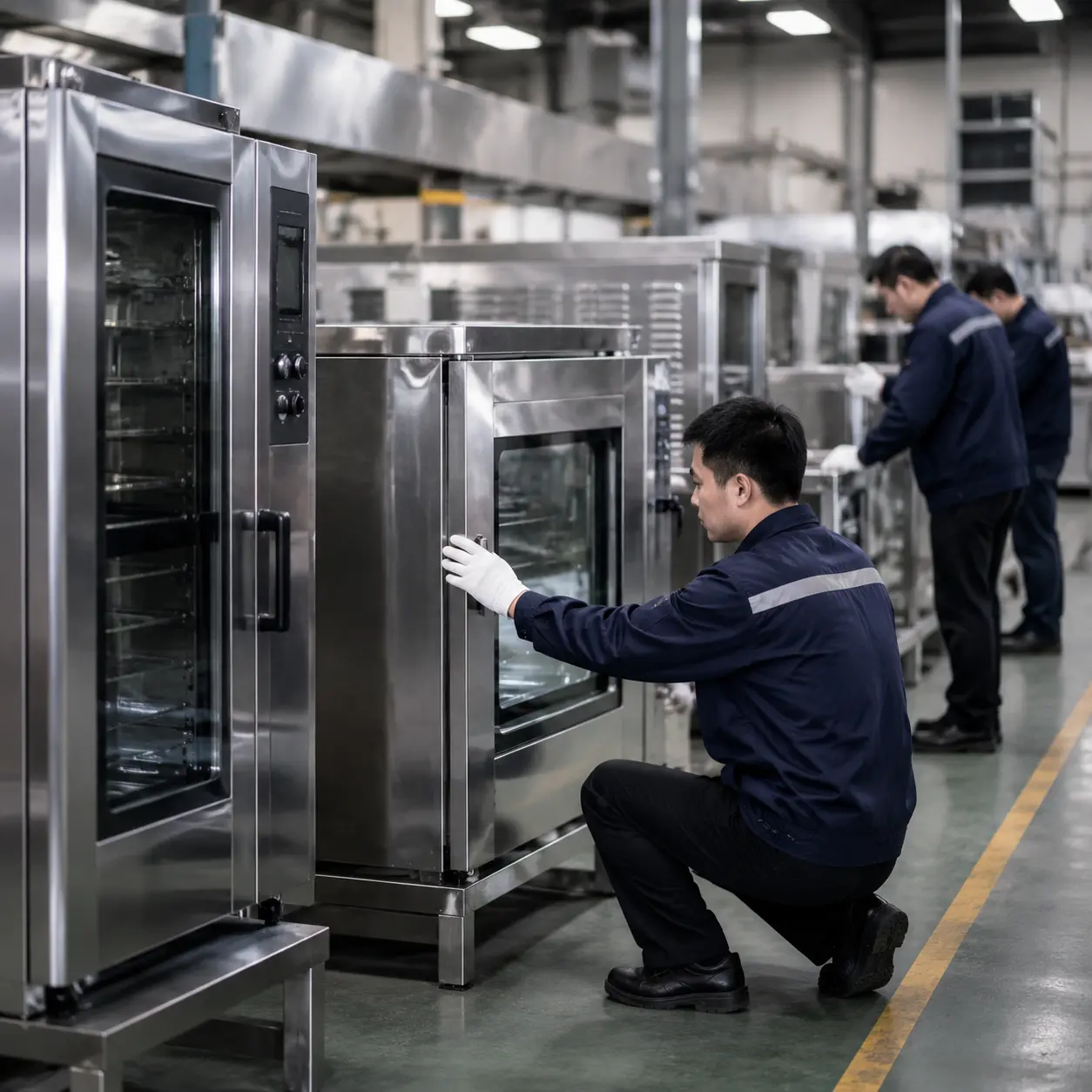
A manufacturer is usually the more practical route when the buyer needs repeatable equipment for new store openings, a distributor catalog, or a private-label program. Direct manufacturing contact can make it easier to resolve questions about temperature recovery, heating elements, refrigeration layout, cabinet construction, control systems, and utility connections. It can also reduce ambiguity when several units must match in dimensions, finishes, electrical input, or branding.
That advantage exists only if the supplier can prove the specification. Ask for a model number, dimensional drawing, rated capacity or usable volume where applicable, temperature range, recovery or performance test method where relevant, power input, gas requirement, phase, frequency, plug or terminal arrangement, and operating instructions. Do not treat a product photograph or a broad category description as performance evidence.
Conditional recommendation: Prefer a manufacturer when specification control, repeat orders, customization, or private labeling matters and the supplier can provide model-level technical evidence. If the evidence is incomplete, a trading company with stronger documentation may be the safer commercial choice.
When a Trading Company May Be the Better Fit
A trading company can be useful when the importer wants multiple brands, mixed equipment categories, small quantities, or one commercial contact for a fragmented project. This may suit a restaurant opening that combines baking equipment, refrigeration equipment, hamburger shop equipment, snack equipment, and accessories from different sources.
The buyer should still identify the actual manufacturer for every major unit. Request the original model number, factory name and address, user manual, packing list, warranty terms, and compliance documents. Confirm whether the trading company is authorized to sell the equipment and whether it will remain responsible for claims after delivery. A low purchase price can lose its value if the seller cannot identify a replacement control board, heating element, compressor, seal, or other service part.
Conditional recommendation: Consider a trading company when assortment, consolidation, or low-volume purchasing is more important than customization. Use it only when the underlying manufacturers and the trading company’s warranty obligations are transparent.
Commercial kitchen equipment for foodservice buyers
Compliance: Which Documents Apply in the Destination Market?
Compliance is not established by saying that equipment is “certified.” Requirements depend on the destination country, equipment type, electrical or gas configuration, installation environment, and sometimes the authority reviewing the project. NSF states that it provides testing and certification services for commercial food equipment. That supports using NSF as a verification resource, but it does not prove that a specific model is NSF certified or that NSF is the only requirement in the buyer’s market.
Before placing an order, ask which documents apply and who will provide them. The file may need model-specific test reports, a declaration or certificate of conformity, electrical information, gas documentation, food-contact material information, installation instructions, EMC or safety evidence, labeling details, and local registration or inspection paperwork. The applicable list must be confirmed with the destination-market authority, qualified installer, or compliance professional.
Check that the document model number matches the quoted equipment. Confirm the rated voltage, frequency, phase, gas type, and component configuration also match. A document for a similar model, a different market, or a different electrical version should not be treated as proof for the unit being imported.
Conditional recommendation: Select the supplier that can map each required document to the exact model and destination-market configuration. If the supplier cannot make that connection, pause the purchase until an independent compliance review is complete.
What a Complete Quotation Should Include
Comparing only the equipment line price produces unreliable results. Request a quotation that separates the following items:
- Exact model number, quantity, finish, dimensions, and included accessories.
- Rated electrical or gas input, utility connection position, and destination-market configuration.
- Packaging, export preparation, inland transport, freight terms, insurance, and estimated lead time.
- Installation, commissioning, training, testing, and site-readiness responsibilities.
- Spare-parts package, consumables, recommended maintenance items, and parts pricing.
- Warranty duration, coverage exclusions, labor responsibility, claim procedure, and response target.
- Required manuals, drawings, compliance documents, labels, and inspection records.
- Payment terms, inspection or approval milestones, change fees, cancellation terms, and remedy for delay.
For a manufacturer, also request confirmation of the production site and whether fabrication, assembly, testing, and final inspection are performed in-house or outsourced. For a trading company, request a supplier-by-supplier responsibility map. This prevents a warranty dispute in which the seller refers the buyer to an unidentified upstream factory.
Buyer Action: A Low-Risk Approval Sequence
- Define the menu, peak service period, expected throughput, operating hours, and available utilities.
- Shortlist both manufacturer and trading-company options using the same technical specification sheet.
- Require drawings, manuals, model-level performance information, and destination-market documentation before comparing price.
- Confirm footprint, service clearances, cleaning access, door swing, drainage, ventilation, and utility connection positions with the installer.
- Approve a sample, pre-production drawing, or inspection plan for private-label and repeat-order projects.
- Put warranty ownership, spare-parts identification, packaging, delivery terms, and acceptance criteria in the purchase contract.
Buyers can review commercial kitchen equipment products, compare shortlisted units through compare commercial kitchen equipment, and review the GZYF Metal equipment portfolio. For company background, see the Guangzhou Yifeng Metal manufacturing background. To submit project details, use the request a commercial kitchen equipment quote page; the final inquiry should include the complete specification and documentation checklist above.
FAQ: Manufacturer vs Trading Company
Is a manufacturer always cheaper?
No. Compare landed cost, customization, minimum order requirements, documentation, installation, spare parts, warranty handling, and downtime risk rather than factory price alone.
Can a trading company provide manufacturer-level support?
Yes, if it has a documented relationship with the actual maker and accepts clear responsibility for parts, warranty claims, manuals, and technical support. Ask for those obligations in writing.
What proves that a commercial kitchen equipment specification is reliable?
The strongest evidence is model-specific documentation that matches the quoted unit: drawings, rated inputs, manuals, test or inspection records where applicable, and a contract that defines acceptance criteria.
Should I request certification before ordering?
Yes. First identify the destination-market requirements, then request the applicable documents for the exact model and configuration. Do not assume a general certification statement covers every variation.
References

Commercial kitchen equipment for foodservice buyers