 (+035) 527-1710-70
 NEWSLETTER


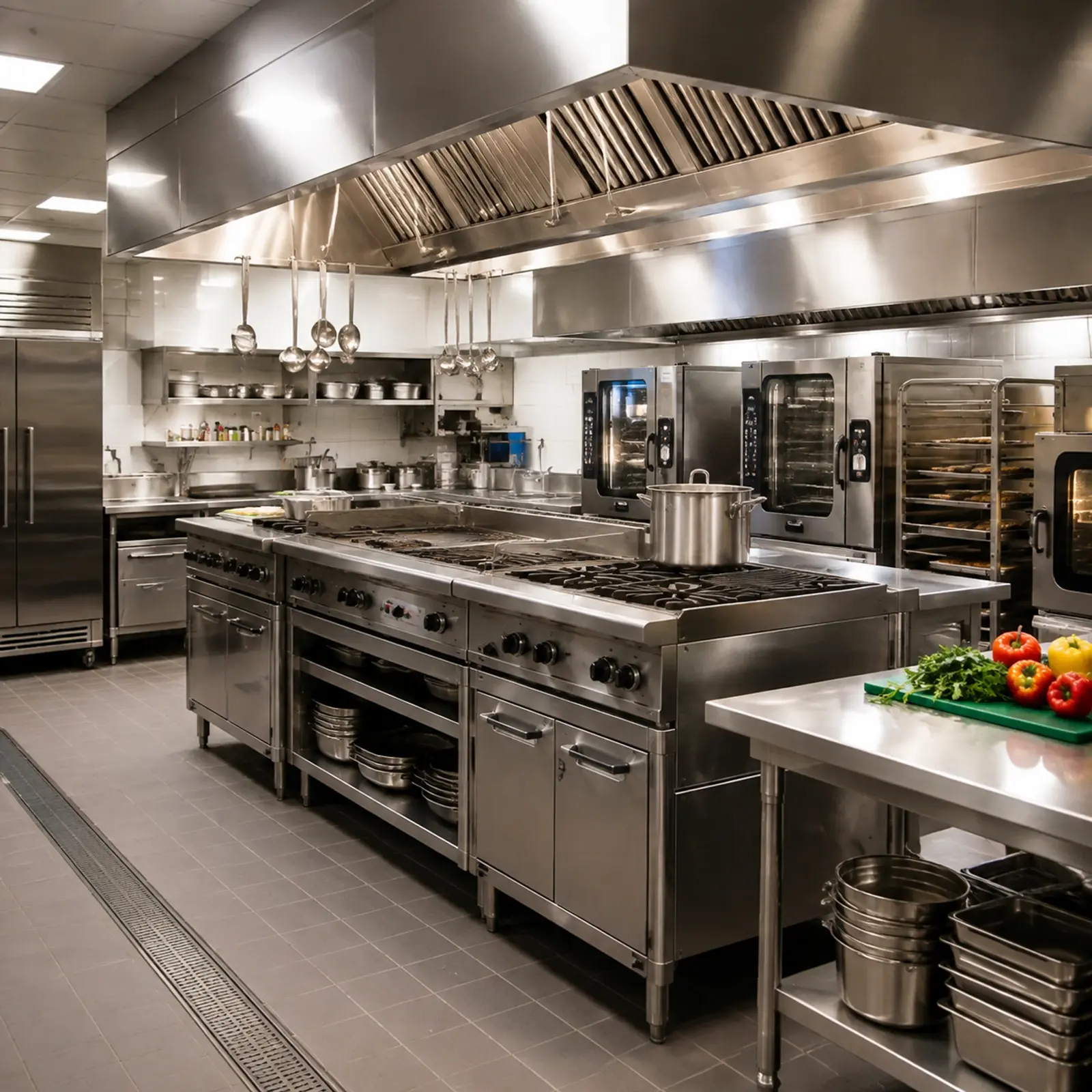
Commercial Kitchen Equipment Layout Planning Basics: A Buyer Selection Guide
Commercial kitchen equipment layout planning starts with the operating process, not a catalog. For an importer or distributor, the equipment schedule must fit the menu, peak throughput, destination utilities, available room, budget, and service model. This guide turns those inputs into a comparable specification and a complete quotation request. It also gives you a way to test unclear capacity claims, missing safety documents, hidden freight or installation charges, and weak spare-parts support.
Buyer inputs
Collect these before asking suppliers to recommend models:
- Menu, product sizes, preparation methods, service hours, and workflow.
- Expected average and peak orders, covers per hour, batch size, recovery time, and holding period.
- Destination country, approval expectations, voltage, frequency, phase, fuel, and plug format.
- Room dimensions, doorways, floor loading, ventilation route, drainage, and service access.
- Budget basis, delivery term, target date, installation responsibility, and spare-parts plan.
- Operator skill, cleaning routine, control language or units, and local technician availability.
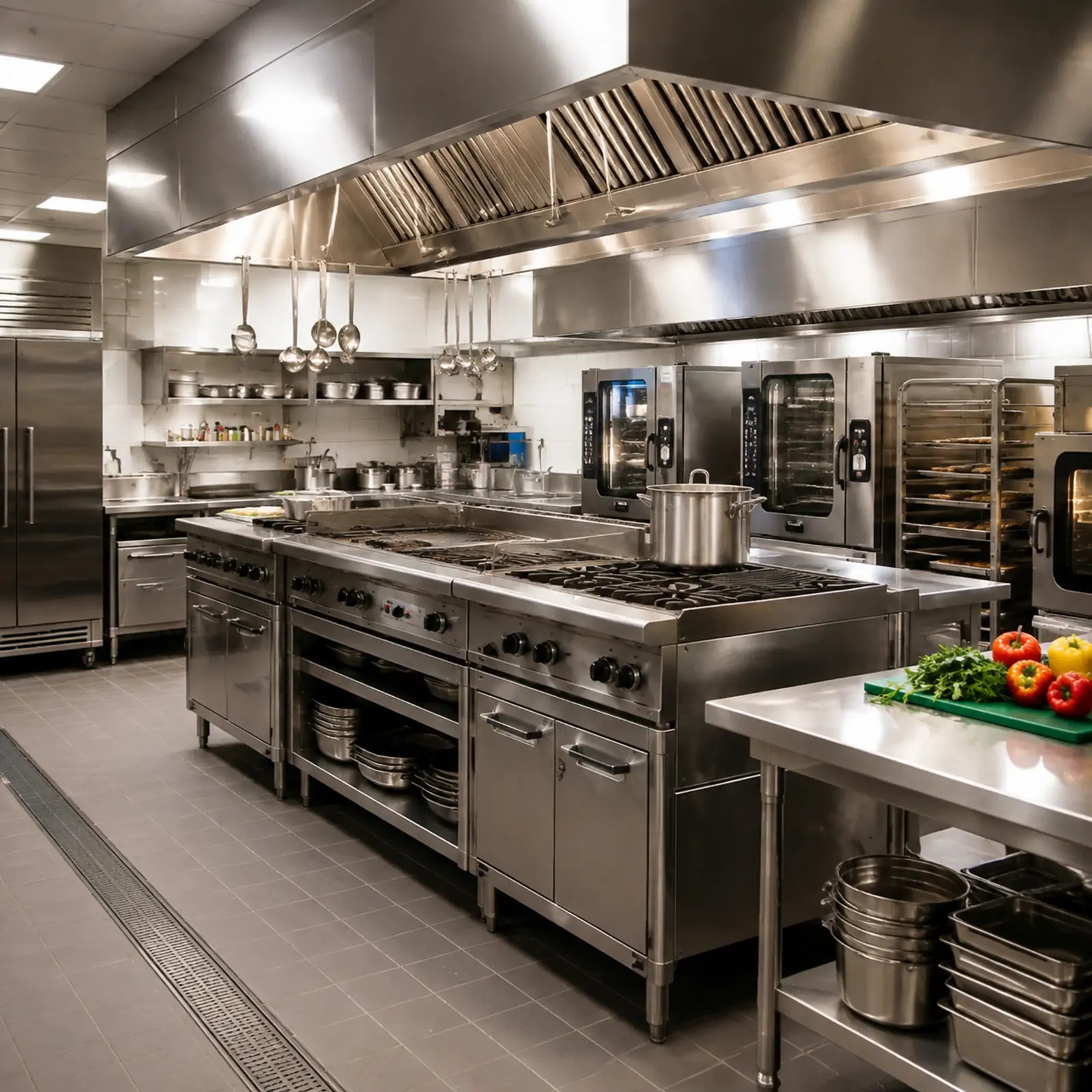
Commercial kitchen equipment for foodservice buyers
Numbered selection steps
-
1. Map the menu to a process
List receiving, dry and cold storage, prep, cooking, holding, service, warewashing, and waste. Mark handoffs, one-way movement, and the steps that can delay service. Use the GZYF Metal equipment portfolio or commercial kitchen equipment products page to build a first equipment schedule by function, not by brand name.
-
2. Convert demand into equipment duty
Record peak orders or covers per hour, batch size, cycles per hour, storage days, and the required recovery window. Ask whether stated capacity is per batch, tray, pan, load, liter, or finished unit, and what product and operating conditions apply. Cross-check baking, hamburger, snack, and refrigeration equipment on the products page; a capacity number without its basis is not comparable.
-
3. Specify utilities for the destination market
Write a utility schedule for every item: voltage, phase, frequency, plug, amperage, fuel type and pressure, water supply, drain, exhaust, heat load, and clearance. Do not assume a model built for one market can use another market’s connection. Request a nameplate image and utility drawing. Review the NSF food equipment standards portfolio as a standards reference, then confirm the rules accepted by the destination authority.
-
4. Validate the physical layout
Check packed dimensions, door swings, aisles, floor loading, leveling, casters, access panels, cleaning gaps, and service clearance in addition to width, depth, and height. Place sinks, warewashing, freezer or refrigeration, and garbage handling around the process, not wherever space remains. Request a dimensioned plan and elevations; the portfolio can help compare the physical form of shortlisted equipment.
-
5. Check construction and controls
Ask for food-contact materials, finishes, weld or seam treatment, insulation, seals, removable parts, cleaning instructions, and replacement components. Then define the control need: display, timer, alarm, temperature indication, interlock, language, or unit system. Use compare commercial kitchen equipment for side-by-side review, but require the supplier’s model-specific data sheet before accepting a comparison.
-
6. Build a model-specific compliance file
Request the manual, wiring diagram, safety instructions, declaration or test documentation where required, labels, and any food-contact documentation. Check that each document names the quoted model, voltage, and revision; a certificate for a related model may not cover the shipment. The PKI safety guide and NSF portfolio are useful reference points, while local authorities control approval.
-
7. Test serviceability before price
Ask for an exploded parts list, component makes and model numbers, recommended commissioning spares, normal lead times, warranty boundaries, remote troubleshooting, and the route for local service. GZYF Metal describes product development, sheet-metal processing, laser cutting, bending, laser welding, manufacturing, and OEM/ODM support on its website; tie any stated capability to the quoted model and post-sale scope through a request for a commercial kitchen equipment quote.
-
8. Turn the schedule into an itemized RFQ
Show model, quantity, dimensions, capacity basis, utility data, accessories, packaging, packed weight, delivery term, freight, insurance, installation, commissioning, documentation, spare parts, warranty, lead time, payment terms, and quote validity. Send it through the request a commercial kitchen equipment quote page; use complete your equipment inquiry to finalize the request, and review selected equipment before approval. A single lump sum does not reveal what is missing.
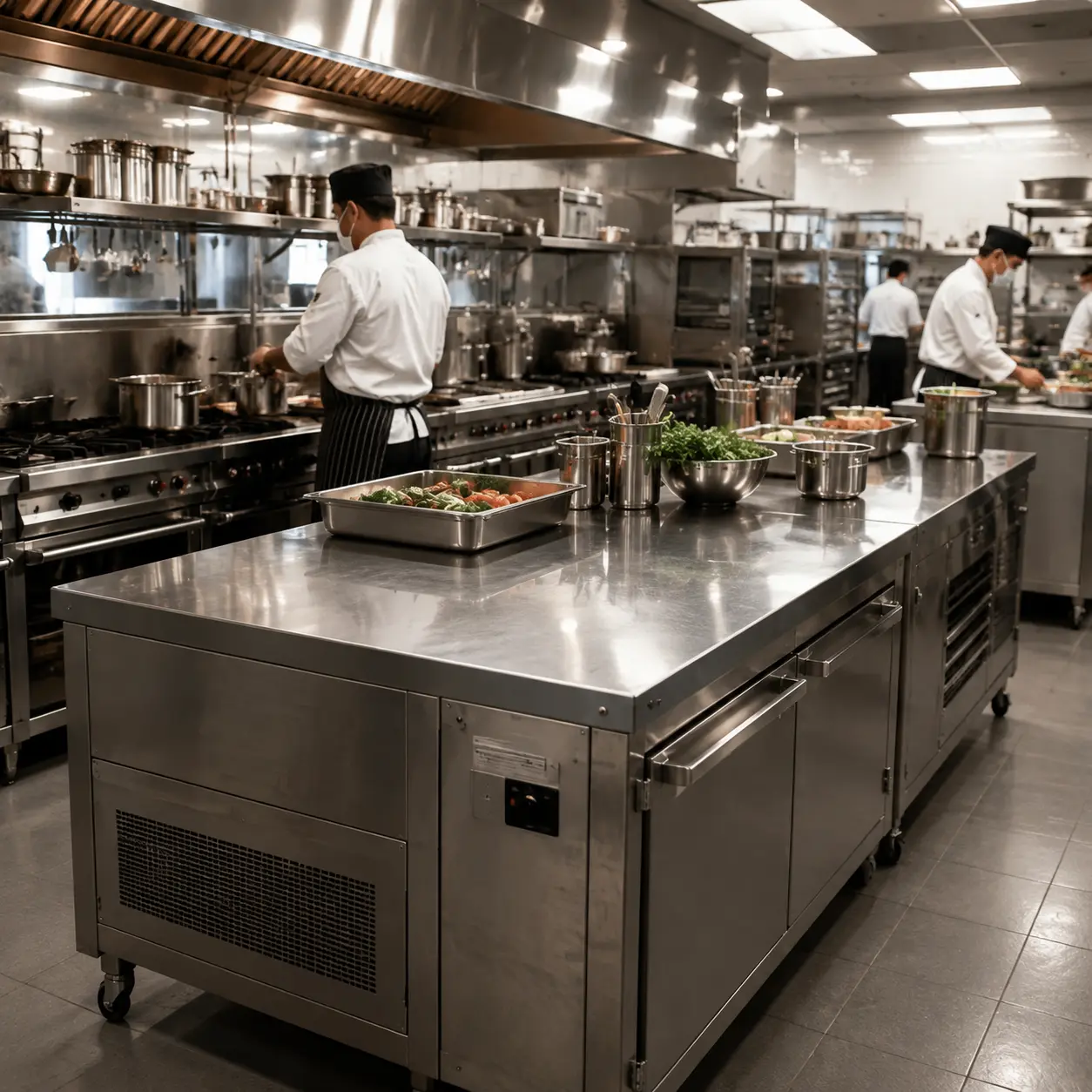
Commercial kitchen equipment for foodservice buyers
Risk and verification table
Use this table to turn common sourcing concerns into evidence requests.
| Risk | What to verify | Evidence to request |
|---|---|---|
| Capacity claim | Rating basis, cycle, product, and recovery condition. | Model data sheet, test method or operating example, and written assumptions. |
| Utility mismatch | Exact model compatibility with voltage, phase, frequency, fuel, water, drain, and exhaust. | Nameplate, wiring diagram, utility schedule, and installation requirements. |
| Layout or installation gap | Service clearances, packed dimensions, access route, and installation scope. | Dimensioned CAD, packed weight, scope of supply, and exclusions. |
| Compliance gap | Whether documents cover the exact model and destination market. | Current manuals, declarations, reports, labels, and certificate scope. |
| Hidden landed cost | What is excluded from the quoted price. | Itemized quote covering packaging, freight, insurance, duties, installation, commissioning, and spares. |
| Service gap | How the buyer will obtain parts and technical help. | Parts list, lead times, warranty terms, support contact, and escalation route. |
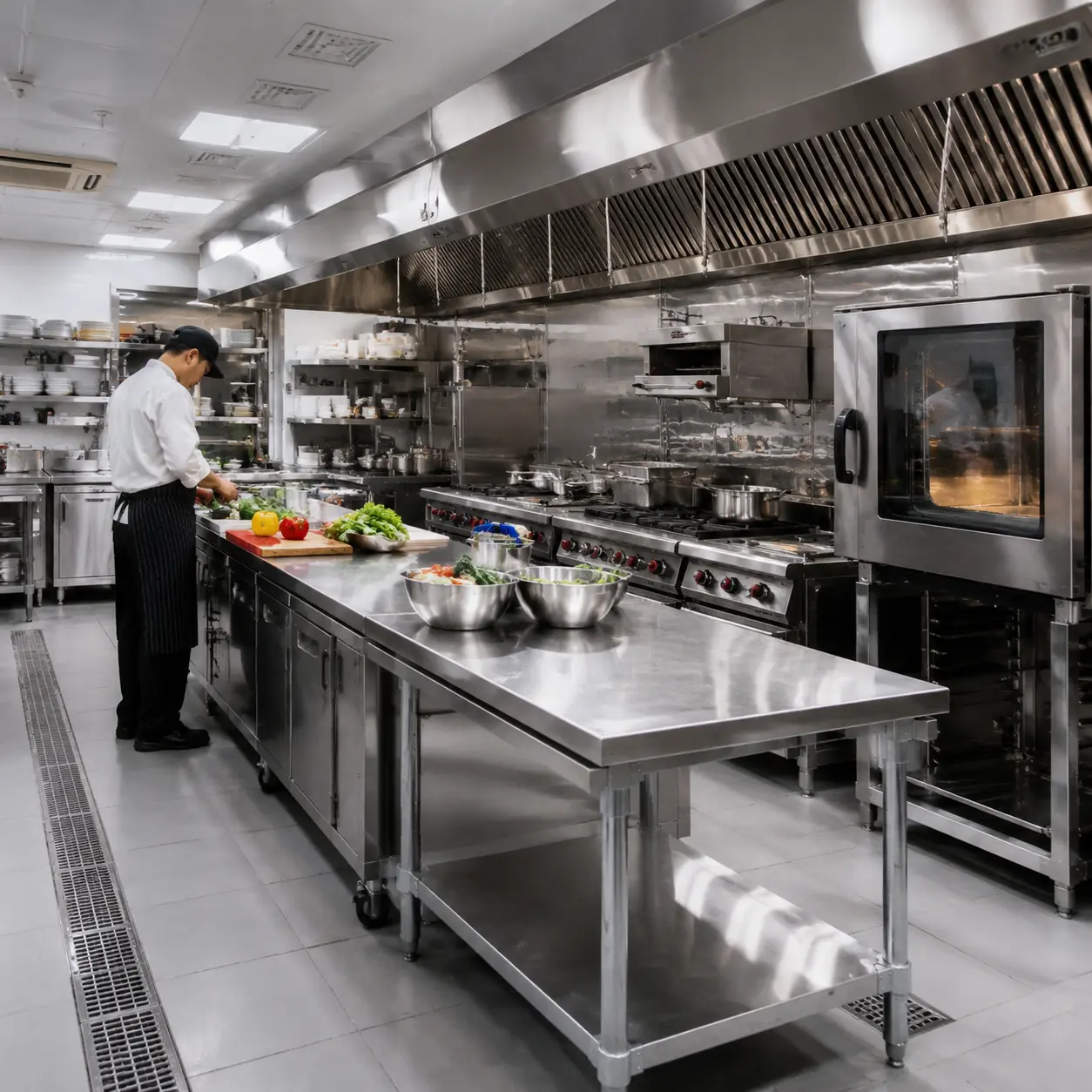
Commercial kitchen equipment for foodservice buyers
Supplier questions
Send these questions with the equipment schedule:
- What product, cycle, ambient condition, and operator assumption supports the capacity?
- What exact utilities and connection details appear on the nameplate?
- Which dimensions include doors, handles, casters, exhaust, and service clearance?
- Which parts are removable for cleaning, and what food-contact material documents are available?
- Which safety and compliance documents apply to the quoted model and destination?
- Which spare parts should ship with the first order, and what are normal replenishment lead times?
- What are the warranty limits, commissioning requirements, training offer, and local service arrangements?
- Which freight, installation, tax, duty, and documentation costs are excluded?
For additional planning context, compare the KaTom kitchen requirements guide and FRS commercial kitchen setup checklist with the destination authority’s rules. Guangzhou Yifeng Metal Technology Co., Ltd. is presented as a commercial kitchen equipment manufacturer and exporter based in Baiyun District, Guangzhou, Guangdong, China. Its website describes R&D, design, sheet-metal processing, laser cutting, bending, laser welding, equipment manufacturing, and OEM/ODM support. Treat website statements, including any certificate references, as supplier claims to verify for the quoted scope. With a process map, utility schedule, compliance file, and itemized RFQ, distributors can compare suppliers on evidence, serviceability, and landed cost rather than on a generic product list.
From Equipment Shortlist to Purchase Decision
Once the process map, duty requirements, utilities, dimensions, construction, compliance needs, and service access have been defined, the buyer can turn commercial kitchen equipment layout planning into a controlled sourcing decision. This stage matters for a new store opening, menu expansion, replacement of unreliable equipment, distributor catalog expansion, private-label development, or a destination-market compliance requirement.
Start with the models available through the commercial kitchen equipment products page and review relevant examples in the GZYF Metal equipment portfolio. Treat website information as an initial reference. The supplier should confirm the specification and commercial scope for every quoted model in writing.
Apply Five Shortlist Gates
- Process gate: Confirm that each item has a defined role in the menu workflow. Record the food or product handled, batch or continuous process, expected output period, upstream preparation, downstream holding, and cleaning method. Remove equipment that does not support a necessary process or measurable operating requirement.
- Site gate: Match the quoted voltage, phase, frequency, plug or connection type, gas type, water, drainage, ventilation, and heat-rejection requirements to the destination site. Confirm overall dimensions, working clearances, door swings, loading paths, hood position, and service access. Use the compare commercial kitchen equipment function to organize candidate models, but retain a separate technical schedule controlled by model number and revision date.
- Performance gate: Ask the supplier to identify how stated capacity or output was determined. The answer should define product, load size, starting condition, cycle time, operating setting, and test conditions where applicable. A capacity number without its basis is not sufficient for a throughput decision.
- Evidence gate: Request model-specific drawings, data sheets, manuals, electrical or gas information, food-contact material declarations where required, and applicable safety or sanitation documents. The model identifier on a certificate, listing, report, or declaration should match the quoted equipment or have a documented relationship to it.
- Support gate: Confirm routine maintenance access, replaceable parts, diagnostic controls, warranty terms, claim procedure, technical contact, and the proposed spare-parts package. Equipment that fits the room but cannot be maintained economically should not pass the final shortlist.

Commercial kitchen equipment for foodservice buyers
Build a Destination-Market Compliance Record
There is no universal document package for every market or installation. Requirements can vary by equipment type, energy source, food-contact application, local authority, and importer responsibility. Before issuing a purchase order, obtain written guidance from the relevant authority, qualified consultant, testing or certification organization, and installation professionals in the destination market.
The NSF food equipment standards page is a useful starting point for identifying NSF’s food-equipment standards portfolio. It should not be treated as evidence that a particular supplier or model is certified. Certification or listing status must be checked against the actual model and the issuing organization’s current records.
Create one compliance folder per model. Include the approved specification sheet, dimensional drawing, utility schedule, manual, label or rating-plate artwork, bill-of-material details needed for regulated food-contact components, and copies of applicable declarations, reports, certificates, or listings. Record the document issuer, number, model scope, revision, expiration date if any, and independent verification result. Unresolved differences should remain open items rather than being replaced by a general supplier assurance.
Compare the Complete Quotation
A usable quotation should separate the equipment price from optional accessories and other commercial costs. Ask for model number, quantity, unit price, included accessories, controls, material or finish options, packaging, spare parts, warranty scope, documentation, lead time, trade term, shipment point, and quote validity. Freight, insurance, duties, taxes, local handling, installation, commissioning, ventilation work, utility connections, and authority fees should be shown as included, excluded, or buyer-supplied.
For private-label or distributor projects, also define branding files, rating labels, manuals, packaging marks, sample approval, specification-change control, minimum order requirements, and ownership of any custom tooling if applicable. Guangzhou Yifeng Metal states that it supports R&D, design, sheet-metal processing, laser cutting, bending, laser welding, equipment manufacturing, and OEM/ODM work. Buyers should confirm which capabilities and deliverables apply to the specific project. The Guangzhou Yifeng Metal manufacturing background page provides company context, not model-level proof.
Resolve Parts and Warranty Before Ordering
Request an exploded parts drawing or parts list where available, recommended opening-stock quantities, prices, order codes, expected availability, and dispatch method. Identify consumable, wear, electrical, control, heating, refrigeration, and gas-train components relevant to the selected model. Confirm whether locally sourced equivalents are permitted and whether their use affects warranty coverage.
The warranty statement should identify the covered equipment, start date, duration, exclusions, labor responsibility, freight responsibility, evidence required for a claim, response channel, and remedy. For imported equipment, clarify whether failed parts must be returned and who pays transport. Also ask who can provide installation guidance, troubleshooting, and service documents across time zones.

Commercial kitchen equipment for foodservice buyers
Buyer Decision Questions
- Can the supplier prove the specification?
- Require a model-controlled data sheet, drawing, rating information, and written answers to performance questions. Where a claim affects capacity, safety, compliance, or installation, request the supporting document or test basis.
- Which documents apply in my market?
- Determine this with destination-market authorities and qualified specialists. Then ask the supplier for documents that match the exact model. Do not infer approval from a logo, website statement, or certificate covering a different product.
- What is included in the quote?
- Use an itemized comparison showing the base machine, accessories, packaging, documents, spare parts, warranty, trade term, and every known exclusion. Compare landed and installed scope, not unit price alone.
- How will parts and warranty support work?
- Approve a written support plan covering parts identification, stock recommendations, claim handling, technical contacts, freight responsibility, and service-document access.
Reference Resources
- KaTom Kitchen Requirements Guide for general kitchen-requirement review.
- Design Development Group’s US kitchen design overview for background reading on US design considerations.
- PKI Group installation safety and compliance tips for installation-stage considerations.
- FRS commercial kitchen checklist as a general setup reference.
Issue a Controlled RFQ
Send the final equipment schedule, site utility information, destination, required documents, accessories, spares, warranty expectations, and commercial terms as one RFQ package. Buyers can save equipment for later review, review selected equipment, or use request a commercial kitchen equipment quote to submit project requirements. Before placing an order or using complete your equipment inquiry, reconcile every quoted model against the approved layout and evidence register.