 (+035) 527-1710-70
 NEWSLETTER


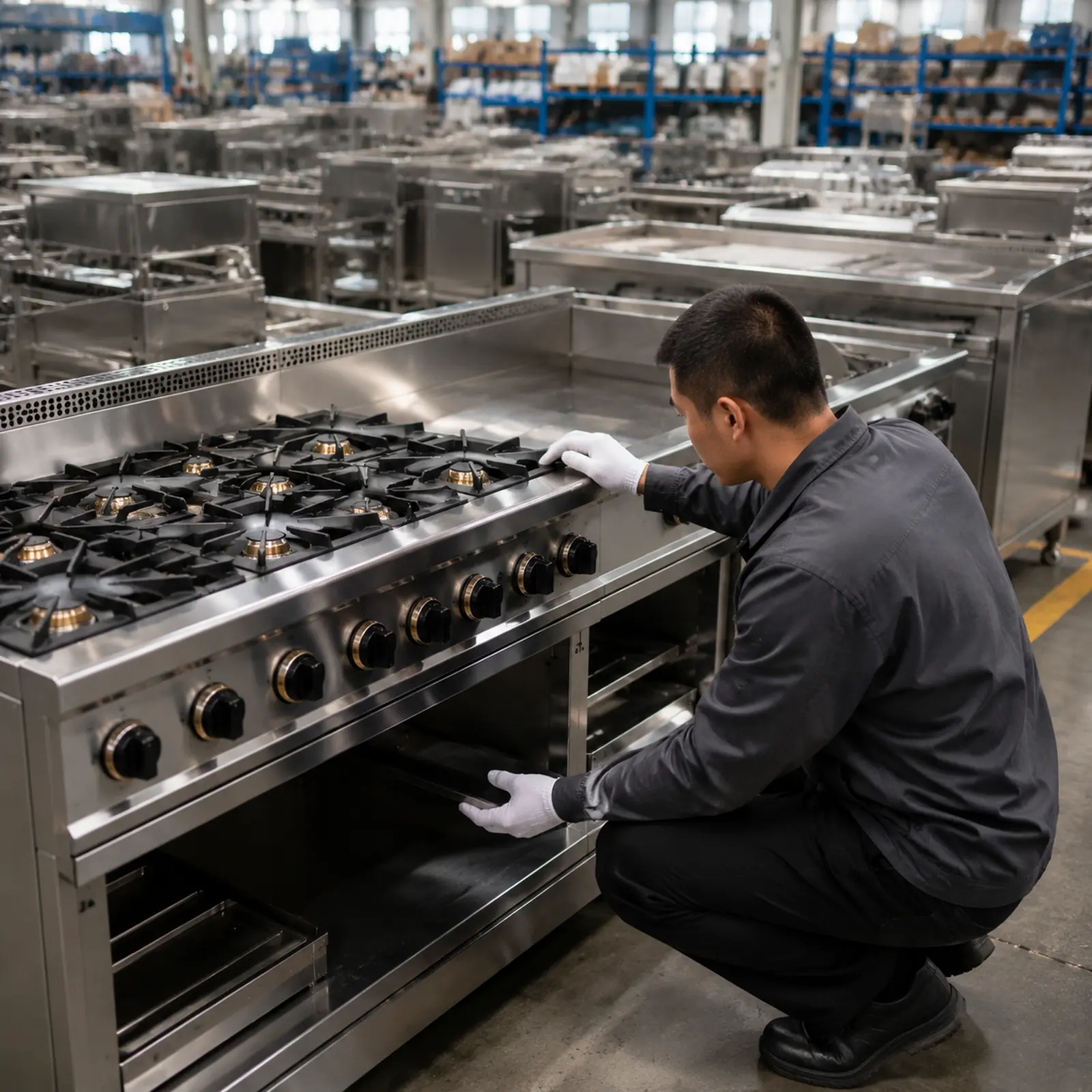
Commercial kitchen equipment is the professional-grade machinery, appliances, fixtures, and supporting accessories used to receive, store, prepare, cook, hold, clean, and serve food in restaurants, bakeries, snack shops, hotels, institutional kitchens, and other foodservice operations. Unlike household appliances, commercial kitchen equipment is selected around menu requirements, production volume, workflow, available utilities, local regulations, service conditions, and the buyer’s total cost of ownership.
For an importer or distributor, the term is broader than a list of machines. A complete equipment decision includes verified capacity, dimensions, materials, electrical or gas requirements, safety documentation, packaging, installation requirements, spare parts, warranty terms, and delivery responsibilities. A product may look suitable in a catalog but still be difficult to sell or install if its power supply, certifications, language labels, or replacement parts do not match the destination market.
Explore GZYF Metal commercial kitchen equipment products by category, or use the equipment comparison page to organize shortlisted models.
Definition and Boundaries
Commercial kitchen equipment includes durable equipment and operational tools designed for repeated use in a foodservice environment. Examples include ovens, fryers, griddles, mixers, refrigerators, freezers, prep tables, display units, sinks, exhaust-related equipment, food processors, worktables, and accessories. Some equipment is powered by electricity, gas, steam, refrigeration systems, or mechanical force. Other items, such as stainless-steel tables and shelving, support workflow without using a power source.
Commercial equipment is not simply any large appliance. A larger unit may still be unsuitable if it lacks the construction details, sanitation features, controls, documentation, or service access expected in a professional operation. Likewise, a compact countertop appliance can be commercial equipment when its design, duty cycle, materials, and operating instructions support foodservice use.
The term also does not automatically mean that a product is approved for every market. Certification, listing, labeling, electrical conformity, gas approval, and food-contact requirements vary by destination and application. Buyers should identify the applicable authority and documentation before placing an order. The NSF food equipment standards portfolio is a useful starting point for identifying relevant food equipment standards, but the applicable current edition and certification scope should be confirmed for the specific product and market at NSF’s official standards resource.
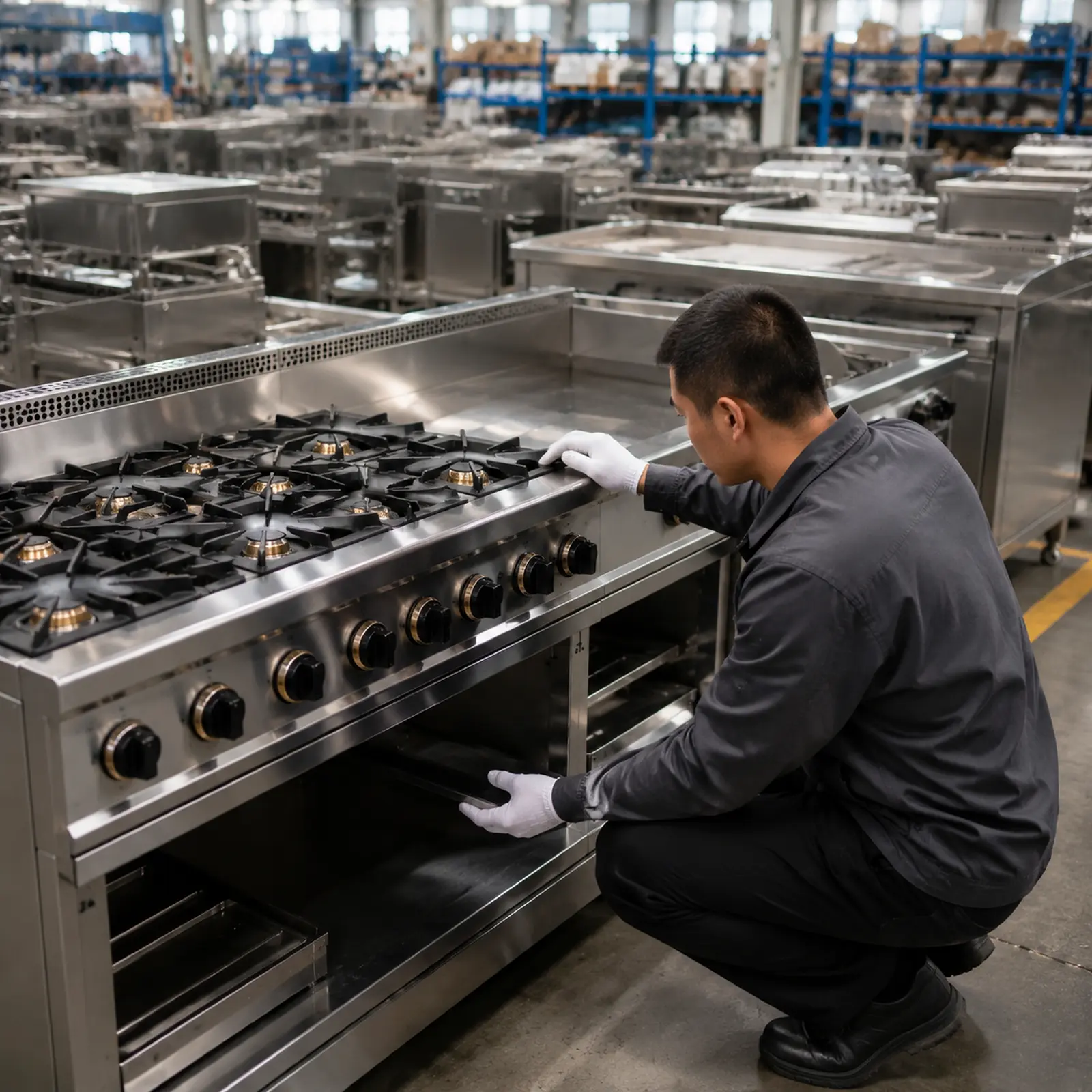
Commercial kitchen equipment for foodservice buyers
How Commercial Kitchen Equipment Works
Most commercial kitchen equipment performs one or more of five operating functions:
- Storage: Refrigeration and freezer equipment removes heat from an insulated cabinet or compartment to slow food deterioration. Performance depends on the refrigeration system, ambient conditions, loading pattern, door openings, and set temperature.
- Preparation: Mixers, slicers, processors, tables, and other prep equipment apply mechanical action or provide an organized work surface. The correct unit depends on ingredient type, batch size, texture, and production frequency.
- Cooking: Ovens, fryers, griddles, hot plates, and related units transfer heat to food through air, oil, metal surfaces, radiation, steam, or combinations of these methods. Heating speed alone does not describe usable output; recovery time, temperature control, chamber or surface area, and operator workflow also matter.
- Holding and display: Hot-holding cabinets, refrigerated displays, and service counters maintain food at an intended condition for a period of time. Buyers must establish the required temperature range, product type, humidity needs, visibility, and loading method.
- Cleaning and support: Sinks, worktables, shelving, waste-handling equipment, and cleaning-related systems help separate raw and ready-to-eat work, maintain sanitation, and move ingredients through the kitchen.
Operating performance is determined by the interaction of the machine and its environment. Voltage, frequency, phase, gas pressure, water pressure, drainage, ventilation, ambient temperature, floor loading, and clearance can all affect operation. A quotation that states only a model name and headline capacity does not provide enough information for a reliable purchase decision.
Main Types of Commercial Kitchen Equipment
Baking Equipment
Baking equipment includes ovens, proofing equipment, mixers, dough-processing equipment, and related bakery accessories. Buyers should connect the equipment to the product mix: bread, pastries, cakes, pizza, or other baked goods may require different temperature control, chamber formats, tray dimensions, mixing actions, and production schedules. Important questions include usable chamber dimensions, tray compatibility, heating method, control type, recovery behavior, and cleaning access.
Cooking and Snack Equipment
Cooking and snack equipment can include fryers, griddles, hot plates, cookers, warming equipment, and compact units used in hamburger shops, kiosks, cafés, and quick-service operations. Selection should begin with the menu and peak-hour workflow. Ask whether the stated output is based on a batch, an hourly estimate, a specific food, or a controlled test condition. Confirm oil capacity, cooking surface dimensions, temperature range, recovery expectations, ventilation needs, and required accessories.
Refrigeration Equipment
Refrigeration equipment includes reach-in cabinets, undercounter units, prep counters, freezers, display cases, and other cold-storage formats. The specification should distinguish gross volume from usable storage volume and should identify temperature range, refrigerant information where applicable, ambient operating conditions, shelving, door configuration, defrost method, and electrical requirements. Product placement and loading practices can affect actual performance, so capacity should be evaluated against the buyer’s menu and replenishment cycle.
Preparation, Stainless-Steel, and Support Equipment
Preparation and support equipment includes worktables, sinks, shelving, carts, food processors, small appliances, and accessories. These items influence sanitation and movement even when they do not have motors or heating systems. Confirm stainless-steel grade where specified, thickness, weld quality, adjustable features, load limits, drain details, caster type, dimensions, and packaging protection. Accessories should be listed individually so the buyer can distinguish included items from optional items.
GZYF Metal identifies its product categories as baking equipment, hamburger shop equipment, refrigeration equipment, snack equipment, other kitchen equipment, and accessories. The company website also describes product development, design, sheet-metal processing, laser cutting, bending, laser welding, and equipment manufacturing capabilities. These statements describe the company’s published capabilities; a buyer should verify which processes and services apply to the quoted model.

Commercial kitchen equipment for foodservice buyers
Applications and Workflow Fit
Commercial kitchen equipment is applied differently across a bakery, hotel, central kitchen, restaurant, food court, café, burger shop, convenience store, or institutional facility. The same oven or refrigerator may have different value depending on batch size, menu complexity, operating hours, staff skill, available floor area, and service expectations.
Start with a simple process map: receiving, dry storage, cold storage, preparation, cooking, holding, service, dishwashing, and waste removal. Then identify bottlenecks and peak demand. A machine with a high published capacity may not improve throughput if staff cannot load it efficiently, if the upstream preparation step is slower, or if utilities cannot support simultaneous operation.
Space planning also requires more than the equipment footprint. Include door swing, operator clearance, ventilation, service access, drainage, loading routes, packing removal, and future maintenance access. Importers should request packed dimensions and gross weight as well as net dimensions and weight because freight planning and installation costs depend on both.
Key Specification Vocabulary
- Capacity: The quantity the equipment can hold, process, cook, chill, or store. Ask for the measurement basis and test conditions.
- Throughput: Output over a defined period. Confirm whether it is theoretical, tested, continuous, or batch-based.
- Usable volume: The practical internal space available after shelves, trays, racks, evaporators, or other components are installed.
- Duty cycle: The expected pattern and intensity of operation. A unit intended for intermittent use may not suit continuous peak production.
- Recovery time: The time required for temperature or operating performance to return after loading or opening.
- Utilities: Electrical voltage, frequency, phase, amperage, gas type and pressure, water connection, drainage, ventilation, and other site requirements.
- Materials: The specified construction materials for food-contact surfaces, exterior panels, racks, shelves, insulation, seals, and fasteners.
- Ingress protection and sanitation features: Details such as sealed controls, cleanable joints, removable parts, rounded corners, drainage, and protection from water or dust where relevant.
- Documentation: Manuals, wiring diagrams, parts lists, test reports, declarations, certificates, labels, and installation instructions supplied with the equipment.
- Incoterm and scope of supply: The agreed division of freight, insurance, export handling, import clearance, unloading, installation, commissioning, and other costs.

Commercial kitchen equipment for foodservice buyers
Questions to Ask Before Requesting a Quotation
A useful quotation should identify the exact model, quantity, configuration, dimensions, materials, utilities, capacity basis, included accessories, packaging, lead time, warranty, spare-parts support, and documentation. Ask the supplier:
- What menu, product, batch size, and operating schedule support the stated capacity?
- Which electrical, gas, water, drainage, and ventilation conditions are required?
- Which safety documents, conformity documents, labels, and manuals are available for the destination market?
- What is included in the price, and what is optional?
- Are freight, export packing, installation, commissioning, and local service included or excluded?
- Which wearing parts and replacement components are available, at what lead time, and for how long?
- What warranty applies, where is service performed, and who pays for parts, labor, and transport?
For a project quotation, buyers can request a commercial kitchen equipment quote and provide the destination country, menu, target output, site utilities, required certifications, delivery terms, and preferred configuration. Review selected equipment through the equipment cart, or complete your equipment inquiry after confirming the specification.
Commercial Kitchen Equipment Buying Guide: How to Evaluate a Supplier and Quote
Commercial kitchen equipment is purchased to support a defined foodservice workflow, not simply to fill a room with appliances. A useful buying decision connects the menu, expected production, available utilities, destination-market requirements, installation conditions, and long-term service plan. The equipment may include cooking, baking, refrigeration, preparation, holding, serving, or specialty units, but the purchase is only workable when the specification can be verified and the total scope is clear.
This matters whether you are opening a new store, expanding a menu, replacing unreliable equipment, adding products to a distributor catalog, developing a private-label range, or meeting a compliance requirement in a new market. GZYF Metal publishes categories that include baking equipment, hamburger shop equipment, refrigeration equipment, snack equipment, other kitchen equipment, and accessories. Buyers can review the commercial kitchen equipment products and use the GZYF Metal equipment portfolio to identify relevant equipment families before requesting a quotation.
What a Verifiable Specification Should Contain
A product name alone is not a specification. Before comparing offers, ask the supplier to identify the exact model or configuration and to state the assumptions behind every performance figure. The specification should be sufficiently precise for an importer, distributor, installer, or operator to determine whether the equipment fits the intended application.
- Capacity basis: Clarify whether capacity refers to chamber volume, tray count, batch weight, storage volume, production per hour, or another measurement. Ask what product, cycle time, loading pattern, and operating conditions support the figure.
- Utilities: Confirm voltage, phase, frequency, electrical load, gas requirements if applicable, water supply, drainage, ventilation, and any connection or clearance requirements. Destination-market utility conditions must be checked before an order is placed.
- Construction and configuration: Request the materials, dimensions, door or access arrangement, included accessories, control type, and available options that apply to the quoted model. Do not assume that a product image represents the final configuration.
- Operating boundaries: Ask what the equipment is designed to process and what it is not designed to do. A baking unit, refrigeration unit, or snack machine should be evaluated against the actual menu and production cycle rather than a broad category label.
- Evidence: Request datasheets, manuals, drawings, wiring information, test documentation, and product photographs that correspond to the quoted model. If a certification mark or declaration is required, ask for the applicable document and issuing basis.
These details help address a common importer concern: a supplier may provide a generic capacity statement that cannot be compared with another quotation. When the capacity basis and utility assumptions are written into the quote, the buyer has a more defensible record for approval, installation, and future replacement planning.
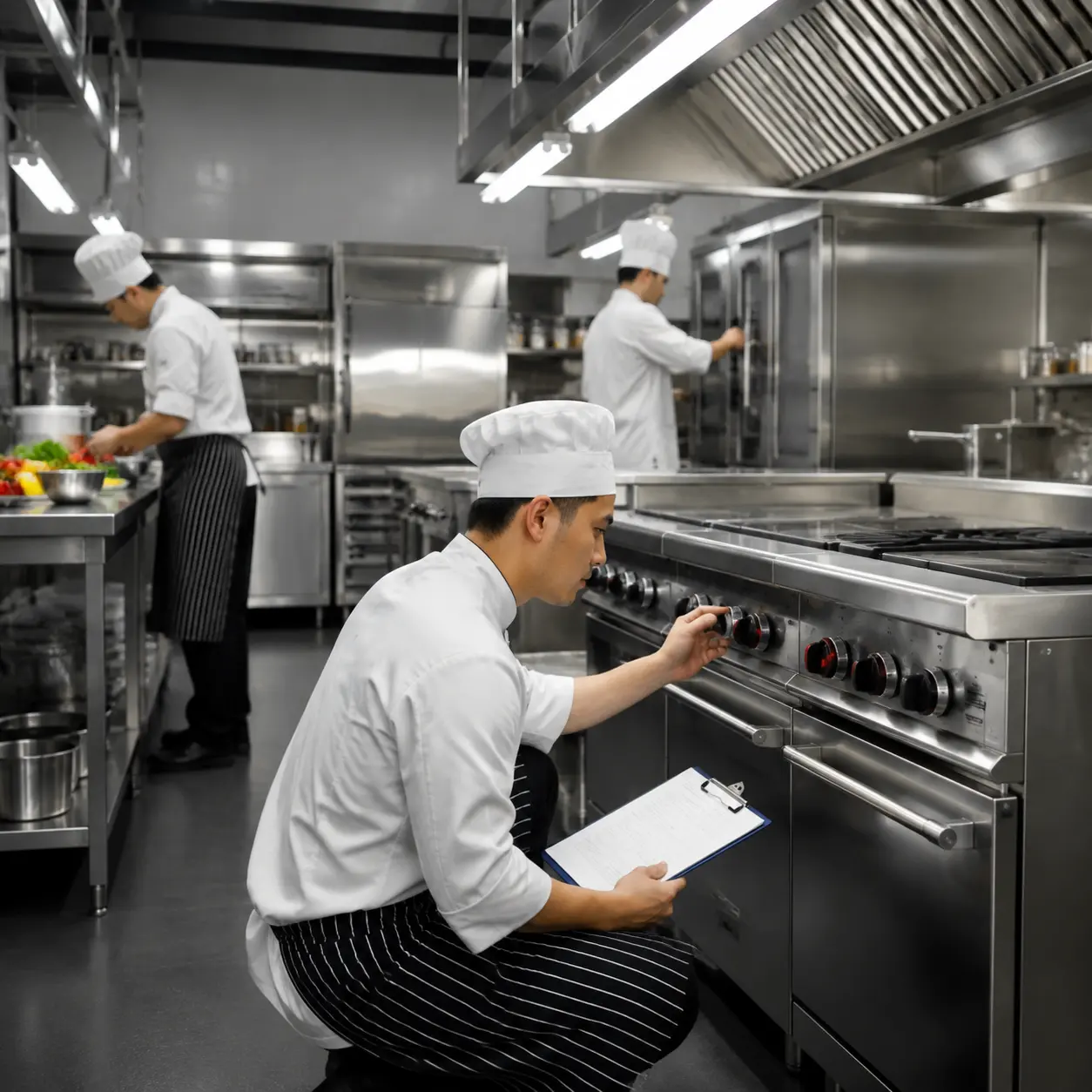
Commercial kitchen equipment for foodservice buyers
Compliance Is a Destination-Market Question
Commercial kitchen equipment does not have one universal compliance package. The applicable requirements depend on the product, electrical or gas system, installation environment, and country or region where the equipment will be sold and operated. A mark shown in a catalog is not, by itself, proof that the complete product is acceptable for a particular market.
NSF maintains an official portfolio of food equipment standards. Buyers should verify which standard applies to the product and confirm the current edition directly from the relevant standards source before treating a requirement as satisfied. Electrical, gas, sanitation, environmental, labeling, and import requirements may also involve other authorities or certification bodies. The supplier quotation should therefore identify which documents are available, which party is responsible for obtaining market-specific approvals, and whether any additional testing or registration is required.
Ask for documentation that matches the actual model and configuration, including an instruction manual, installation requirements, electrical information, safety warnings, cleaning instructions, warranty terms, and any conformity or certification documents available for the destination market. If documentation is incomplete, record the gap as a condition of purchase rather than assuming it will be resolved after shipment.
Read the Quote as a Project Scope
The equipment price is only one part of the acquisition. A useful quotation states what is included and excluded so the buyer can calculate the delivered and operational cost. At minimum, ask the supplier to separate or clearly describe:
- Equipment model, quantity, configuration, and included accessories
- Packaging, dimensions, gross weight, shipping terms, and freight assumptions
- Installation, positioning, utility connection, start-up, and commissioning responsibilities
- Applicable taxes, duties, port charges, inland delivery, and destination handling
- Warranty duration, coverage boundaries, exclusions, response process, and claim documentation
- Recommended spare parts, consumables, service tools, and parts availability
- Lead time, production milestones, inspection arrangements, and remedies for changes or delays
Hidden installation and commissioning costs can change the economics of an otherwise suitable unit. The buyer should also confirm whether the supplier supports remote troubleshooting, provides replacement parts, and can communicate with the local installer or distributor. These questions are especially important for private-label programs and distributor catalog expansion, where a repeatable support process may matter as much as the initial product specification.
How to Match Equipment to the Operation
Start with the workflow rather than the equipment category. A bakery may need to coordinate mixing, proofing, baking, cooling, and storage. A burger shop may prioritize cooking speed, holding, refrigeration, and cleaning access. A snack operation may need compact preparation and production equipment with a clear replenishment plan. Restaurants, hotels, cafés, and institutional kitchens may require different combinations because their menus, service periods, staffing, and peak demand differ.
For each proposed unit, document the menu task, expected peak workload, operating schedule, available space, utility condition, cleaning routine, and consequence of downtime. This exposes mismatches early. Equipment that is technically capable but difficult to clean, install, staff, or repair may not be a good workflow fit. Conversely, an accessory or supporting unit may be necessary to make the main equipment practical in daily operation.
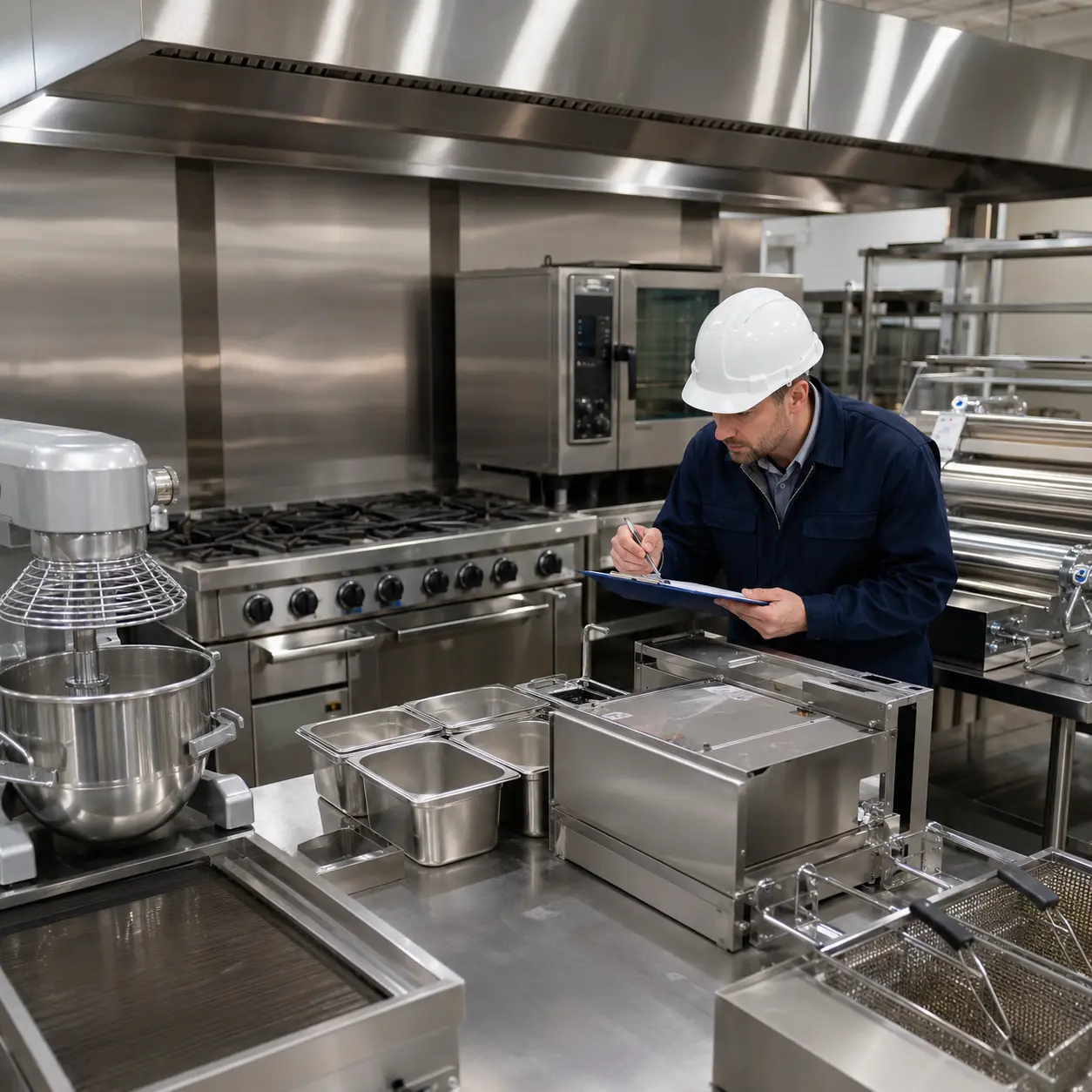
Commercial kitchen equipment for foodservice buyers
Questions to Ask Before Requesting a Quotation
- What exact menu task and production volume will this equipment support?
- What is the stated capacity basis, and can the supplier provide the test conditions or operating assumptions?
- Which voltage, phase, frequency, gas, water, drainage, ventilation, and clearance requirements apply?
- Which accessories, controls, racks, trays, fittings, and documentation are included?
- Which destination-market documents or certifications are available for the exact model?
- Who is responsible for installation, commissioning, inspection, and utility connection?
- What are the warranty process, parts lead times, service contacts, and recommended spare-parts list?
- What are the freight terms and the likely costs beyond the quoted equipment price?
Buyers can compare commercial kitchen equipment during early evaluation, save equipment for later review, or review selected equipment before contacting the supplier. For a project-specific assessment, request a commercial kitchen equipment quote with the menu, destination market, utility details, required documents, and delivery expectations included.
Frequently Asked Questions
Can a supplier prove the stated specification?
Ask for a model-specific datasheet, manual, drawing, test basis, and configuration list. Capacity claims should identify the measurement method and operating assumptions. If the supplier cannot provide supporting documentation, treat the figure as unverified.
Which compliance documents apply to my market?
That depends on the equipment and destination. Confirm the applicable food equipment, electrical, gas, sanitation, labeling, import, and installation requirements with the relevant authority or qualified local professional. Verify the current standard or certification basis rather than relying on a generic mark or outdated document.
What should be included in the quotation?
The quote should identify the exact equipment, configuration, accessories, utilities, packaging, freight assumptions, installation and commissioning responsibilities, warranty, spare-parts support, lead time, and exclusions. A price without scope is difficult to compare accurately.
How should I evaluate warranty and parts support?
Ask who receives service requests, how claims are documented, which parts are stocked or recommended, expected response times, and whether troubleshooting support is available remotely. Confirm these terms in writing before ordering.
Practical Buyer Action
Prepare one inquiry packet for each equipment group. Include the menu application, target output, operating schedule, destination country, utility conditions, available space, required certifications or documents, delivery location, installation plan, and expected after-sales support. Then ask suppliers to respond against the same checklist. This creates a comparable record and makes unresolved risks visible before a deposit, production release, or shipment.
For supplier background, buyers can review the Guangzhou Yifeng Metal manufacturing background. GZYF Metal identifies itself as Guangzhou Yifeng Metal Technology Co., Ltd., located in Baiyun District, Guangzhou, Guangdong, China, and describes capabilities including product development, design, sheet-metal processing, laser cutting, bending, laser welding, and equipment manufacturing. Those are manufacturer-published capability statements; buyers should still request model-specific evidence and project terms for the equipment under consideration.
References
- NSF Food Equipment Standards – official standards portfolio for verifying applicable food equipment standards and current editions.
- GZYF Metal commercial kitchen equipment – manufacturer product categories and company information.