 (+035) 527-1710-70
 NEWSLETTER


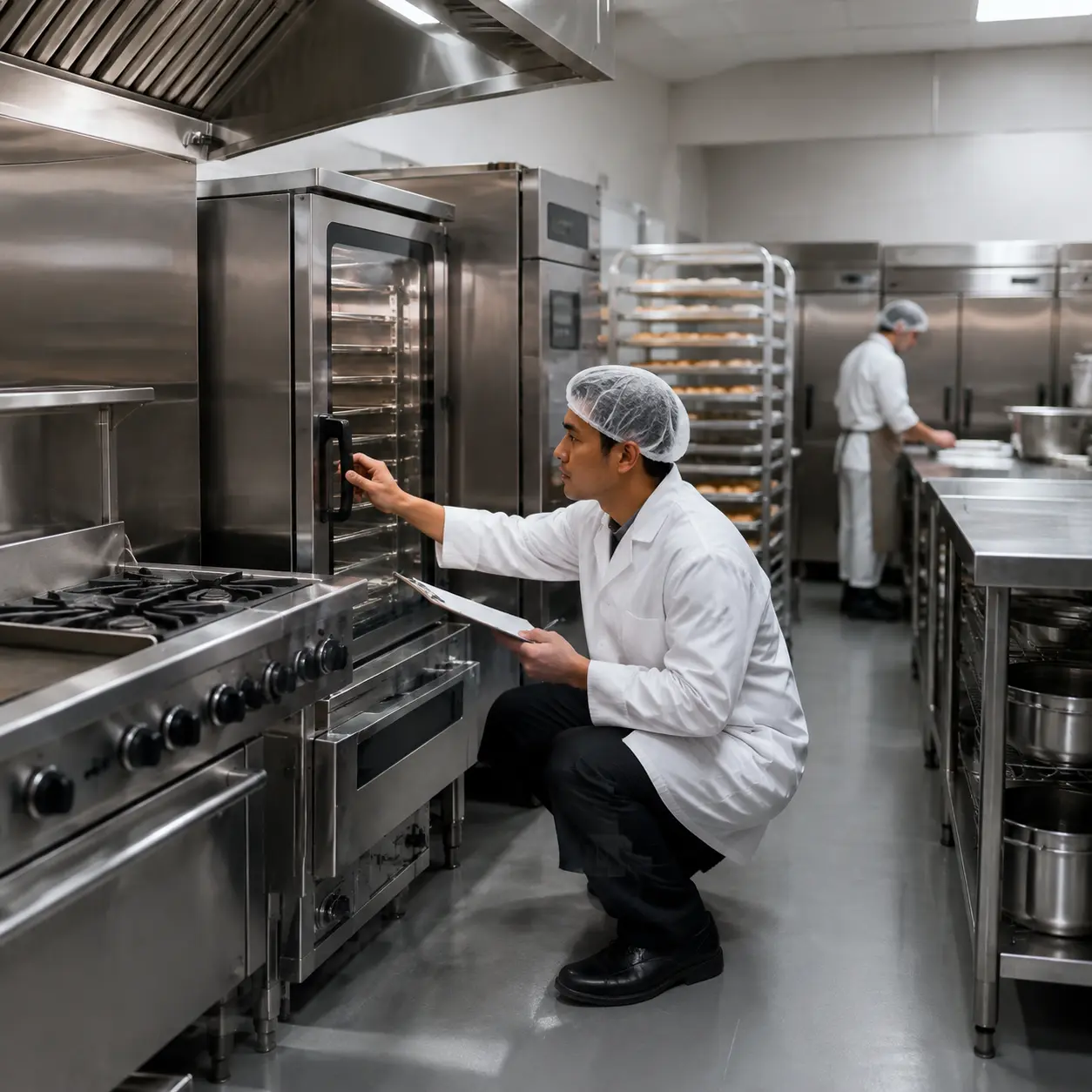
Commercial kitchen equipment is the powered, fabricated, or specialized equipment used to prepare, cook, hold, refrigerate, display, and support food production in restaurants, bakeries, snack shops, hotels, institutional kitchens, and other foodservice operations. Unlike residential appliances, commercial equipment is selected around menu requirements, production throughput, working space, utility conditions, sanitation expectations, service access, and the purchasing requirements of the destination market.
For an importer or distributor, the term includes more than a list of machines. It describes a coordinated operating system. A fryer, oven, freezer, worktable, refrigerator, mixer, display case, and sink must fit the menu and the layout, while their electrical, gas, drainage, ventilation, packaging, documentation, and spare-parts requirements must fit the market where the equipment will be installed.
Commercial kitchen equipment for foodservice buyers
Definition and Boundaries
What commercial kitchen equipment includes
Commercial kitchen equipment generally includes:
- Preparation equipment: mixers, slicers, food processors, dough equipment, worktables, and prep stations.
- Cooking equipment: ovens, fryers, griddles, ranges, grills, steamers, and specialized cooking machines.
- Refrigeration equipment: upright refrigerators, freezers, undercounter units, prep counters, and refrigerated display equipment.
- Holding and service equipment: hot holding cabinets, warming equipment, display units, counters, and serving stations.
- Cleaning and support equipment: sinks, shelving, dishwashing equipment, ventilation components, and selected smallwares or accessories.
Commercial equipment is not limited to large appliances. Stainless-steel fabrication, equipment stands, storage accessories, and purpose-built counters may also be part of a working kitchen package. The exact scope depends on the operation and the supplier’s product range.
What it is not
Commercial kitchen equipment is not the same as residential kitchen equipment, even when the product appears similar. Residential appliances are typically designed for lower and less continuous usage, different installation conditions, and household purchasing expectations. A commercial buyer should not infer suitability from appearance alone.
The term also does not automatically include every item required to open a foodservice business. Construction work, extraction ducting, fire-suppression systems, gas installation, electrical distribution, plumbing, architectural fixtures, ingredients, packaging, and point-of-sale systems may be separate scopes. A quotation should state what is included, excluded, supplied loose, or expected to be installed by others.
How the Equipment Works
Commercial kitchen equipment converts utilities or manual labor into repeatable food production steps. The operating principle differs by equipment type:
- Heating equipment transfers energy to food through convection, conduction, radiation, hot oil, steam, or a combination of methods. An oven circulates or applies heat in an enclosed chamber; a griddle transfers heat through a heated surface; a fryer transfers heat through oil.
- Refrigeration equipment removes heat from an insulated cabinet and releases it through a refrigeration system. Its useful performance depends on the cabinet design, refrigerant system, ambient conditions, loading pattern, door opening frequency, and correct installation.
- Mechanical preparation equipment uses a motor, transmission, blade, bowl, roller, or other working tool to mix, slice, grind, shape, or portion food.
- Holding equipment maintains prepared food within the operating range specified by the equipment design and the local food-safety process. Holding is not a substitute for correct cooking, cooling, storage, or monitoring procedures.
- Fabricated equipment supports workflow without necessarily using a motor or heating system. Tables, sinks, shelves, counters, and stands organize ingredients, utensils, cleaning tasks, and equipment placement.
For sourcing purposes, the operating principle matters because it determines utility demand, control requirements, cleaning procedures, wear parts, ventilation needs, and the type of operator training required. A supplier should explain how the unit is intended to operate, not only provide exterior dimensions and a product photograph.
Main Types of Commercial Kitchen Equipment
Baking equipment
Baking equipment supports dough mixing, proofing, shaping, baking, cooling, and display. Relevant purchasing questions include the product being made, batch size, tray or pan format, heating method, control system, loading clearance, and cleaning access. A bakery may need a coordinated group of machines rather than a single oven.
Hamburger shop equipment
Hamburger shop equipment typically supports rapid preparation and cooking of burgers, buns, fries, and related menu items. The equipment mix may include griddles, fryers, refrigerated prep counters, freezers, warming units, and stainless-steel workstations. Throughput should be evaluated across the full service period, including preparation and recovery time, rather than from a headline output claim alone.
Refrigeration equipment
Refrigeration equipment protects ingredients and supports organized production. Buyers should compare cabinet volume, usable storage arrangement, temperature control, door configuration, shelf layout, insulation, compressor and condenser access, power requirements, and ambient operating conditions. Shipping volume and installation clearance are also important for importers and distributors.
Snack equipment
Snack equipment is designed around focused menu processes such as frying, heating, baking, grilling, dispensing, or displaying prepared products. Because snack concepts often depend on speed and consistency, the buyer should confirm loading method, cycle time, recovery behavior, cleaning access, operator controls, and replacement-part availability.
Other kitchen equipment and accessories
This group can include preparation machines, counters, sinks, storage, stands, serving equipment, and accessories that complete a workstation. Accessories are easy to overlook in a quotation, but missing baskets, trays, shelves, lids, connectors, casters, or electrical components can delay installation or prevent the equipment from being used as intended.
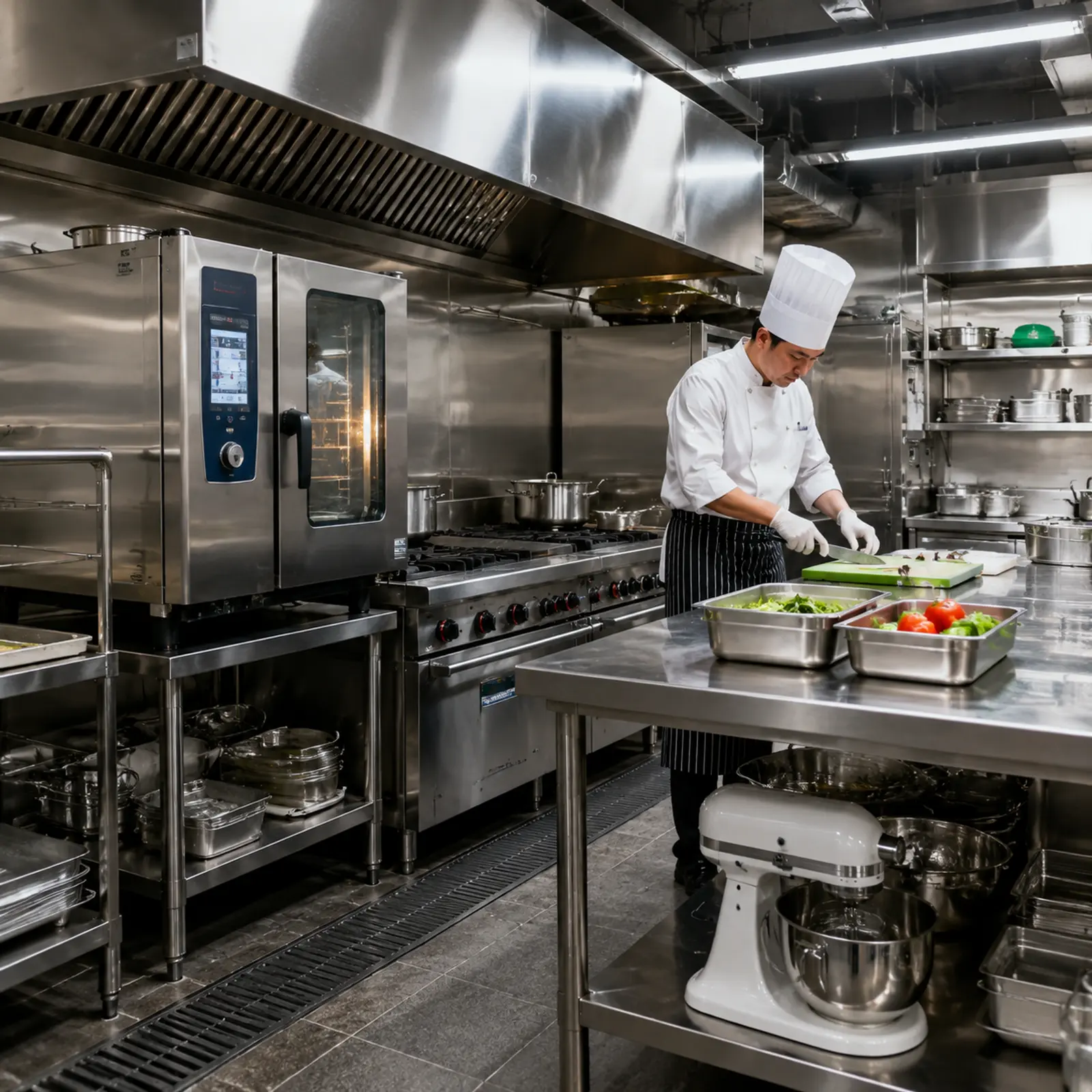
Commercial kitchen equipment for foodservice buyers
Applications in Foodservice
The right equipment depends on the production model:
- Restaurants: combine preparation, cooking, refrigeration, holding, warewashing, and service equipment within a constrained back-of-house layout.
- Bakeries: prioritize dough handling, repeatable baking, tray compatibility, proofing, cooling, and product presentation.
- Hotels and institutional kitchens: often require broader menus, scheduled production, storage planning, and coordination between multiple service areas.
- Quick-service and snack operations: emphasize short service cycles, compact footprints, simple controls, rapid cleaning, and predictable replenishment.
- Import and distribution programs: require standardized specifications, destination-market utility compatibility, packaging information, documentation, warranty terms, and parts support that can be communicated to downstream customers.
A menu-first assessment should identify the product, portion, batch size, peak demand, operating hours, available space, staff workflow, and required holding or storage steps. Equipment should then be matched to those conditions. Buying by category alone can produce a technically complete but operationally unsuitable kitchen.
Key Specification Vocabulary
These terms appear frequently in product sheets and quotations:
- Capacity: the amount the equipment can hold, process, or produce under stated conditions. Ask whether the figure refers to gross volume, usable volume, batch size, load weight, or a theoretical maximum.
- Throughput: output over a defined period. Confirm the test conditions, product type, cycle time, operator assumptions, and recovery time.
- Footprint: the external width, depth, and height. Request service clearances, door-swing requirements, loading space, and ventilation space separately.
- Utility requirement: electrical phase, voltage, frequency, amperage, plug type, gas type and pressure, water connection, drainage, or other required services. These must match the destination market.
- Temperature range: the stated operating or control range. Ask how it was measured and whether ambient conditions affect the result.
- Material specification: the grade, thickness, finish, and location of stainless steel or other materials. “Stainless steel” alone may not describe every surface or component.
- Control and safety features: thermostats, timers, sensors, interlocks, overload protection, emergency stops, alarms, and access guards. Confirm which features are standard and which are optional.
- Certification and conformity documents: evidence relevant to the destination market and equipment category. Ask for current documents, issuing body, model coverage, and scope. NSF publishes food-equipment standards and related information, but a buyer should verify the applicable requirement and current documentation for the specific model.
- Incoterm and landed cost: the commercial term, export packing, freight basis, insurance, duties, destination charges, installation, commissioning, and local service responsibilities.
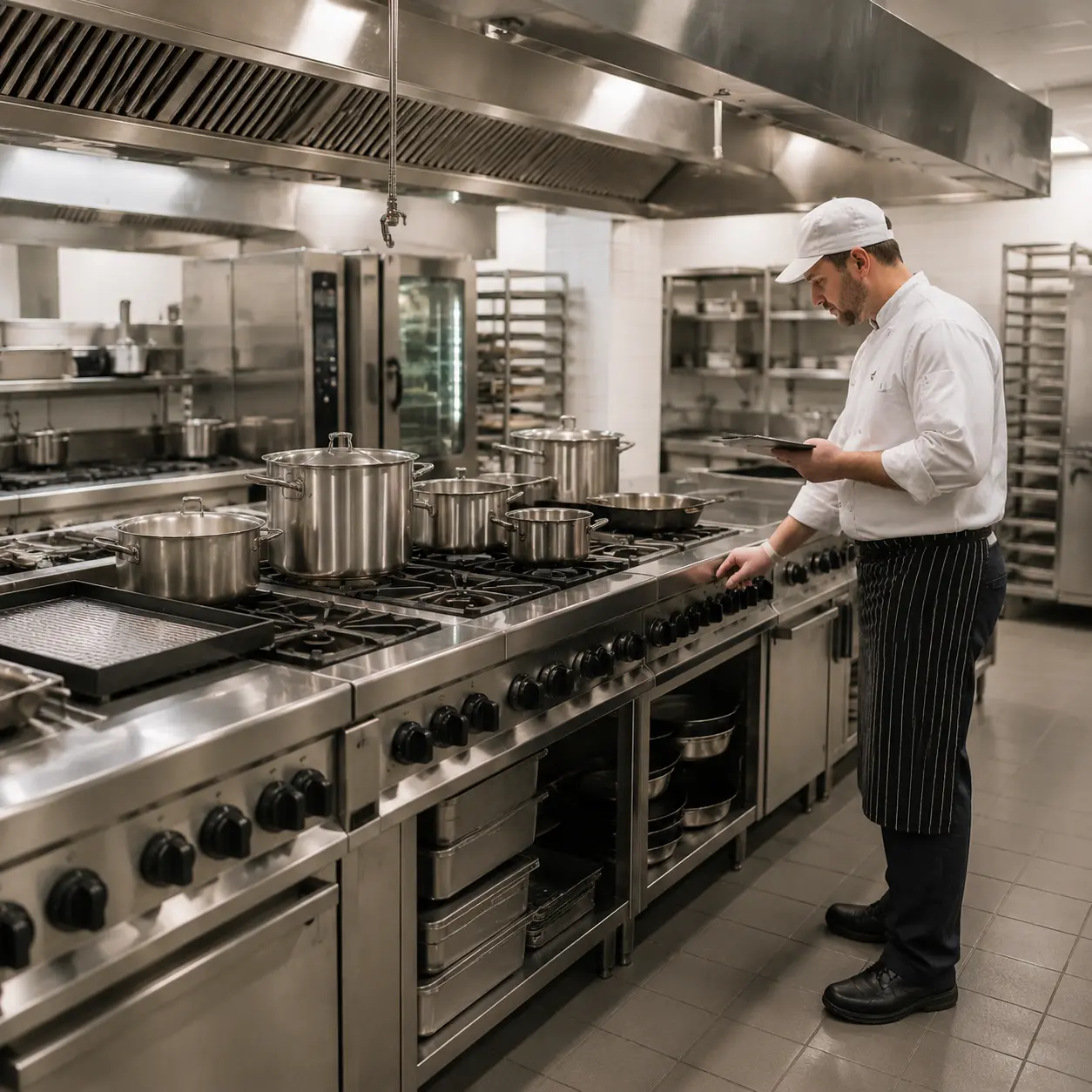
Commercial kitchen equipment for foodservice buyersBefore requesting a quote, prepare a specification brief covering menu, quantity, target market, utilities, delivery location, packaging needs, required documents, warranty expectations, spare parts, and installation scope. A manufacturer such as GZYF Metal commercial kitchen equipment can then evaluate the request across its baking, hamburger shop, refrigeration, snack, other kitchen equipment, and accessory categories. The company website describes product development, manufacturing, sheet-metal processing, laser cutting, bending, laser welding, and OEM/ODM support; buyers should confirm the exact scope for each requested model.
Use compare commercial kitchen equipment to review shortlisted items, then request a commercial kitchen equipment quote with model-specific questions. Ask the supplier to itemize equipment, accessories, utilities, documents, packing, freight, installation, warranty, and spare-parts support so the quotation can be evaluated on total suitability rather than unit price alone.
How to Choose Commercial Kitchen Equipment for a Real Operation
The right commercial kitchen equipment is determined by the menu, production volume, available utilities, workflow, destination-market requirements, and service plan. A piece of equipment can appear suitable in a catalog yet be impractical if it does not fit the kitchen layout, electrical supply, ventilation system, cleaning process, or expected duty cycle.
Start with the operating requirement
Translate the menu into repeatable tasks before comparing models. Identify what must be prepared, how often it must be produced, how many staff members will use the equipment, and whether the process is batch-based or continuous. A bakery, hamburger shop, snack counter, hotel kitchen, and central production kitchen may all need heating, refrigeration, preparation, and holding equipment, but their priorities are different.
For a new store opening, the first question is whether the proposed equipment supports the complete workflow from receiving and storage through preparation, cooking, holding, service, and cleaning. For a replacement project, compare the proposed unit with the failure points of the existing one. For menu expansion, confirm whether the equipment adds capacity or simply moves the bottleneck to another station. Distributors and private-label buyers should also evaluate repeatability, documentation, packaging, and the ability to maintain a consistent product specification across orders.
Specifications that should appear in a quotation
A useful quotation should identify the exact equipment being offered rather than only a product category. Ask the supplier to state the model or reference number, overall dimensions, usable capacity where relevant, materials and finish, power requirements, heating or cooling method, controls, included accessories, and installation assumptions. The quotation should also identify what is excluded.
For equipment that connects to utilities, request the required voltage, phase, frequency, power or fuel input, water connection, drainage, ventilation, and clearance requirements. Do not infer compatibility from a product photograph. Confirm whether the listed dimensions include handles, casters, controls, doors, protruding fittings, or service clearance.
For refrigeration, ask how the usable storage area is configured, how the doors or drawers are arranged, and which operating conditions the buyer must provide. For cooking and baking equipment, clarify the intended product type, control range, loading method, recovery expectations, and cleaning access. For preparation and snack equipment, confirm the working area, removable parts, operator access, and whether the quoted accessories match the intended menu.
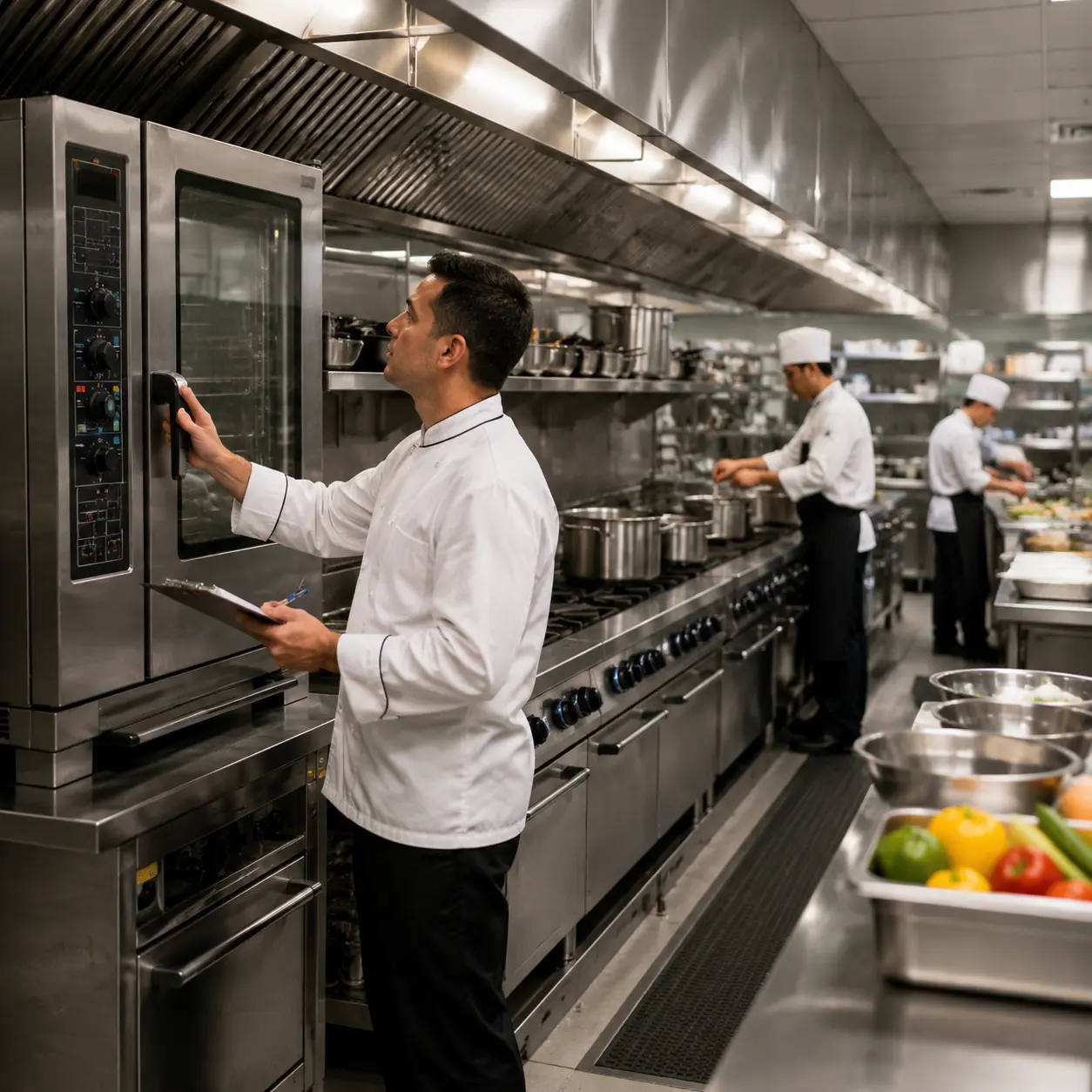
When evidence is important, ask for a current datasheet, dimensional drawing, wiring or utility diagram, user manual, maintenance instructions, material information for food-contact areas, and photographs of the actual configuration. A supplier should be able to distinguish a standard specification from an optional feature and a confirmed value from an estimate.
Commercial kitchen equipment for foodservice buyers
What documents and marks apply?
Compliance depends on the destination market, equipment type, installation environment, and applicable authority. A buyer should not assume that a general statement such as “commercial grade” proves compliance with a particular requirement. Ask which documents are available for the exact model and configuration, who issued them, what market they cover, and whether they remain valid after private-label changes or electrical modifications.
The NSF Food Equipment Standards portfolio is a useful starting point for identifying food-equipment standards that may be relevant. It does not replace a project-specific review. The importer, distributor, consultant, or local authority should confirm which sanitation, electrical, gas, fire, building, labeling, and environmental requirements apply before purchase.
Request copies or references for applicable declarations, test reports, certificates, listing information, labels, and installation instructions before approving production. Verify that the documents match the equipment model, voltage, accessories, and destination market. If a required document is unavailable, treat that as an open procurement issue rather than assuming it can be supplied later.
What should be included in the quote?
Ask the supplier to separate the commercial offer into equipment, options, accessories, packaging, documentation, delivery terms, and services. Confirm whether the price includes standard shelves, trays, baskets, racks, casters, filters, hoses, drains, controls, or other operating parts. Establish whether installation, commissioning, training, local inspection, and spare parts are included or arranged separately.
The quote should also define the order quantity, production lead time, inspection point, shipping information, payment milestones, and process for approving drawings or samples. For OEM or ODM work, document the approved logo, label, finish, control layout, packaging, manuals, and ownership or permitted use of custom files. The company context identifies Guangzhou Yifeng Metal Technology Co., Ltd. as a commercial kitchen equipment manufacturer and exporter offering R&D, design, sheet-metal processing, laser cutting, bending, laser welding, equipment manufacturing, and OEM/ODM support. Those capabilities should still be matched to the specific scope, drawings, samples, and quality records required for the project.
Plan parts, warranty, and service before shipment
Warranty language is only useful when it explains the remedy and the process. Ask what defects are covered, when coverage begins, which parts are excluded, who pays freight, how a fault is diagnosed, and how replacement parts are identified. Request a recommended spare-parts list for consumables, wear items, controls, seals, heaters, refrigeration components, or other serviceable parts applicable to the equipment.
Confirm whether parts will be available individually or only as assemblies. Ask how long technical records, exploded views, wiring diagrams, and parts references will remain available. For distributors, agree on how service questions will be escalated and whether manuals can be supplied in the required language. These details matter especially when the buyer is replacing unreliable equipment or supporting multiple customer sites.
A practical decision test
Before approval, score each proposed unit against five questions:
- Does it perform the required menu task at the expected operating frequency?
- Does it fit the planned layout, access route, utilities, ventilation, and cleaning process?
- Can the supplier prove the important specifications with model-specific documents?
- Are the applicable market requirements and installation responsibilities understood?
- Are the quotation, parts, warranty, and support arrangements specific enough to operate after delivery?
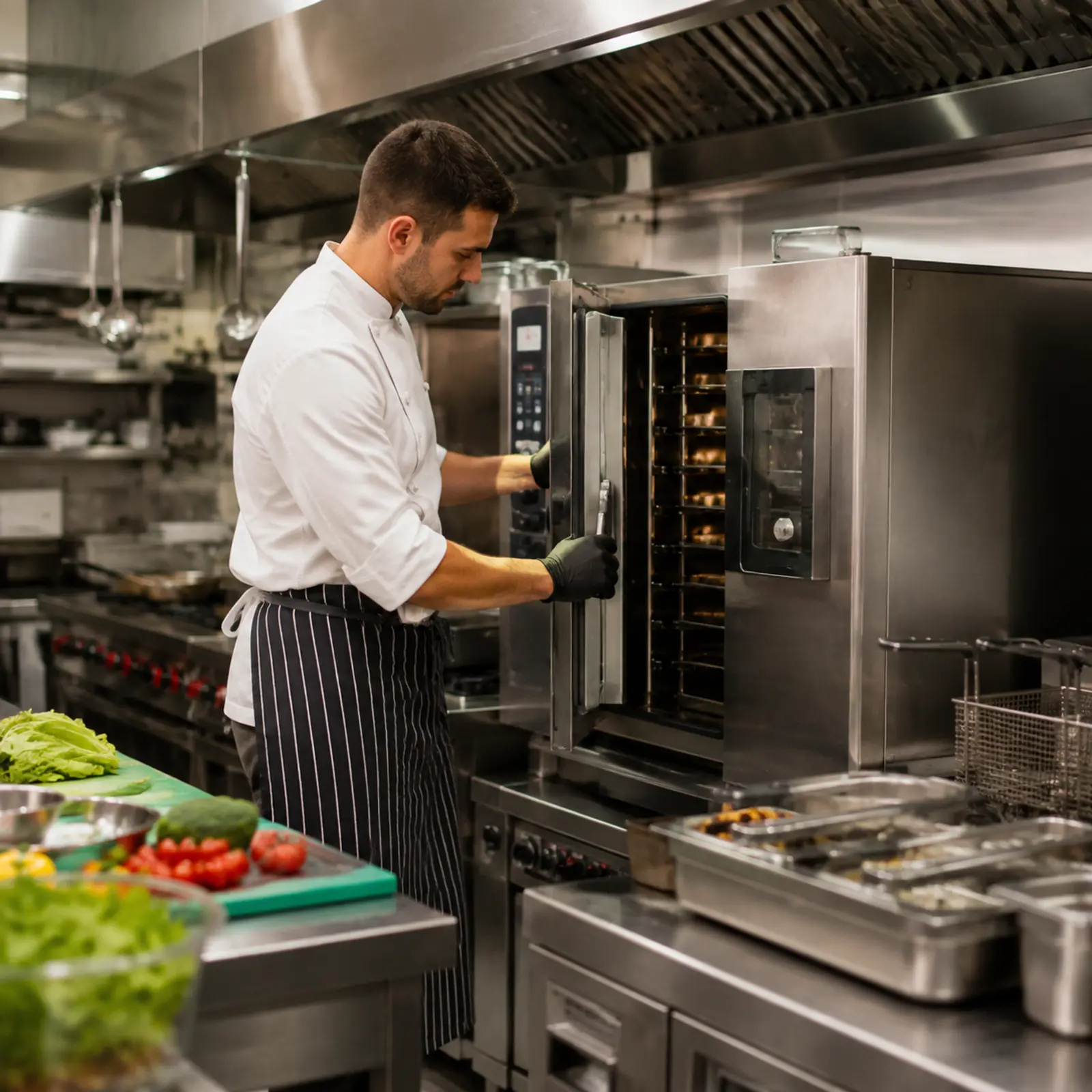
A lower purchase price does not resolve an uncertain utility requirement, missing compliance document, difficult cleaning process, or unavailable replacement part. The best comparison is based on the complete operating and ownership requirement.
Commercial kitchen equipment for foodservice buyers
Frequently asked questions
Can a supplier prove the specification?
Ask for a model-specific datasheet, drawing, utility schedule, manual, photographs, sample, or inspection record appropriate to the claim. Separate confirmed values from targets and optional configurations.
Which documents apply in my market?
Confirm requirements with the destination-market authority, importer, consultant, or qualified inspection body. Review sanitation, electrical, gas, fire, building, labeling, and environmental obligations as applicable.
What is usually missing from a quote?
Common gaps include accessories, service clearances, utility connections, installation, commissioning, manuals, spare parts, packaging details, and responsibility for local inspection. Ask the supplier to list inclusions and exclusions line by line.
How should parts and warranty support work?
Obtain written coverage terms, a parts list, identification method, response process, freight responsibility, and escalation contact before placing the order. Keep the approved model and configuration records with the purchase file.
Buyer action: prepare a complete inquiry
Send the supplier your menu or application, target quantity, site dimensions, utility details, destination market, required documents, branding needs, delivery location, and service expectations. Use the commercial kitchen equipment products page to identify relevant categories, compare commercial kitchen equipment where product information permits, and review the GZYF Metal equipment portfolio for sourcing context. Then request a commercial kitchen equipment quote with the specification and documentation questions attached. A complete inquiry gives the supplier a clear basis for a comparable quotation and gives the buyer a record against which the final equipment can be checked.