 (+035) 527-1710-70
 NEWSLETTER


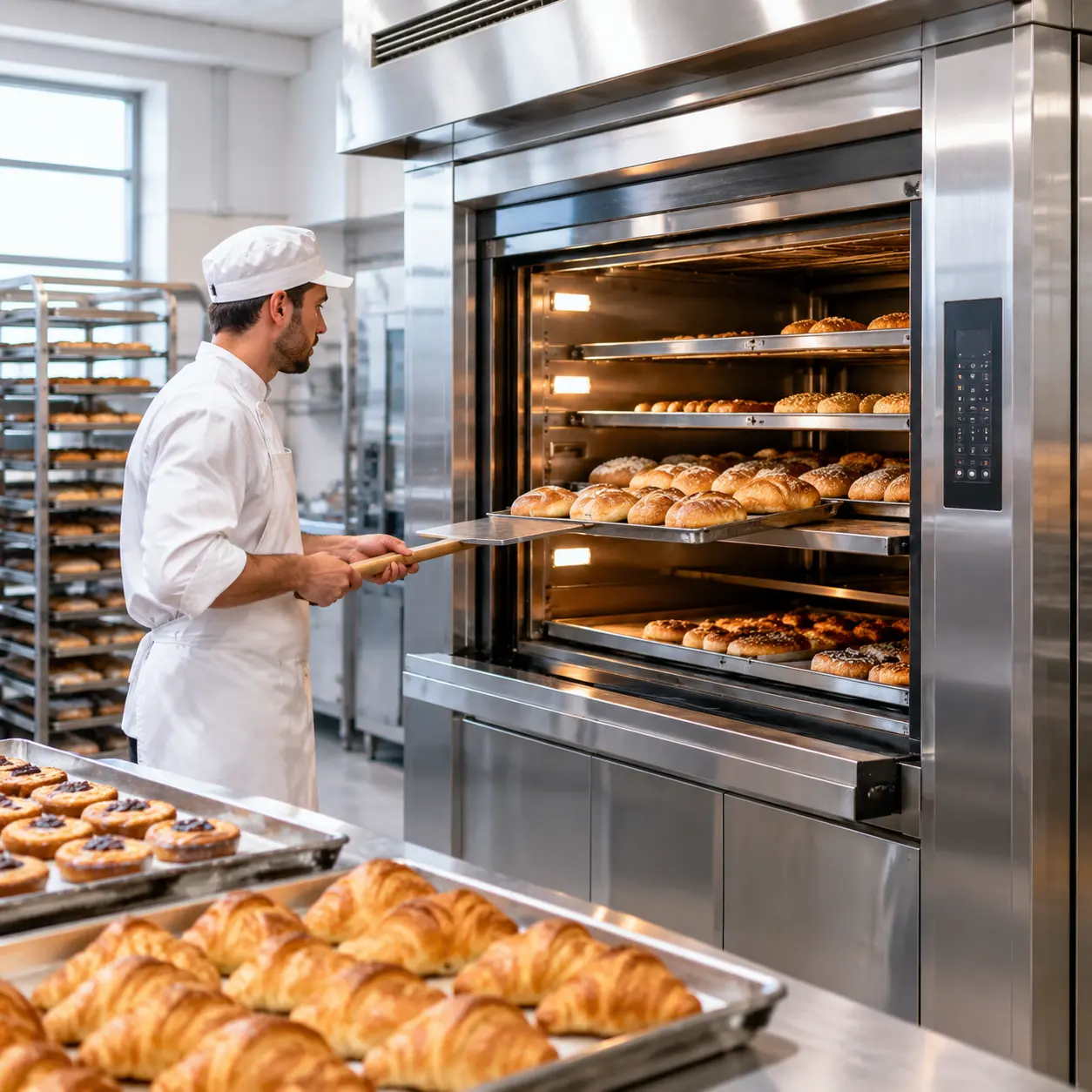
Commercial bakery oven capacity is not simply the number of trays, decks, or loaves listed on a supplier sheet. For an importer or distributor, the useful measure is how much saleable product an oven can produce during the required period under realistic operating conditions. Product mix, batch time, loading practices, heat recovery, utilities, labor, and cleaning all affect that result.
This guide provides a practical sequence for translating buyer demand into an oven specification and a complete quotation. It can be used alongside How to Choose a Commercial Baking Oven when comparing individual oven types.
Buyer Inputs to Collect Before Requesting a Quote
Prepare the following information before contacting a manufacturer:
- Products to be baked, including dimensions, piece weight, and whether steam is required.
- Target output per hour, shift, and peak service period.
- Batch size, baking time, loading time, unloading time, and expected changeovers.
- Pan or tray dimensions, orientation, spacing, and quantity per batch.
- Available voltage, phase, frequency, electrical load, or gas type and pressure.
- Maximum equipment and access dimensions, including doors, corridors, and elevators.
- Destination country and required safety, sanitation, labeling, and documentation package.
- Ventilation, water, drainage, floor-loading, and installation constraints.
- Budget range, delivery destination, warranty expectations, and service model.
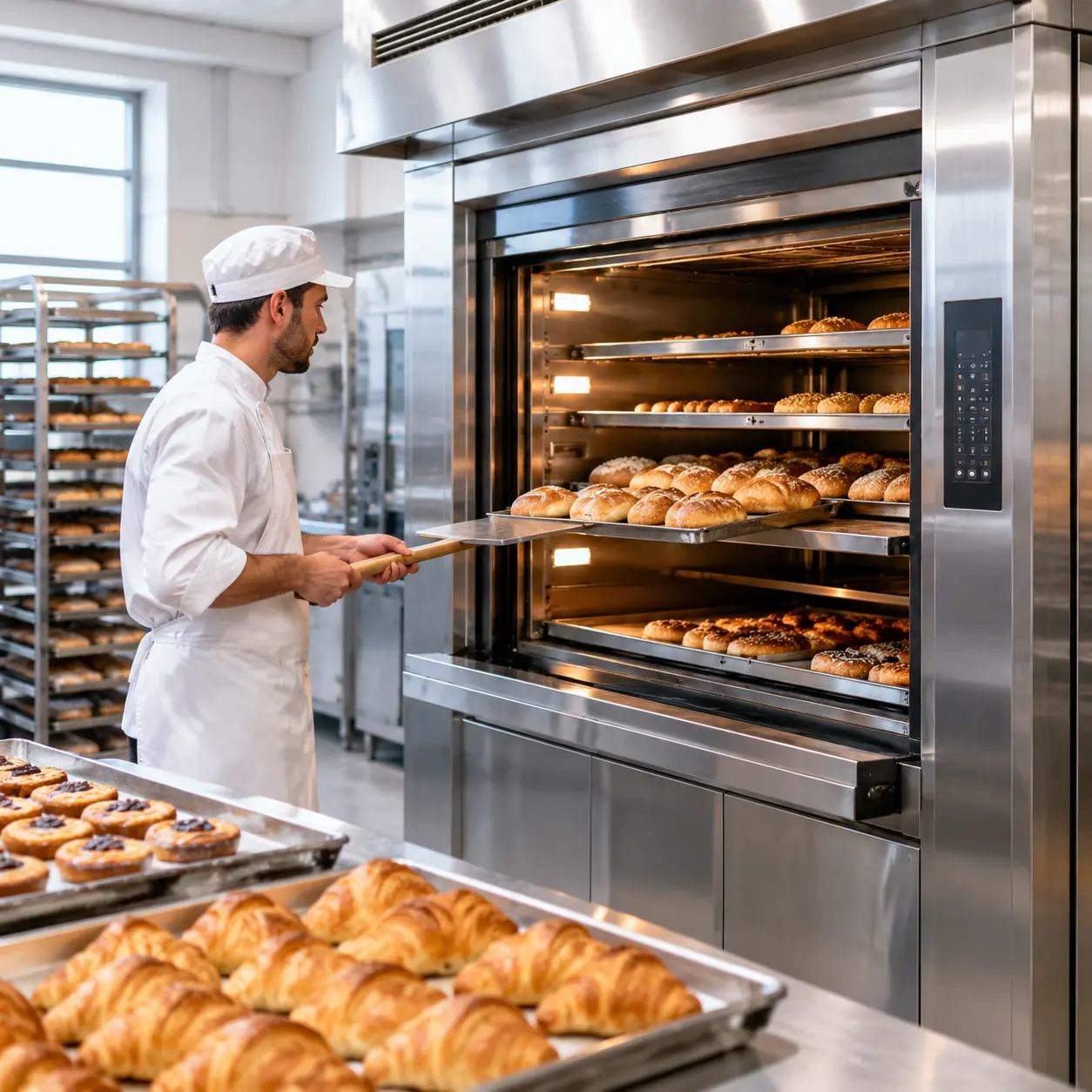
Commercial kitchen equipment for foodservice buyers
Numbered Selection Steps
1. Define the Menu and Baking Process
Start with products rather than oven labels. Bread, pastries, cakes, pizza, cookies, and laminated dough can require different heat transfer, humidity, airflow, temperature, and loading methods. Identify whether each item needs convection, deck heat, steam injection, independent chambers, or continuous conveyor cooking. Review the GZYF Metal equipment portfolio to organize the inquiry by product category, but request model-specific evidence before making a selection.
2. Convert Sales Demand into Required Throughput
Calculate peak demand rather than relying only on daily averages. A basic batch estimate is:
Required batches per hour = peak units per hour ÷ saleable units per batch.
Then calculate practical output:
Practical hourly output = saleable units per batch × completed batches per hour × utilization allowance.
The utilization allowance should account for loading, unloading, heat recovery, changeovers, rejects, and cleaning. Ask the supplier to show the assumptions behind every capacity claim.
3. Verify Pan-Based Capacity
A statement such as “four trays” is incomplete without tray dimensions, shelf spacing, usable chamber dimensions, and loading orientation. Confirm how many pieces fit on each pan without blocking convection airflow or causing uneven baking. If the buyer uses existing pans, send drawings or samples. Request a loaded-chamber test with the intended product where project volume justifies testing.
4. Match the Oven Type to the Production Pattern
Convection ovens suit many batch applications where circulating heat and compact capacity are priorities. Deck ovens provide separate baking surfaces and may support products that depend on strong bottom heat. Rack ovens can serve higher-volume batch production, while conveyor ovens support repeatable continuous flow. The appropriate configuration depends on menu, peak output, labor, footprint, and product change frequency—not tray count alone.
5. Confirm Voltage, Frequency, Fuel, and Connected Load
Provide destination-market utilities in writing. For electric ovens, verify voltage, phase, frequency, rated input, plug or hardwire arrangement, breaker guidance, and cable requirements. For gas equipment, verify fuel type, inlet pressure, connection size, ignition arrangement, and any conversion limitations. Do not assume a model can be changed between regional electrical or gas systems after production.
6. Check Dimensions, Access, and Installation Requirements
Compare external dimensions with the delivery route and final kitchen layout. Request net weight, packed dimensions, shipping weight, service clearances, door swing, ventilation needs, and utility connection locations. Determine whether the quotation includes stands, trays, steam connections, exhaust components, installation, commissioning, or training. These items can materially change landed and installed cost.
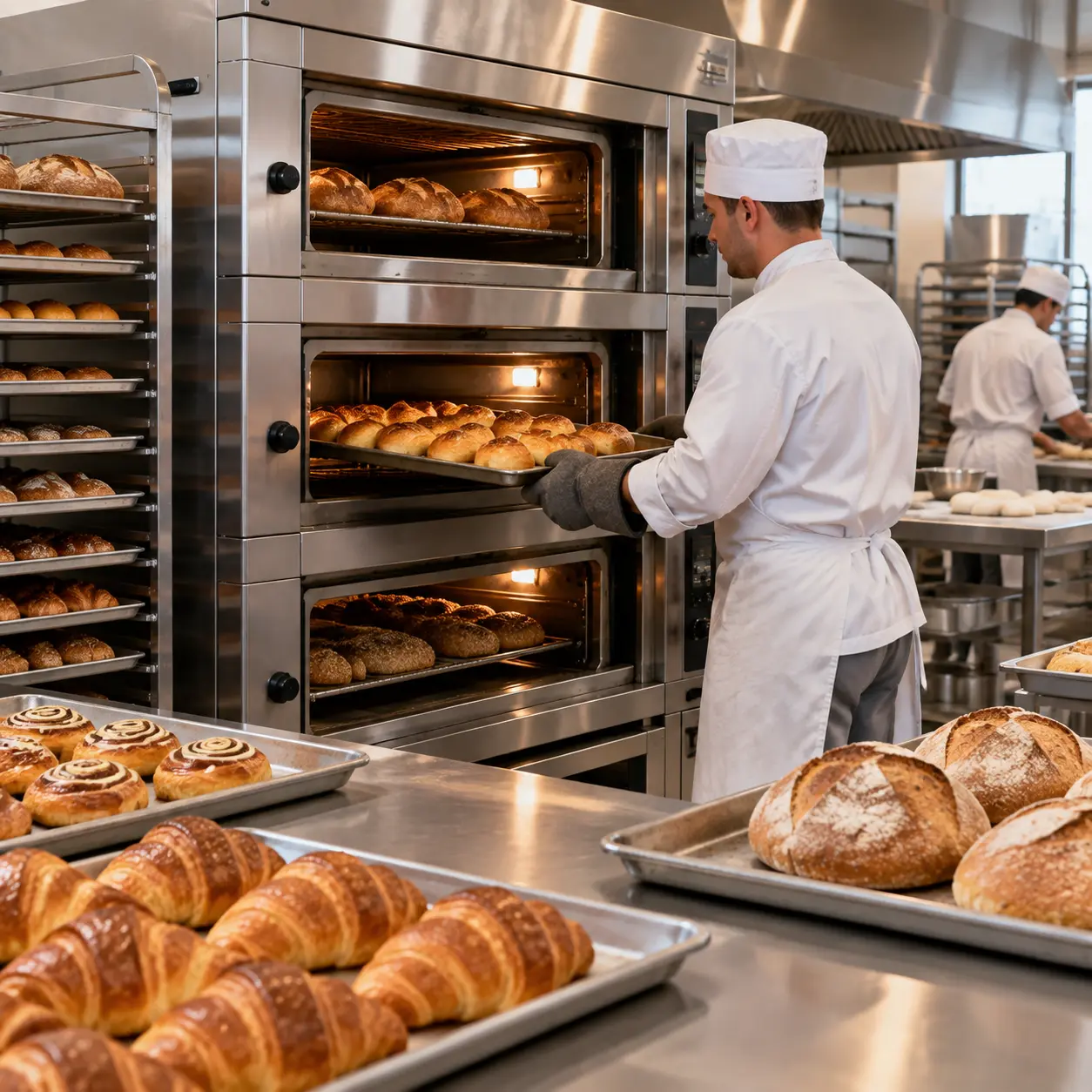
Commercial kitchen equipment for foodservice buyers
7. Review Controls and Repeatability
Specify whether the operation needs manual thermostats, timers, programmable recipes, independent deck controls, fan control, steam timing, temperature displays, or fault codes. More control features can improve process consistency, but they also affect training and spare-parts planning. Ask which settings remain stored after a power interruption and whether control labels or manuals can be localized.
8. Verify Food-Contact Materials and Cleanability
Request a material declaration identifying food-contact surfaces, chamber materials, trays, racks, seals, and insulation boundaries. Review removable parts, internal seams, drainage points, access behind fan guards, and cleaning instructions. NSF publishes food equipment standards information; buyers should identify which sanitation requirements apply in the destination market and separately verify whether a quoted model has the required evaluation or listing.
9. Match Safety Documentation to the Destination Market
Ask for model-specific certificates, reports, declarations, rating-label artwork, wiring diagrams, component lists, and user manuals. Verify the issuing organization, model numbers, report scope, validity, and regional acceptance. A general company certificate or website statement does not establish that a particular oven is approved for a particular market. Guangzhou Yifeng Metal describes BSCI and other certificates on its website, but buyers should verify their scope before using those claims in procurement or marketing.
10. Evaluate Spare Parts and Serviceability
Request a recommended spare-parts list for the expected service period, including part numbers, prices, lead times, and replacement instructions. Confirm access to heating elements, thermostats, fans, motors, door seals, igniters, control boards, and glass. Ask whether diagnostics can be performed remotely and whether local technicians can service the equipment using supplied diagrams. The Guangzhou Yifeng Metal manufacturing background describes design, sheet-metal processing, laser cutting, bending, laser welding, and equipment manufacturing capabilities; project-specific service arrangements still need written confirmation.
11. Request a Complete Commercial Quotation
The RFQ should identify the exact model, configuration, quantity, unit price, accessories, packaging, trade term, loading port, production lead time, payment terms, warranty, documentation, and quotation validity. It should also separate optional trays, racks, stands, steam systems, plugs, spare parts, installation, and commissioning. Buyers can request a commercial kitchen equipment quote after compiling these inputs, or review selected equipment before they complete an equipment inquiry.
Risk and Verification Table
| Risk | Verification action |
|---|---|
| Capacity stated only as tray count | Confirm pan size, pieces per pan, cycle time, recovery time, and saleable output. |
| Utility mismatch | Approve the rating label and utility schedule before production. |
| Unsupported compliance claim | Check model numbers, report scope, issuer, validity, and destination acceptance. |
| Unexpected landed cost | Request packed data, trade terms, accessories, installation exclusions, and freight basis. |
| Poor field serviceability | Review diagrams, fault codes, component access, spare-parts prices, and lead times. |
| Uneven real-world output | Request a product test protocol using the intended load and operating sequence. |
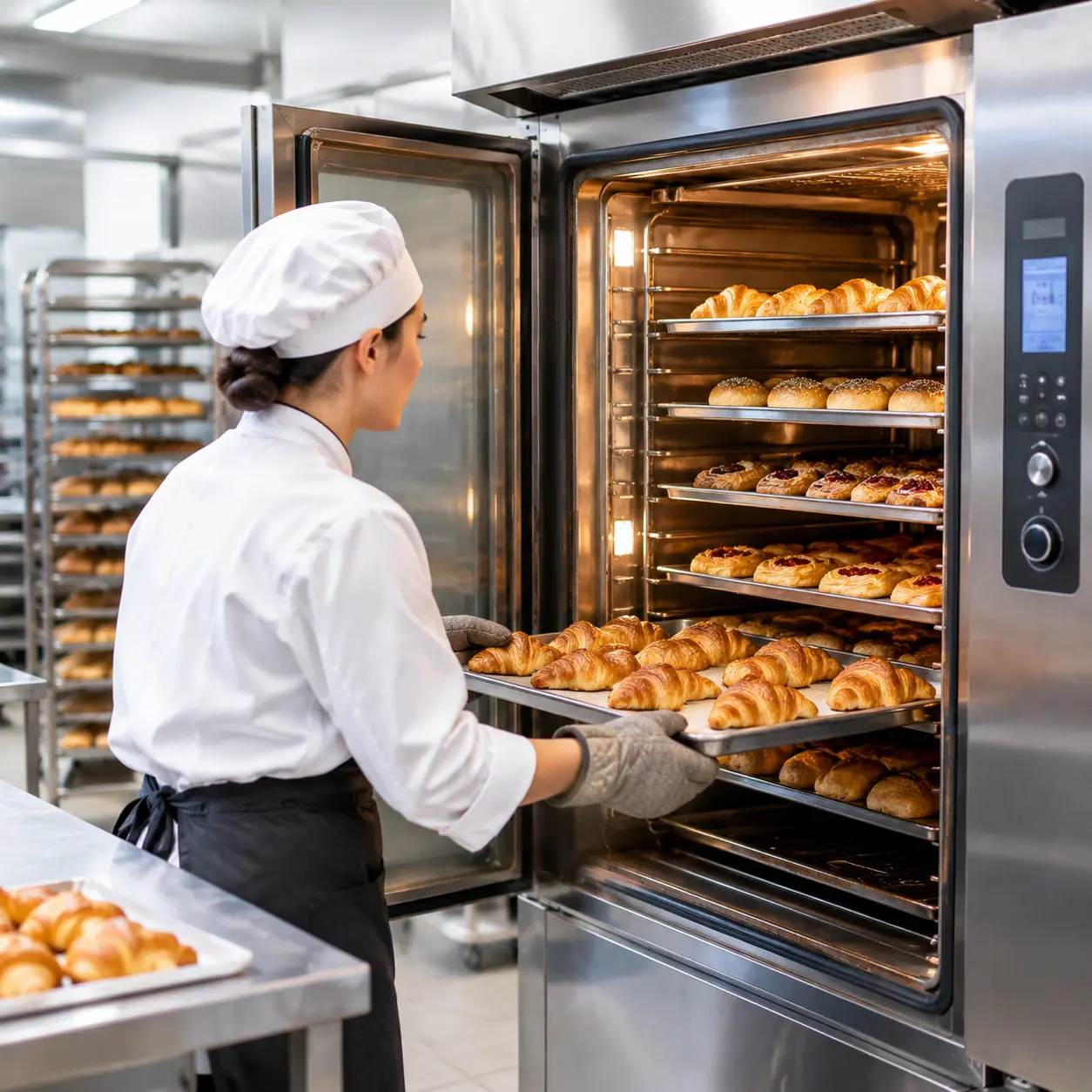
Commercial kitchen equipment for foodservice buyers
Supplier Questions for the Final Comparison
- What exact product, pan size, load, temperature, and cycle time support the stated capacity?
- Is output measured per batch, per hour, or per shift, and does it include recovery time?
- Which voltage, frequency, phase, gas, and control configurations are available?
- What are the usable chamber, external, packed, and access dimensions?
- Which food-contact materials are used, and can you provide a material declaration?
- Which documents apply to the exact quoted model and destination market?
- What accessories and installation items are excluded from the price?
- Which spare parts should be stocked by the importer, and what are their lead times?
- What warranty process applies when no local supplier technician is available?
- Can the quotation include manuals, labels, wiring diagrams, packaging marks, and OEM/ODM requirements?
A defensible capacity decision connects menu demand to verified batch performance, utilities, installation conditions, compliance evidence, and after-sales support. This approach gives importers and distributors a clearer basis for comparing ovens whose headline capacity figures may otherwise appear similar.
Make the Final Commercial Bakery Oven Capacity Decision
The correct commercial bakery oven capacity is the smallest configuration that can reliably meet peak demand without forcing rushed loading, excessive product waiting, or unrealistic labor timing. Published chamber or pan counts are only a starting point. The final decision should be based on usable output with your products, pans, recipes, loading pattern, and recovery requirements.
Before approval, create a one-page capacity schedule showing each product, peak-hour quantity, pieces per pan, bake time, loading and unloading time, required temperature, and compatible batch combinations. If products cannot share a temperature or baking profile, calculate their capacity separately. Buyers needing additional oven-selection context can review How to Choose a Commercial Baking Oven.
- Approve the model when documented pan fit and realistic cycle timing meet the peak production schedule.
- Add chambers or production time when multiple products require conflicting temperatures or must be baked simultaneously.
- Request a product trial when quality depends on airflow, humidity, browning, recovery, or precise repeatability.
- Reject nominal capacity alone as proof. A statement such as “four trays” is incomplete without tray dimensions, usable spacing, product height, and loading orientation.
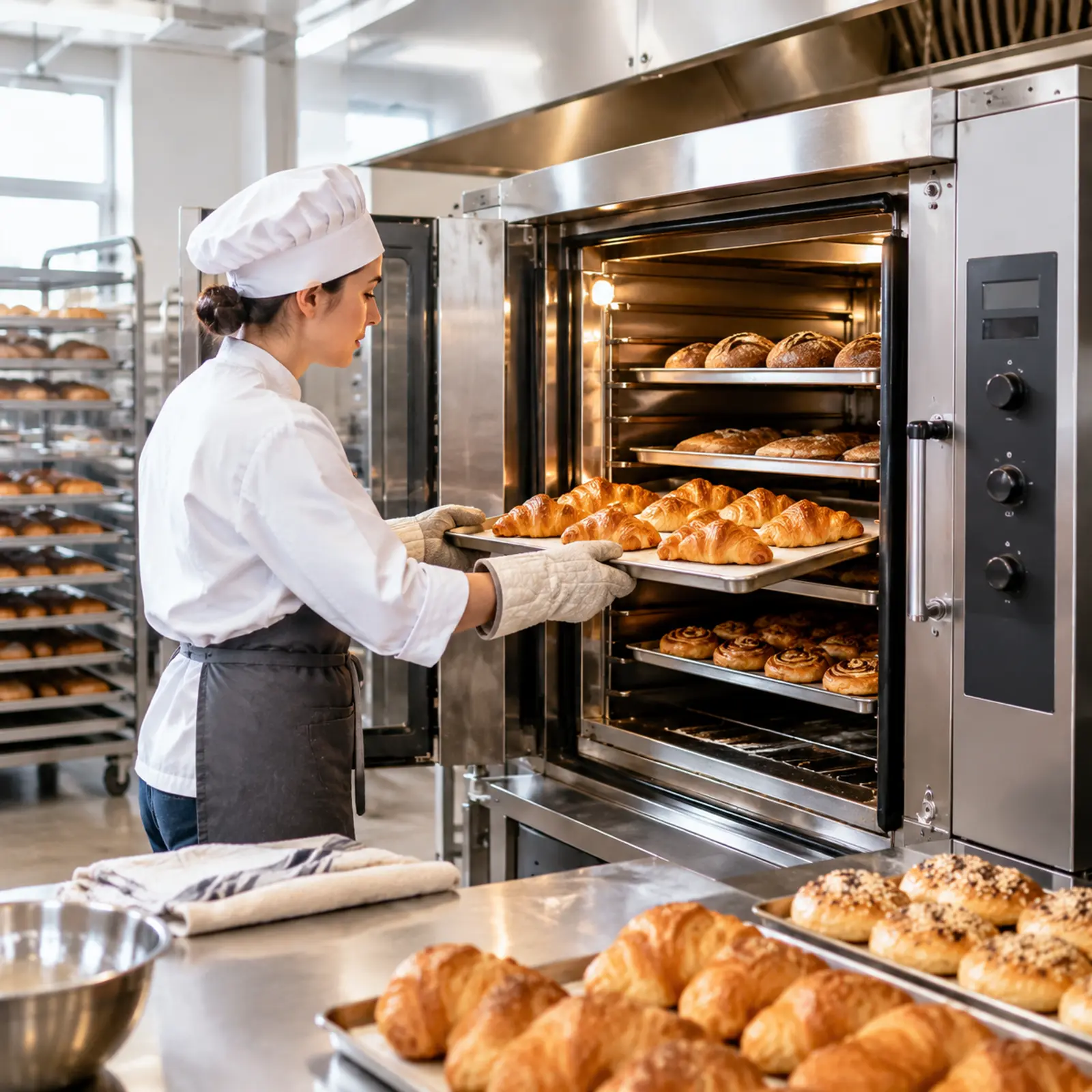
Commercial kitchen equipment for foodservice buyers
Apply Capacity to the Buying Trigger
| Buying situation | Decision emphasis |
|---|---|
| New store opening | Validate peak demand, utility availability, access route, ventilation implications, and commissioning responsibility before shipment. |
| Menu expansion | Confirm that new products fit existing pans and can share temperatures, airflow settings, and production windows. |
| Replacing unreliable equipment | Compare service access, component availability, controls, recovery performance, and local repair capability—not just chamber size. |
| Distributor catalog expansion | Define standard configurations, destination-market documents, packaging, spare-parts lists, and consistent model nomenclature. |
| Private-label development | Freeze the approved specification, drawings, rating label, manuals, branding, packaging, and change-control process. |
| Compliance-driven purchase | Obtain written acceptance criteria from the importer, authority having jurisdiction, consultant, or certification body before ordering. |
For adjacent product categories and sourcing context, review the GZYF Metal equipment portfolio. Product examples should not be treated as evidence that a particular oven configuration is available or approved for every market.
Require a Model-Specific Proof Package
A supplier should be able to connect every important claim to the exact quoted model. Request the following before issuing a purchase order:
- Signed specification sheet with model number, external dimensions, chamber dimensions, pan format, rack spacing, net electrical or fuel requirements, and control description.
- Dimensioned drawings showing utility connection points, door swing, service clearances, feet or casters, and exhaust-related interfaces where applicable.
- Photographs of the rating plate and the production model rather than only generic marketing images.
- Electrical diagram, parts diagram, operation manual, installation instructions, and cleaning guidance in an agreed language.
- Copies of applicable reports, certificates, or listings that identify the model, manufacturer, standard, scope, and validity status.
- A written factory acceptance checklist covering operation, controls, heating, alarms, accessories, appearance, and packing.
Guangzhou Yifeng Metal describes product development, manufacturing, OEM/ODM support, and export-oriented service. Its website also describes sheet-metal processing, laser cutting, bending, laser welding, design, R&D, and equipment manufacturing capabilities. These are manufacturer statements; buyers should verify how they apply to the quoted oven through drawings, samples, inspections, and model-specific records. See the Guangzhou Yifeng Metal manufacturing background.
Determine Which Compliance Documents Apply
Compliance requirements vary by destination, fuel type, installation, and local enforcement. Do not assume that a factory-level certificate, social-audit claim, or document for another model proves product acceptance. Ask the local importer, electrical professional, fire or building authority, health authority, and ventilation consultant which documents are required.
NSF publishes a portfolio of food-equipment standards covering sanitation-related subjects. That portfolio can help buyers understand the standards landscape, but it does not establish that a specific oven is certified or listed. Verify any claim through model-specific documentation and the relevant certification organization. Likewise, BSCI and other certificates presented on a company website should be checked for holder name, site address, scope, issue date, and validity; a social audit is not a substitute for product safety evaluation.
Normalize the Commercial Quotation
Capacity comparisons are unreliable when quotations contain different accessories or delivery scopes. Require each supplier to identify the base unit, trays or racks, stand, water-related components if applicable, plug or cable, packaging, manuals, spare parts, branding, testing, and any optional items. The quote should also state quantity, model revision, voltage, frequency, phase, fuel configuration, trade terms, lead-time basis, payment terms, warranty terms, and quotation validity.
Clarify who pays for freight, insurance, duties, unloading, site movement, utility work, ventilation work, installation, commissioning, and operator training. Buyers can review selected equipment and then complete your equipment inquiry, but the resulting order should still reference the final approved technical schedule.
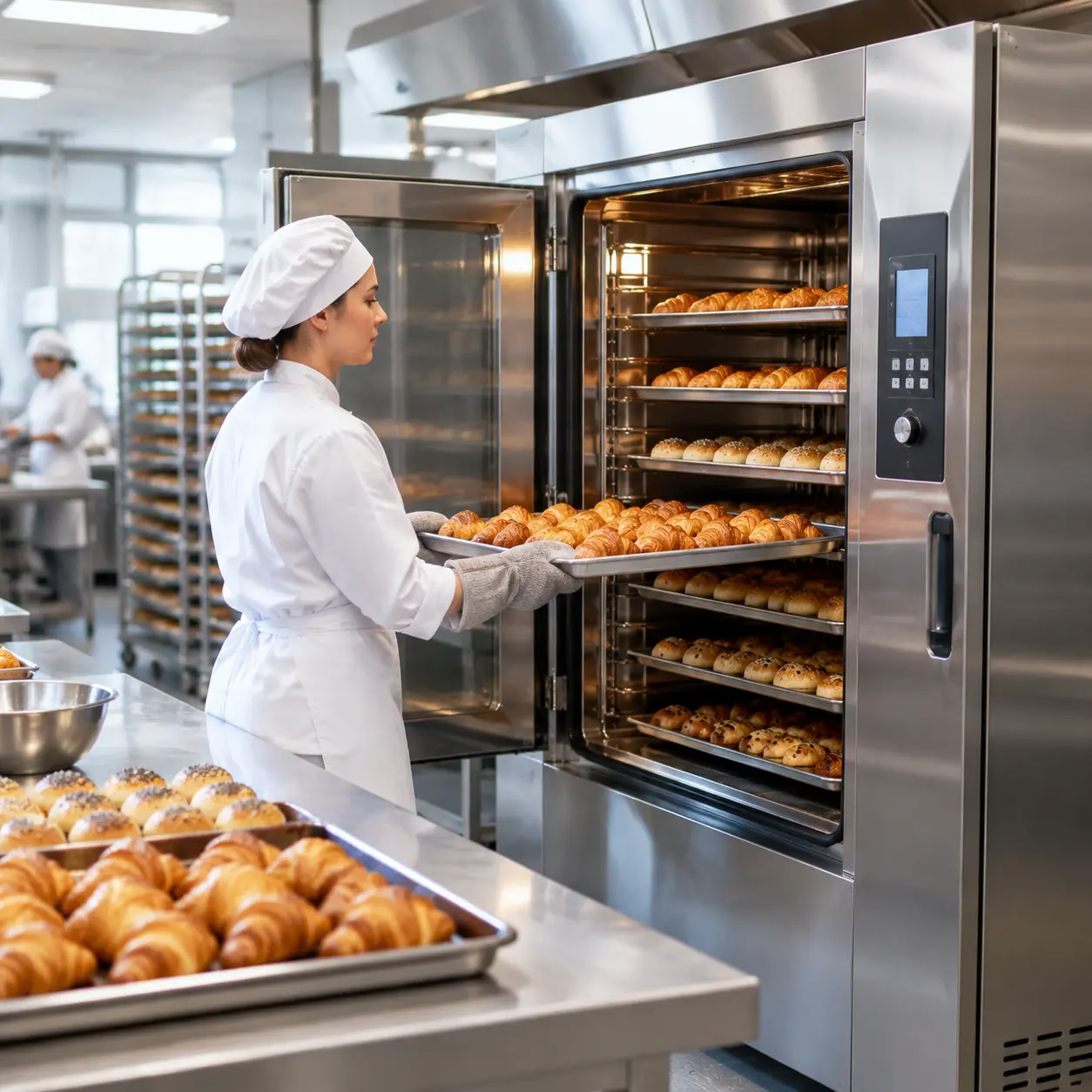
Commercial kitchen equipment for foodservice buyers
Lock Down Parts, Warranty, and Service
Request a recommended spare-parts list for the planned operating period, including part numbers, prices, availability, and dispatch location. Ask whether controls, heating components, door parts, seals, sensors, switches, and fans are proprietary or locally replaceable. The warranty should define its start date, duration, covered parts, exclusions, labor responsibility, freight responsibility, troubleshooting process, and remedy when a defect is confirmed.
For multi-site or distributor programs, agree on serial-number tracking, service-manual access, remote diagnostic support, response channels, and notification of component or design changes. These terms matter as much as initial capacity when downtime affects daily production.
Commercial Bakery Oven Capacity FAQs
Can a pan count prove hourly output?
No. Pan count must be combined with pan dimensions, product quantity per pan, bake time, loading time, recovery, and recipe compatibility. Request a witnessed or recorded trial when the output claim is critical.
Should I buy extra capacity?
Allow for peak demand, cleaning, menu growth, and operational variability, but avoid applying an arbitrary percentage. Model actual production periods and approve a documented operating margin.
Which certificate do I need?
That depends on the destination and installation. Obtain a written requirement from the responsible local parties, then confirm that each document covers the exact manufacturer and model.
What if the specification changes after approval?
Use written change control. Require the supplier to disclose and obtain approval for changes affecting components, dimensions, utilities, controls, labels, compliance documentation, performance, or service parts.
References and Buyer Action
- NSF Food Equipment Standards — standards-portfolio context only; verify model-specific certification separately.
- GZYF Metal commercial kitchen equipment — manufacturer website and product-category context.
Send the capacity schedule, destination, utility data, required documentation, accessory list, delivery terms, and support expectations as one controlled RFQ. To discuss a documented configuration, request a commercial kitchen equipment quote and ask the supplier to identify every exception or assumption in writing.