(+035) 527-1710-70
 NEWSLETTER


Commercial Baking Equipment for Small Bakery Buyers: Scenario Profiles, Equipment Combinations, and RFQ Path
For an importer or distributor, commercial baking equipment for small bakery programs is a configuration problem, not a single-product search. The right package depends on the menu, peak demand, available power, destination-market requirements, floor plan, landed budget, and the service network that will support the buyer after installation.
This Part 1 guide uses four industry scenarios. It connects each scenario to an equipment combination, states throughput and layout assumptions, and turns vague capacity language into RFQ questions. Treat every output figure as a planning input until the supplier defines product, batch, tray, cycle, operator, and utility conditions.
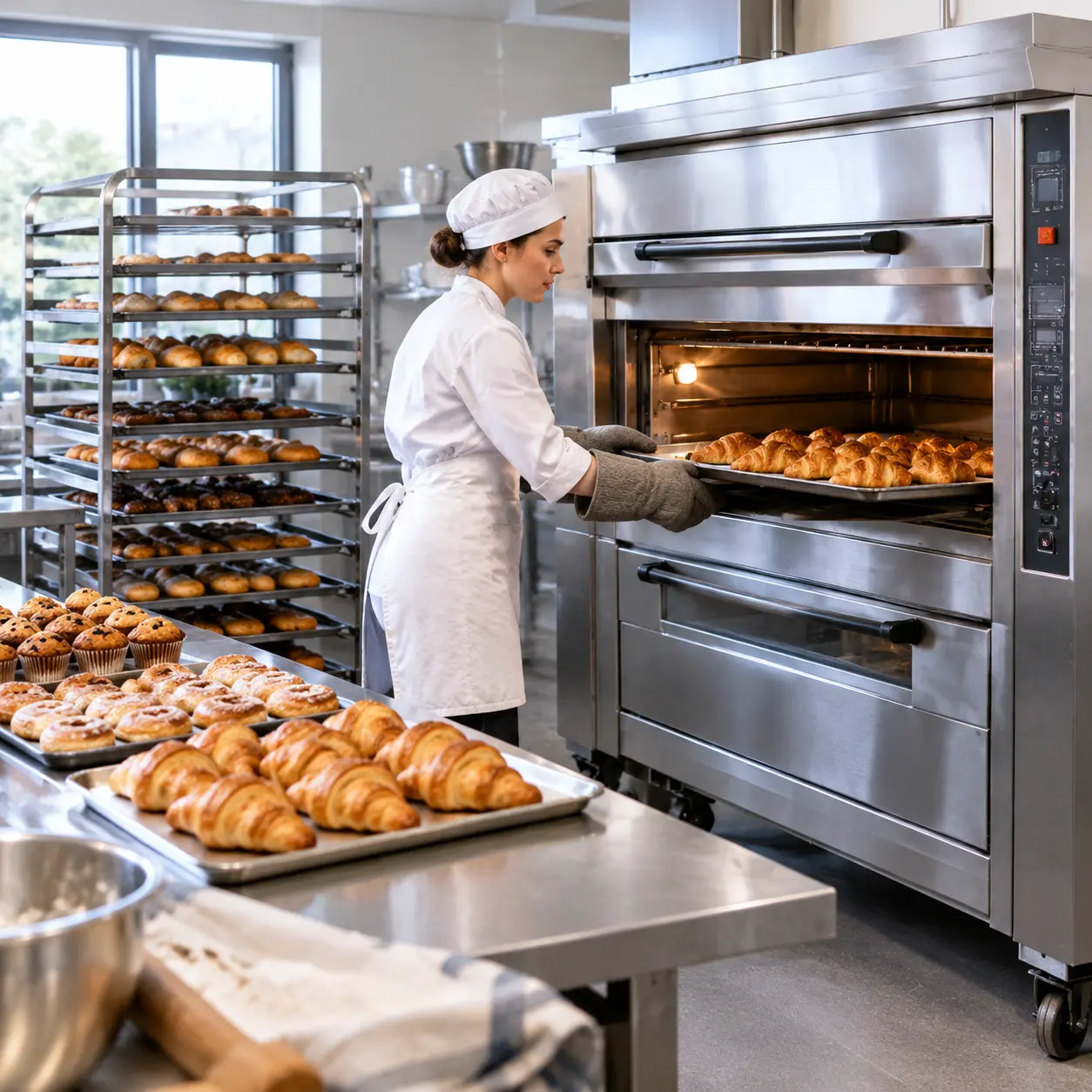
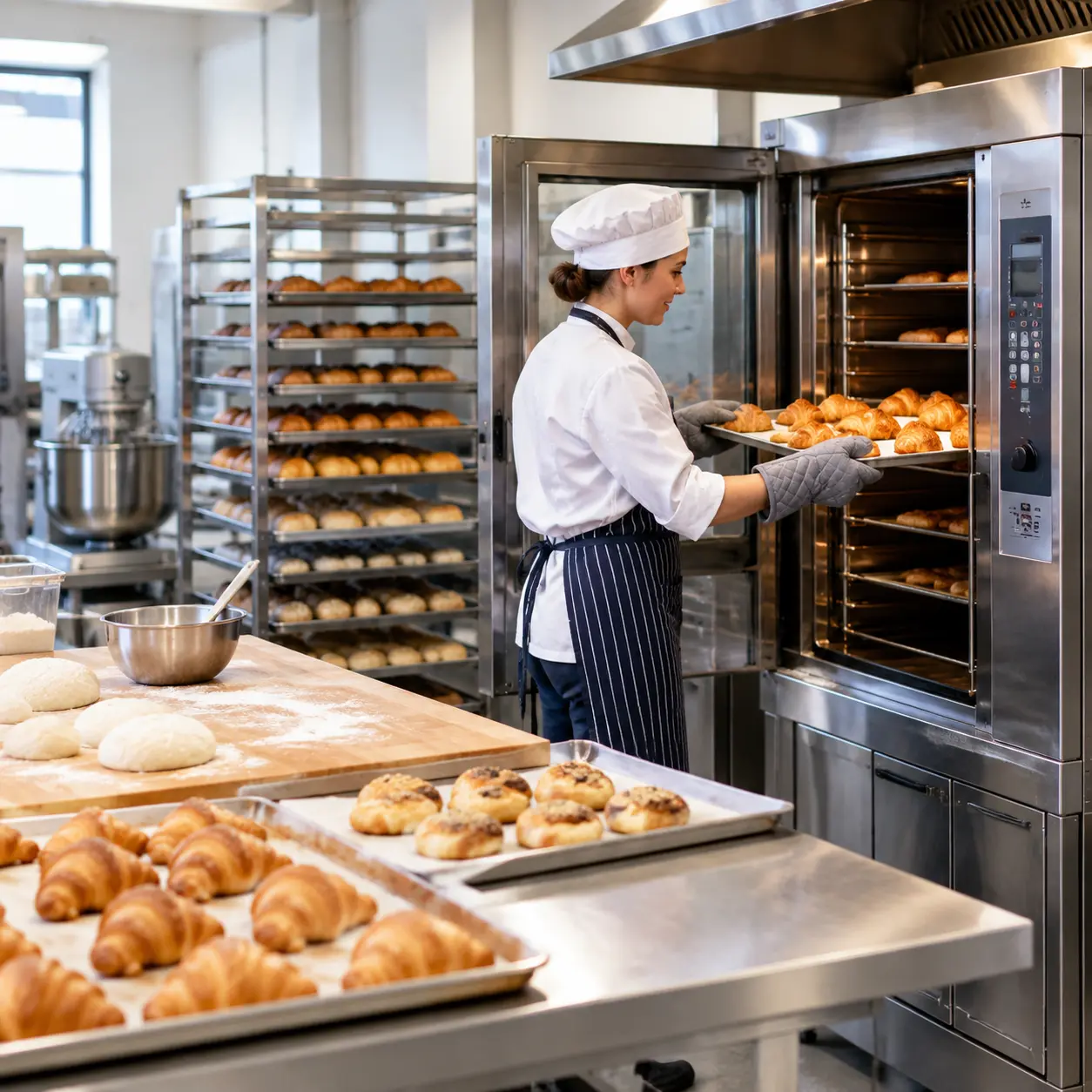
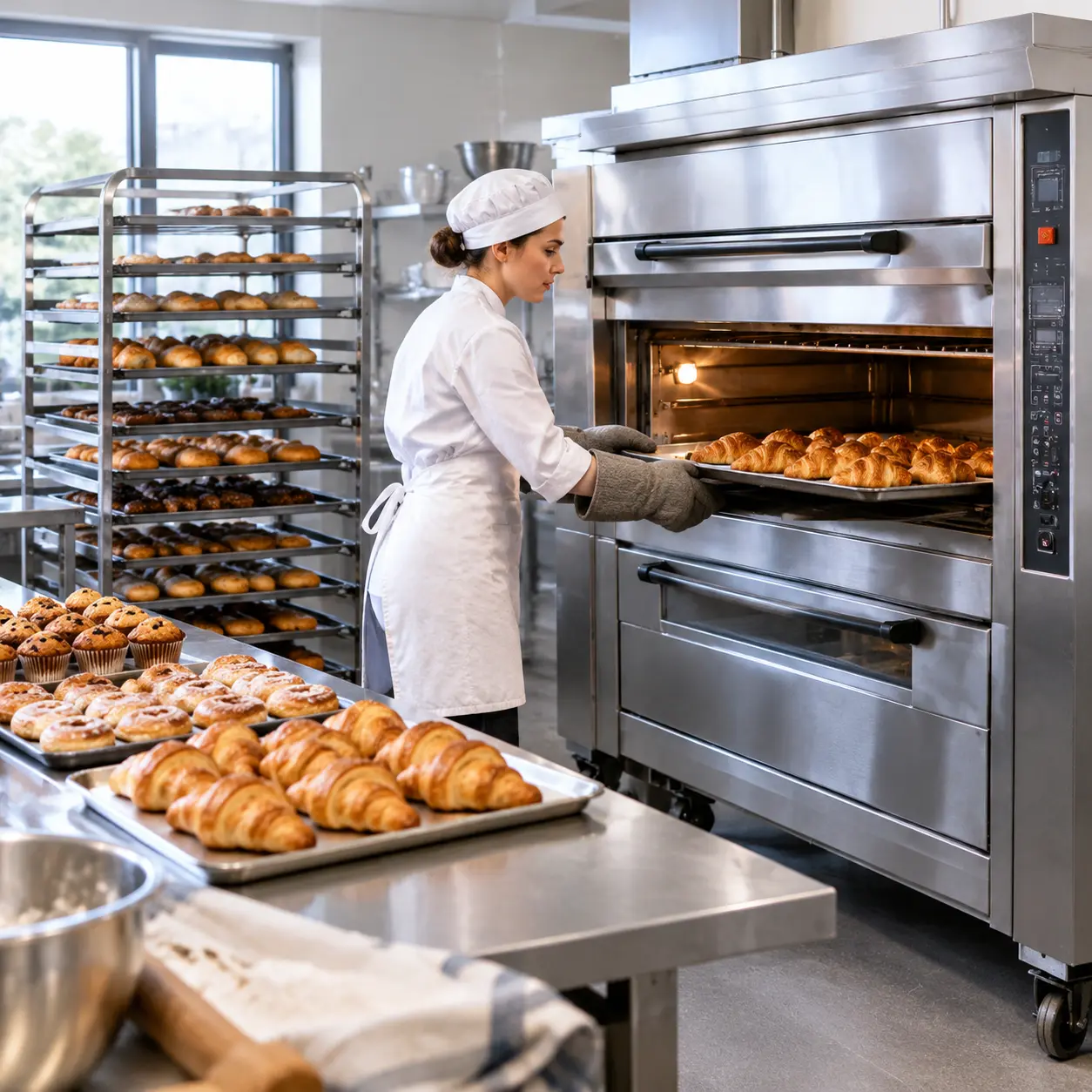
Commercial kitchen equipment for foodservice buyers
Scenario Profiles
1. Independent Bakery: Bread, Buns, and Pastries
An independent bakery producing bread, buns, and pastries usually needs a process-led package. Assume defined recipes, two daily production peaks, and limited room for duplicate equipment. Start with a dough mixer, prep bench, proofing or holding solution where required, oven, cooling racks, refrigeration, and dry storage. Ask whether quoted output is measured in dough weight, pieces, trays, or cycles; these measures cannot be compared without the product and time basis. Include cleaning and recipe-change time in the operating model.
2. Restaurant, Fast-Food Kitchen, Snack Shop, or Food Truck
Restaurants, fast-food kitchens, and snack shops often need bake-off or a narrow signature item rather than a full bread line. Assume prepared or frozen dough, short service windows, and a constrained back-of-house footprint. A convection oven, compact cold storage, rack or shelving, and prep surface may cover the core workflow. A waffle-led menu should be quoted with a dedicated waffle unit; route that request to the Commercial Belgian Square Waffle Maker for Cafes and Dessert Shops product page rather than treating every snack application as an oven purchase. Food trucks add weight, door clearance, vibration, power, ventilation, and service-access questions, so the model needs a mobile-installation review.
3. Hotel Pastry Kitchen or Canteen
Hotels and canteens need scheduled production and predictable dispatch. Assume multiple product sizes, shift handoffs, and a shared kitchen where bakery work competes with other foodservice activity. Quote the oven, mixer, racks, refrigeration, staging, and any proofing or holding equipment as a coordinated work cell. Separate breakfast, banquet, or meal-period demand from total daily volume. Assign loading, unloading, cleaning, rack movement, and installation coordination in writing.
4. Distributor Portfolio
A distributor should build a segmentable package instead of a generic catalog list. Assume it serves bakeries needing dough production, restaurants and fast-food kitchens needing bake-off, snack shops needing specialized menu equipment, and food trucks needing compact, serviceable units. Create a matrix with a core model, utility variant, accessories, spare-parts kit, documentation pack, and target buyer. Record destination voltage and plug, dimensions, packed dimensions, weights, lead time, and service route for each SKU.
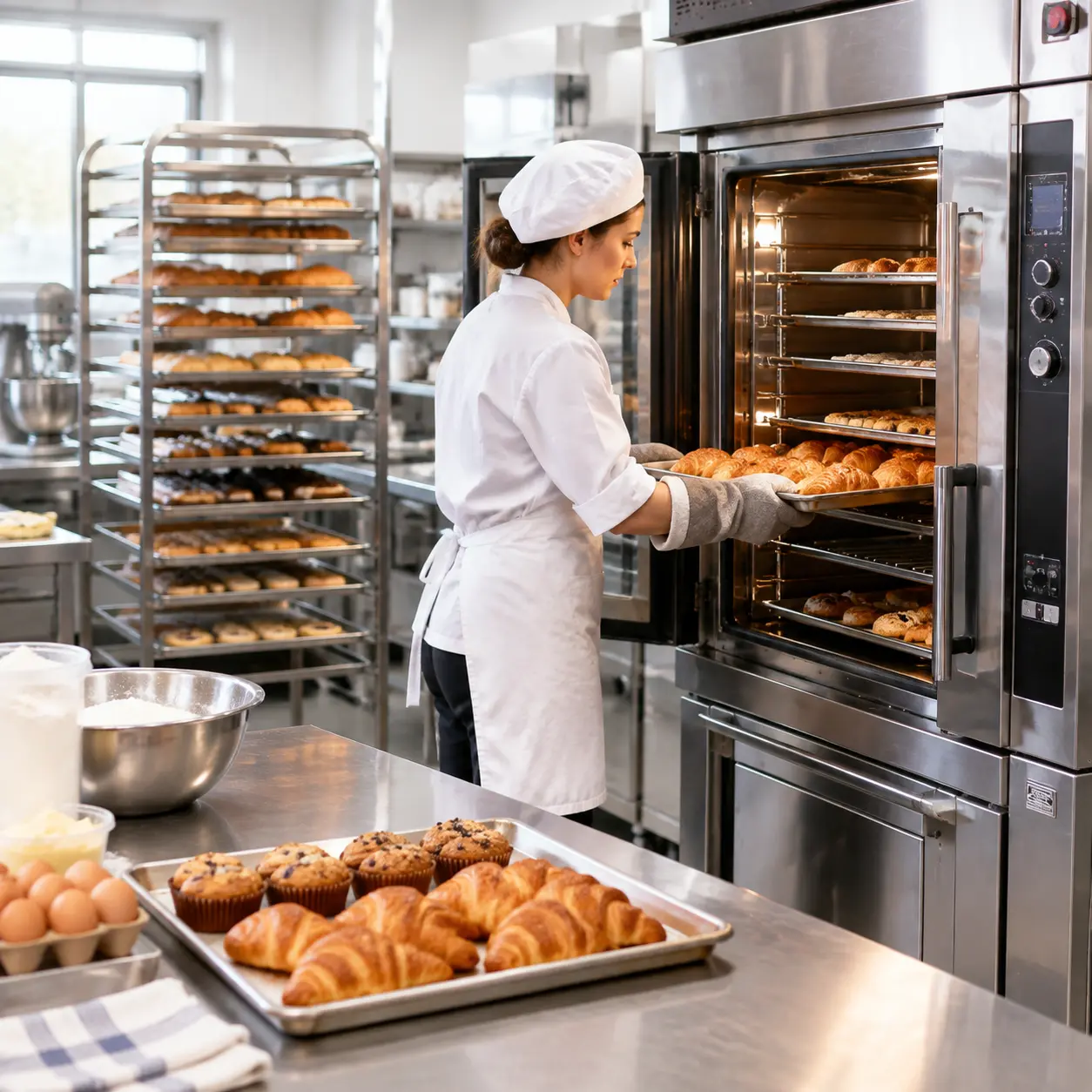
Commercial kitchen equipment for foodservice buyers
Equipment Combinations
Build the quote around process stages: receiving and storage, scaling, mixing, forming, proofing or holding, baking, cooling, and packing. Not every small bakery needs every stage, and some buyers will supply prepared dough.
Bread or bun line: combine the mixer with forming equipment only when the menu and labor model require it, then add proofing or holding, oven, racks, and cold and dry storage. The supplier should explain how the quoted batch moves between stations.
Pastry or cafe line: consider a planetary mixer, refrigerated prep, oven, racks, and dedicated ingredient storage. Confirm pan or tray format and product mix; a quotation built around one pastry may not serve a mixed cafe menu.
Bake-off or snack line: combine refrigeration or freezer storage, a compact oven or menu-specific cooking unit, shelving, and a clean prep surface. Use the GZYF Metal equipment portfolio to separate baking, snack, refrigeration, and accessory requests. Keep menu-specific items, such as a waffle maker, on their own line so the buyer can approve or remove them.
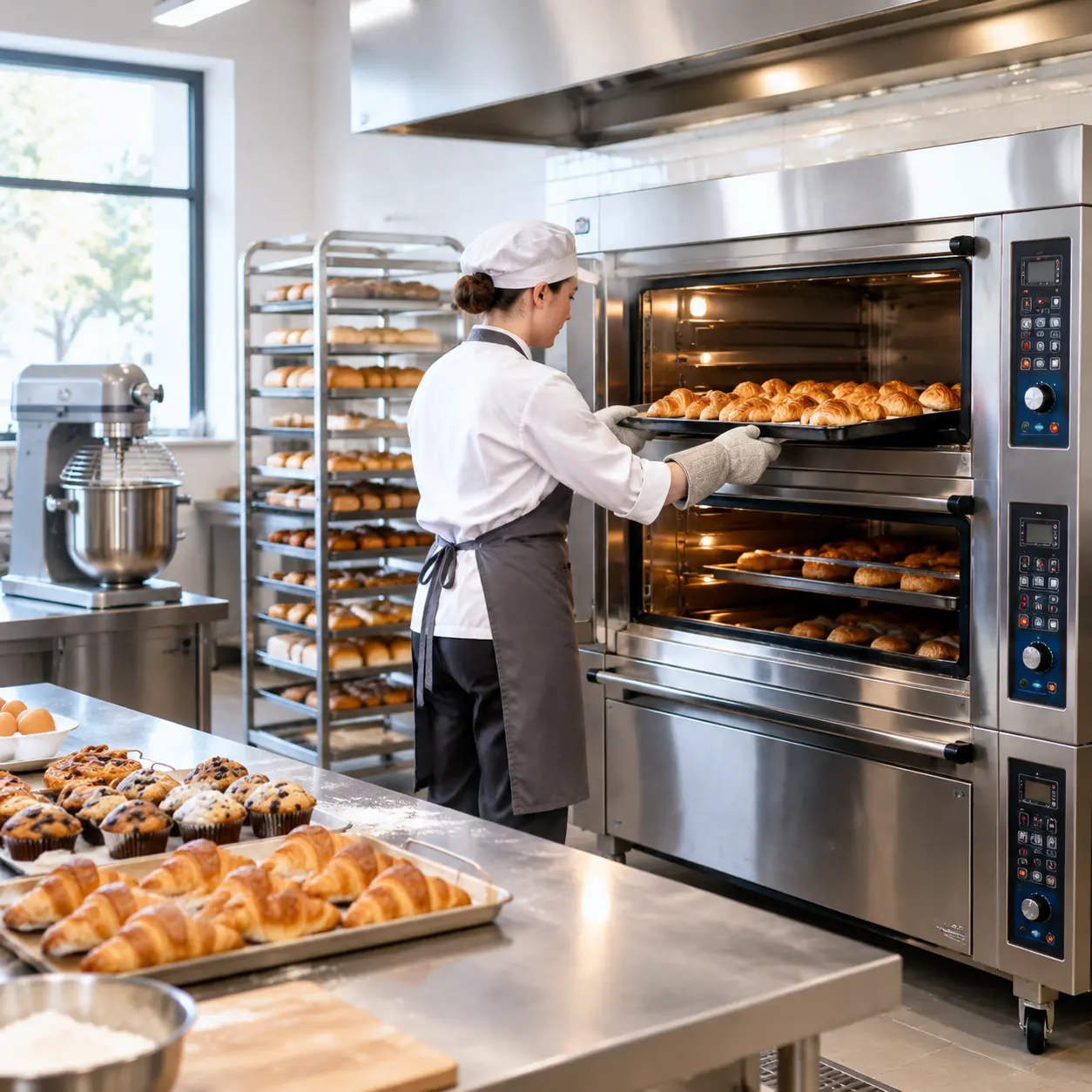
Commercial kitchen equipment for foodservice buyers
Throughput and Layout Assumptions
Use peak-window demand, not daily sales alone. Divide units required during the peak window by peak hours to establish planning demand. For example, 240 rolls required across a two-hour dispatch window equals 120 rolls per hour. That is not an oven rating: the supplier must relate it to batch size, product weight, tray format, bake time, loading and unloading, recovery, and operator count. Ask for a written capacity basis and, when commercially important, a test using the buyer’s product or an agreed proxy.
Map flow from receiving to storage, prep, mixing, forming, proofing, oven, cooling, and dispatch. Confirm door and aisle clearance, rack movement, service access, floor loading, working height, and separation from heat and wet-cleaning zones. List utilities by model: voltage, phase, frequency, plug, power, gas type and pressure if applicable, ventilation, water, drain, and ambient conditions. Small dimensions do not remove installation checks.
RFQ Path
To obtain a quotation that a distributor can compare and resell, send a structured brief:
- Application: list products, dough or batter weight, units per batch, peak window, daily schedule, and expected operator count.
- Technical schedule: request model, dimensions, usable chamber or tray format, materials, controls, utilities, plug, accessories, and installation clearances. Ask the supplier to define every capacity term.
- Compliance file: request manuals, wiring diagrams, labels, declaration or test documents where applicable, food-contact material information, and the exact scope of available certificates. Use the NSF Food Equipment Standards portfolio as a reference when a customer or destination market specifies NSF-related requirements; request model-specific evidence rather than relying on a logo.
- Commercial scope: require unit price, quantity, export packing, net and gross weight, crate dimensions, Incoterm, freight, insurance, destination charges, installation, training, taxes, duties, and quotation validity, with inclusions and exclusions visible.
- Service plan: obtain warranty terms, recommended spare parts, parts pricing, lead times, troubleshooting support, service manuals, and the responsible contact. Include a replacement-parts route for each destination market.
Supplier Qualification
GZYF Metal may be evaluated against this same brief. Guangzhou Yifeng Metal Technology Co., Ltd. describes itself as a commercial kitchen equipment manufacturer and exporter in Baiyun District, Guangzhou, with product development, manufacturing, OEM/ODM support, and export-oriented service. The company website describes R&D, design, sheet-metal processing, laser cutting, bending, laser welding, and equipment manufacturing. Its manufacturing background page says it was founded in 2015; the home page describes approximately 20,000 square meters of factory area; and the site mentions BSCI and other certificates. These are website self-claims. Request current evidence, certificate scope, issuing entity, and model relevance before using them in buyer-facing material. Send the schedule through request a commercial kitchen equipment quote or complete your equipment inquiry, then review selected equipment before final commercial review.
A quotation is ready for comparison when the menu, process, utilities, capacity basis, documentation, landed scope, and service plan appear together. That standard gives the distributor a usable sourcing brief and gives the supplier a precise basis for product matching.
Once the operating scenario is clear, the next decision is not simply which oven to buy. A buyer selecting commercial baking equipment for a small bakery must confirm that the equipment combination fits the menu, utilities, installation site, service plan, and destination-market requirements. The same review applies to a restaurant adding baked items, a food truck working within a strict weight limit, a hotel pastry kitchen coordinating several shifts, or a distributor building a private-label portfolio.
Make the Practical Decision
Start with the products that create the highest daily constraint. For a bakery producing bread, buns, and pastries, that may be the oven, dough mixer, proofer, or refrigeration unit. For a fast-food kitchen or snack shop, the priority may be a compact bake-off unit, bun toaster, waffle maker, or other menu-specific equipment. A hotel pastry kitchen or canteen should map equipment to dispatch windows and shift handoffs, while a food truck should first confirm dimensions, weight, door clearance, vibration exposure, power availability, ventilation, and access for maintenance.
Build the equipment list in three layers:
- Core production: the equipment directly responsible for the product, such as an oven, mixer, toaster, waffle maker, or refrigeration unit.
- Process support: racks, trays, worktables, holding equipment, storage, and accessories that keep production moving.
- Risk control: spare parts, installation information, cleaning access, electrical documentation, and destination-market compliance documents.
This structure prevents a common sourcing error: comparing the headline machine price while overlooking accessories, utility changes, replacement parts, or service requirements. It also gives a distributor a clearer way to create separate packages for bakeries, restaurants, hotels, food trucks, canteens, and snack shops.
For equipment categories beyond baking, buyers can review the GZYF Metal equipment portfolio. The company context supplied for this project identifies baking equipment, hamburger shop equipment, refrigeration equipment, snack equipment, other kitchen equipment, and accessories as product categories. Product-level specifications still need to be confirmed in the quotation and technical documents.
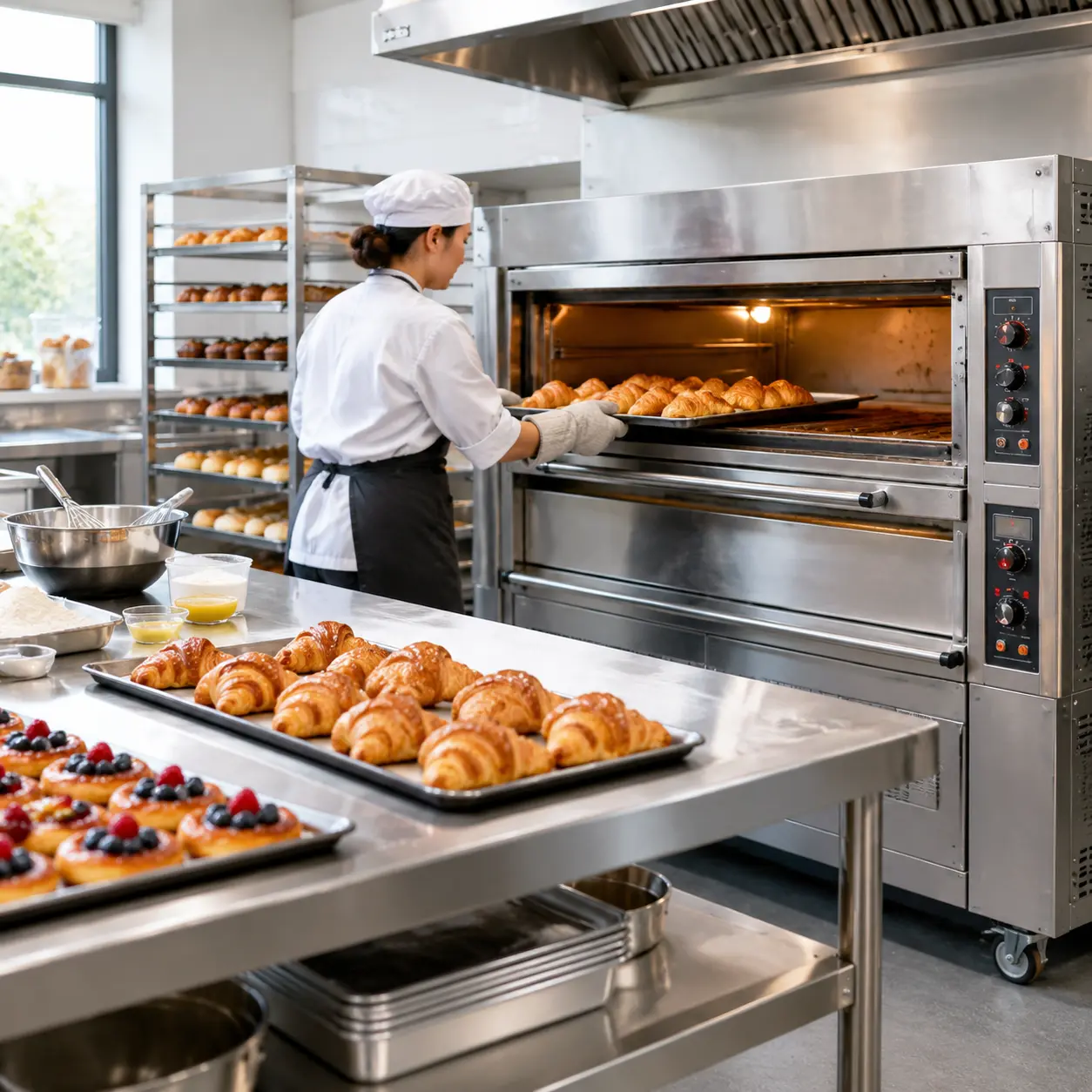
Compliance and Documentation Review
Compliance is a destination-market question, not a generic marketing label. Before placing an order, identify the rules that apply to the equipment type, installation environment, electrical system, gas supply if relevant, food-contact surfaces, ventilation, sanitation, and workplace safety. Confirm requirements with the importer of record, local authority, qualified installer, and applicable inspection body.
Ask the supplier to identify which documents are available for the exact model and configuration:
- Technical specification sheet with dimensions, utility requirements, materials, and operating limits.
- Wiring diagram, plug or terminal information, and electrical rating documentation.
- Gas, ventilation, drainage, or installation information where applicable.
- Cleaning and maintenance instructions, recommended consumables, and wear-part references.
- Declaration, test report, certificate, or conformity document required by the destination market, when applicable.
- Packaging dimensions, shipping weight, gross weight, and handling instructions.
- Spare-parts list, warranty terms, response process, and service escalation contact.
NSF maintains a portfolio of food equipment standards, which is a useful standards reference during a specification review. However, a standards portfolio is not proof that a particular machine is certified. Do not treat a supplier website reference, a general factory certificate, or a certificate for another model as evidence of compliance for the equipment being purchased. The buyer should request model-specific evidence and confirm its scope, issuing entity, validity, and destination-market acceptance.
The supplied company context states that Guangzhou Yifeng Metal Technology Co., Ltd. supports R&D, design, sheet-metal processing, laser cutting, bending, laser welding, equipment manufacturing, and OEM/ODM work. Its website also mentions BSCI and other certificates. These are manufacturer or website statements that should be verified directly before publication or procurement. They do not, by themselves, establish food-equipment certification or approval for a particular model.
What the RFQ Must Resolve
A useful RFQ should describe the application instead of asking only for a catalog and price. Include the product type, batch or service pattern, target output, available floor area, door and elevator restrictions, electrical standard, gas conditions if relevant, ventilation constraints, preferred materials, branding requirements, destination country, delivery term, and required documentation.
Request an itemized quotation that separates the equipment, accessories, spare parts, packaging, documentation, customization, testing, shipping assumptions, and warranty coverage. Ask what is included as standard and what is optional. For a distributor portfolio, request consistent naming, model numbering, product images, manuals, carton marks, private-label options, minimum order quantities, lead-time assumptions, and a recommended initial spare-parts package.
When reviewing a quote, compare like for like. A lower initial price may exclude trays, stands, controls, installation materials, replacement parts, or required documentation. A higher price may reflect a specified utility configuration or an OEM adjustment. The buyer should require the supplier to state exclusions rather than infer them.
Supplier Qualification Questions
Use the following questions before approving a supplier or product family:
- Can you provide the complete specification for the exact model and voltage or utility configuration?
- Which documents apply to my destination market, and which are available for this model?
- What is included in the quoted price, and what must be purchased separately?
- Which parts are considered wear parts, and how can they be ordered?
- How are warranty claims opened, diagnosed, and resolved across borders?
- What installation, commissioning, cleaning, and maintenance information is supplied?
- Can you support OEM or ODM changes, and how are approved revisions controlled?
- What sample, inspection, or pre-shipment verification options are available?
For a first order, request drawings, manuals, photos of the actual configuration, and a documented review of the packing list. If the equipment is safety-critical or subject to inspection, use an appropriate third-party inspection or conformity process. The right level of verification depends on the product, market, order value, and consequences of downtime.
Frequently Asked Questions
What is the best commercial baking equipment for a small bakery?
There is no universal best combination. Select equipment around the bakery’s recipes, peak production window, available utilities, floor plan, and service capability. A compact bakery with bread and pastries may need a different sequence of equipment from a restaurant that only reheats prepared products.
Can a restaurant or food truck use bakery equipment?
Yes, when the equipment matches the menu and installation conditions. Restaurants and snack shops should focus on service speed, cleaning, and repeatable menu production. Food trucks require additional checks for mobility, weight, vibration, power, ventilation, and service access before ordering.
How can I prove that a supplier’s specification is reliable?
Request model-specific technical documents, drawings, utility data, manuals, and an itemized packing list. For higher-risk purchases, add sample testing, factory acceptance, or independent pre-shipment inspection. Keep the approved specification attached to the purchase order.
How should warranty and spare-parts support be evaluated?
Ask for written warranty duration, exclusions, claim procedures, response responsibilities, replacement-part availability, and shipping arrangements. Clarify whether the buyer or supplier handles diagnosis, labor, customs, and installation. These details matter especially for importers and distributors supporting multiple end users.
Buyer Action
Prepare a one-page requirement sheet, select the relevant category, and send the same information to each shortlisted supplier. Buyers can use the request a commercial kitchen equipment quote route to submit project details, or use the review selected equipment path when comparing products. The complete your equipment inquiry route can support a more detailed submission.
For company background, consult the Guangzhou Yifeng Metal manufacturing background page and the GZYF Metal commercial kitchen equipment site. Buyers should still verify current product availability, specifications, documentation, warranty terms, and market suitability in writing before purchase.
References
- NSF Food Equipment Standards: standards reference for food equipment review; not proof of certification for a specific product.
- KaTom Kitchen Requirements Guide: general planning reference; local codes and authorities control.
- Commercial Kitchen Requirements Guide: general code-planning reference; verify all requirements locally.