 (+035) 527-1710-70
 NEWSLETTER


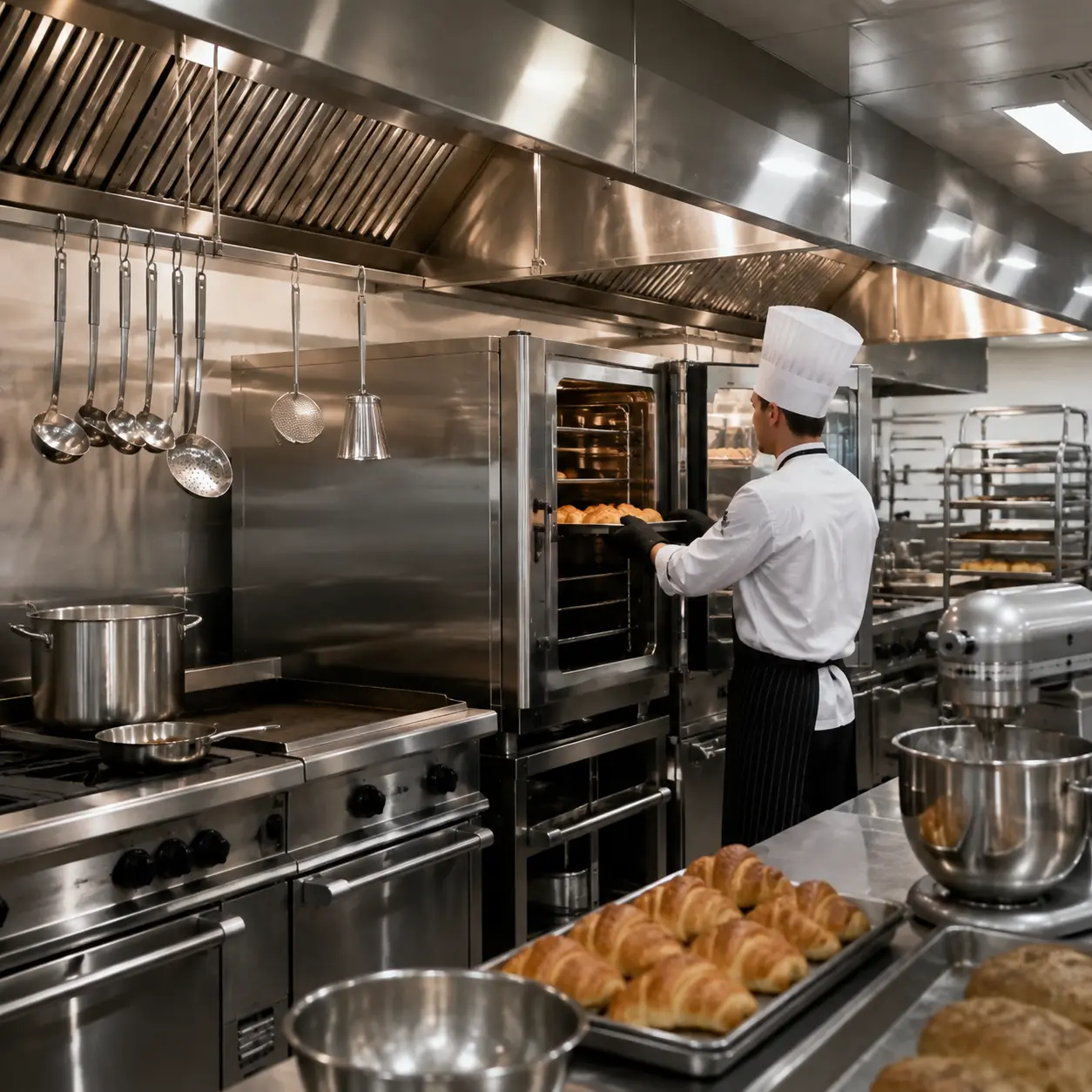
Commercial kitchen equipment is the professional-grade machinery, fixtures, and accessories used to prepare, cook, bake, chill, hold, clean, and serve food in restaurants, hotels, bakeries, cafeterias, commissaries, food trucks, institutional kitchens, and other foodservice operations. Unlike household appliances, commercial equipment is selected around menu requirements, production volume, workflow, available utilities, sanitation rules, staff use, maintenance access, and the purchasing requirements of a specific destination market.
For an importer or distributor, the term covers more than a list of machines. It describes a coordinated equipment package that must fit the buyer’s menu, throughput, kitchen layout, electrical and gas conditions, installation process, replacement-parts plan, and budget. A useful quotation therefore needs more detail than a product name and a unit price. It should identify the model, dimensions, materials, capacity basis, utility requirements, included accessories, packaging, delivery terms, documentation, warranty, and service arrangements.
Definition and Boundaries
Commercial kitchen equipment includes powered and non-powered products. Powered equipment may use electricity, gas, refrigeration systems, steam, water, or mechanical drive systems. Examples include ovens, fryers, griddles, mixers, refrigerators, freezers, ice machines, food processors, and heated holding cabinets. Non-powered equipment includes worktables, sinks, shelving, storage racks, preparation counters, carts, and selected kitchen accessories.
The boundary is practical rather than purely technical. A stainless-steel worktable can be commercial kitchen equipment even though it has no motor or heating element. A countertop appliance can also qualify when it is designed for repeated foodservice use. Conversely, a general consumer appliance is not automatically suitable for a professional kitchen simply because it has a similar function. Its duty cycle, cleanability, spare-parts availability, electrical configuration, and safety documentation may not match commercial requirements.
Commercial kitchen equipment is not the same as a complete kitchen design, an installation contract, or a foodservice operating system. Equipment is one part of the project. Ventilation, drainage, fire protection, water treatment, refrigeration commissioning, electrical work, gas piping, flooring, and staff procedures may be separate scopes. A supplier quotation should state clearly which items and services are included and which must be arranged locally.
To review product ranges efficiently, buyers can start with commercial kitchen equipment products, then use the compare commercial kitchen equipment function for models under consideration.
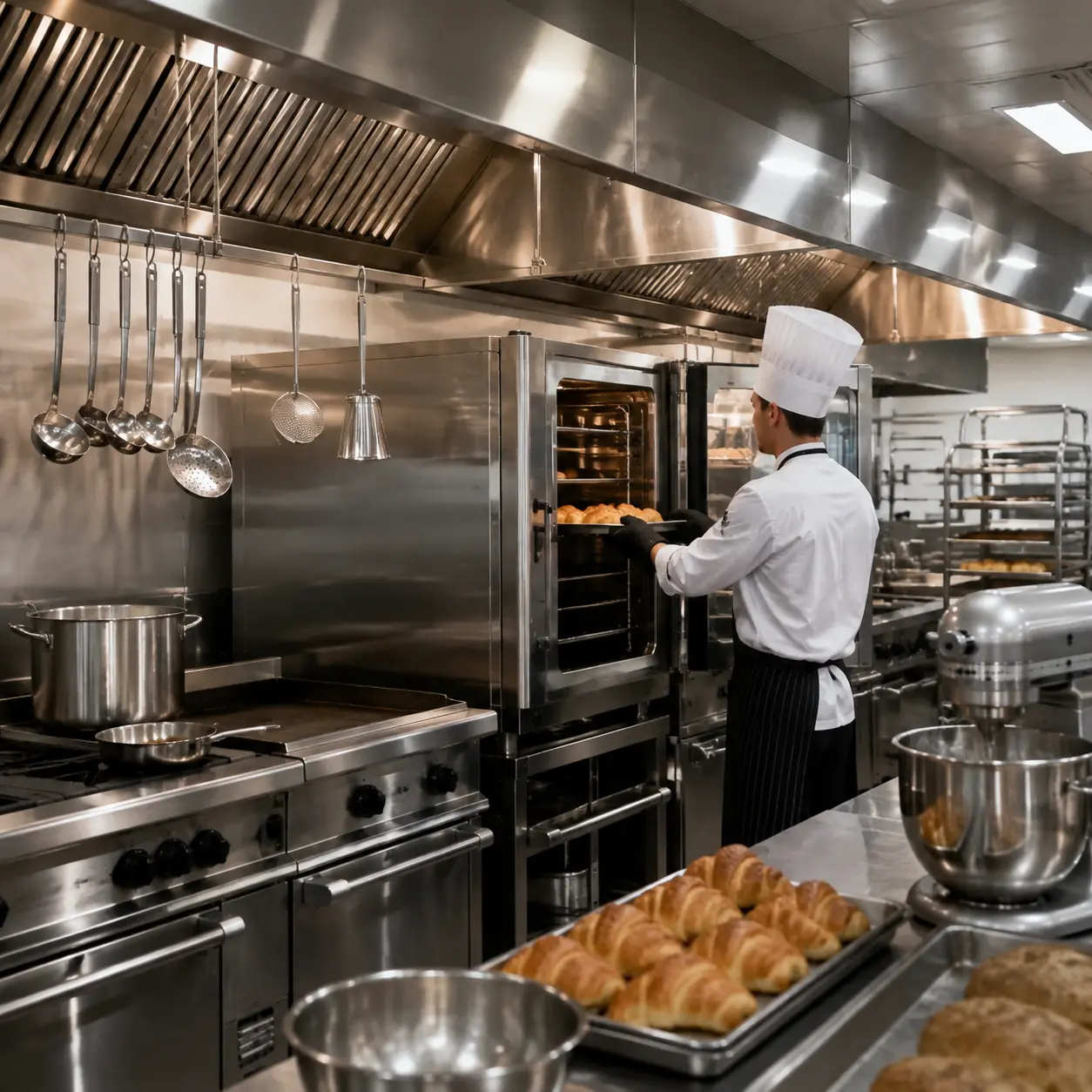
Commercial kitchen equipment for foodservice buyers
How Commercial Kitchen Equipment Works
Most commercial equipment performs a defined process by receiving an input and producing a controlled result. A convection oven receives electrical or gas energy, transfers heat through air circulation, and produces a baked or cooked product according to time and temperature. A fryer transfers heat through oil to cook food quickly. A refrigerator removes heat from an insulated cabinet to keep stored products within the required operating range. A mixer converts motor power into mechanical movement for dough, batter, or other ingredients.
The operating principle matters because it determines the equipment’s utility demand, output characteristics, installation conditions, cleaning method, and service requirements. Heat-producing equipment may need ventilation and clearance around hot surfaces. Refrigeration equipment requires adequate airflow and a suitable ambient environment. Water-using equipment may require a drain, filtration, pressure range, or backflow protection. Gas equipment may require a destination-market gas type, pressure, regulator, and approved connection arrangement.
Capacity claims also require careful interpretation. A stated capacity may refer to cabinet volume, pan count, batch size, hourly output, maximum load, or a recommended working load. These are not interchangeable. An importer should ask how the capacity was measured, which product was used, what cycle time applies, and whether the figure represents a maximum or normal operating condition. When a supplier provides only a broad capacity statement, the buyer should request a technical datasheet and a written basis for comparison.
Main Types of Commercial Kitchen Equipment
Cooking Equipment
Cooking equipment includes ranges, burners, griddles, hot plates, fryers, broilers, steamers, and cooking kettles. Selection depends on the menu, cooking method, batch size, recovery time, heat distribution, control method, and available fuel. A distributor should confirm whether a unit is intended for countertop, undercounter, or floor installation and whether the quoted configuration matches the destination market.
Baking and Bakery Equipment
Baking equipment includes deck ovens, convection ovens, bakery ovens, proofers, mixers, dough preparation machines, and related accessories. Buyers should examine chamber dimensions, tray or pan compatibility, temperature-control method, heating configuration, ventilation needs, and cleaning access. GZYF Metal identifies baking equipment among its product categories and describes manufacturing capabilities that include sheet-metal processing, laser cutting, bending, and laser welding on its company website. These are company-described capabilities and should be confirmed for the specific model and order.
Refrigeration Equipment
Refrigeration equipment includes reach-in refrigerators, freezers, undercounter units, prep counters, display cases, and other cold-storage products. Key questions include usable internal volume, temperature range, refrigerant information, ambient-temperature assumptions, defrost method, insulation, door configuration, shelving, drainage, and power supply. The buyer should distinguish gross volume from usable volume and confirm whether performance data applies to an empty cabinet, a specified product load, or a defined test condition.
Food Preparation Equipment
Food preparation equipment supports cutting, slicing, mixing, blending, grinding, forming, portioning, and ingredient handling. Examples include vegetable cutters, meat grinders, planetary mixers, dough mixers, slicers, and food processors. Important variables include product-contact materials, feed opening, batch size, blade or attachment options, operating controls, clean-down procedure, and the availability of replacement wear parts.
Holding, Display, and Service Equipment
Holding and service equipment maintains food condition after cooking or during customer service. It may include heated cabinets, bain-marie units, warming counters, display cases, serving counters, carts, and beverage equipment. Buyers should confirm holding temperature controls, humidity management where relevant, loading configuration, visibility, mobility, and the difference between holding food and cooking food. A holding cabinet is not a substitute for a cooking appliance unless the manufacturer expressly designs it for that function.
Storage, Washing, and Accessories
Storage and support equipment includes stainless-steel tables, sinks, shelving, racks, bins, trolleys, and accessories. Dishwashing and warewashing products may form a separate equipment group because they involve water, drainage, detergent, heat, ventilation, and local plumbing requirements. These products can determine workflow efficiency even when they do not directly prepare food.
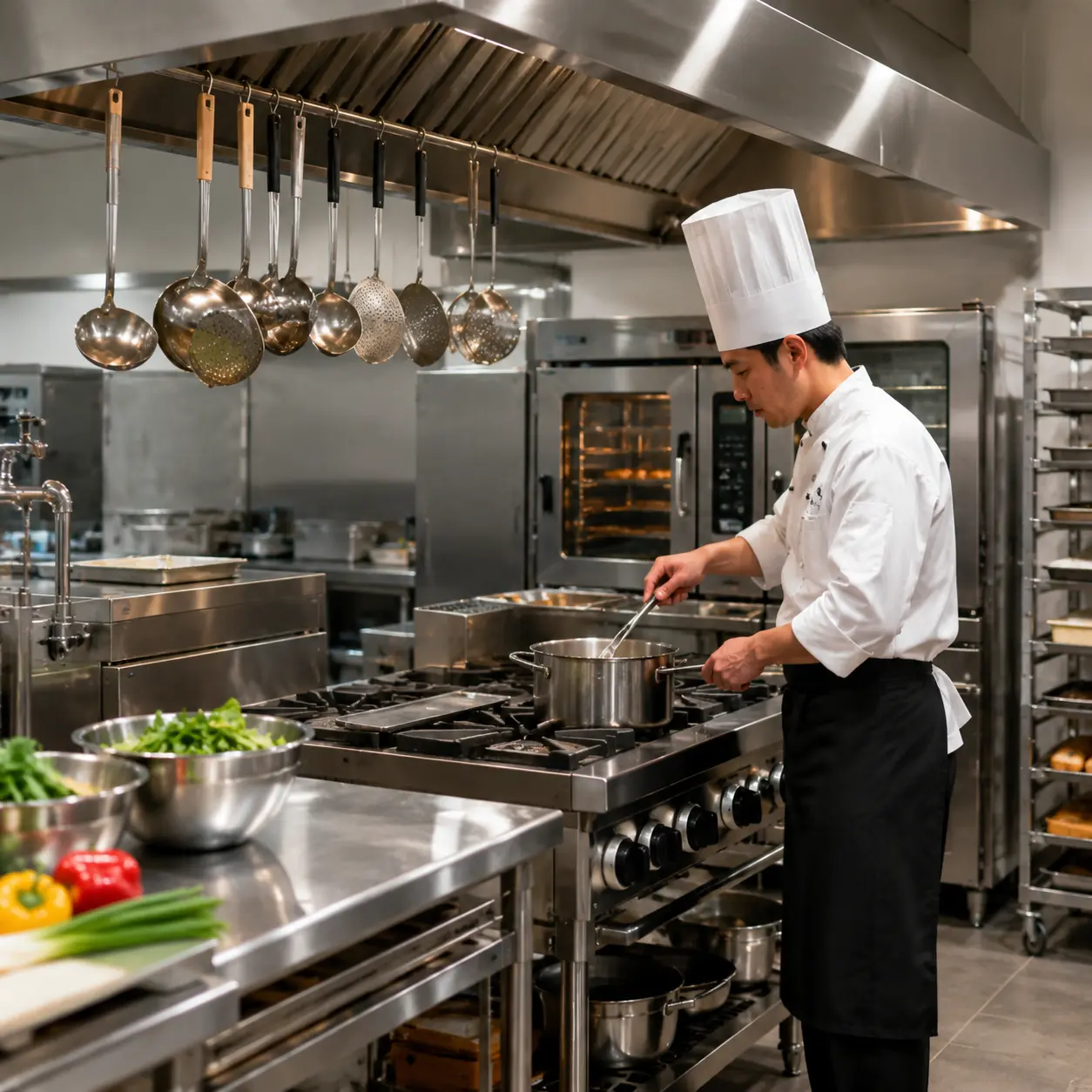
Commercial kitchen equipment for foodservice buyers
Applications in Foodservice
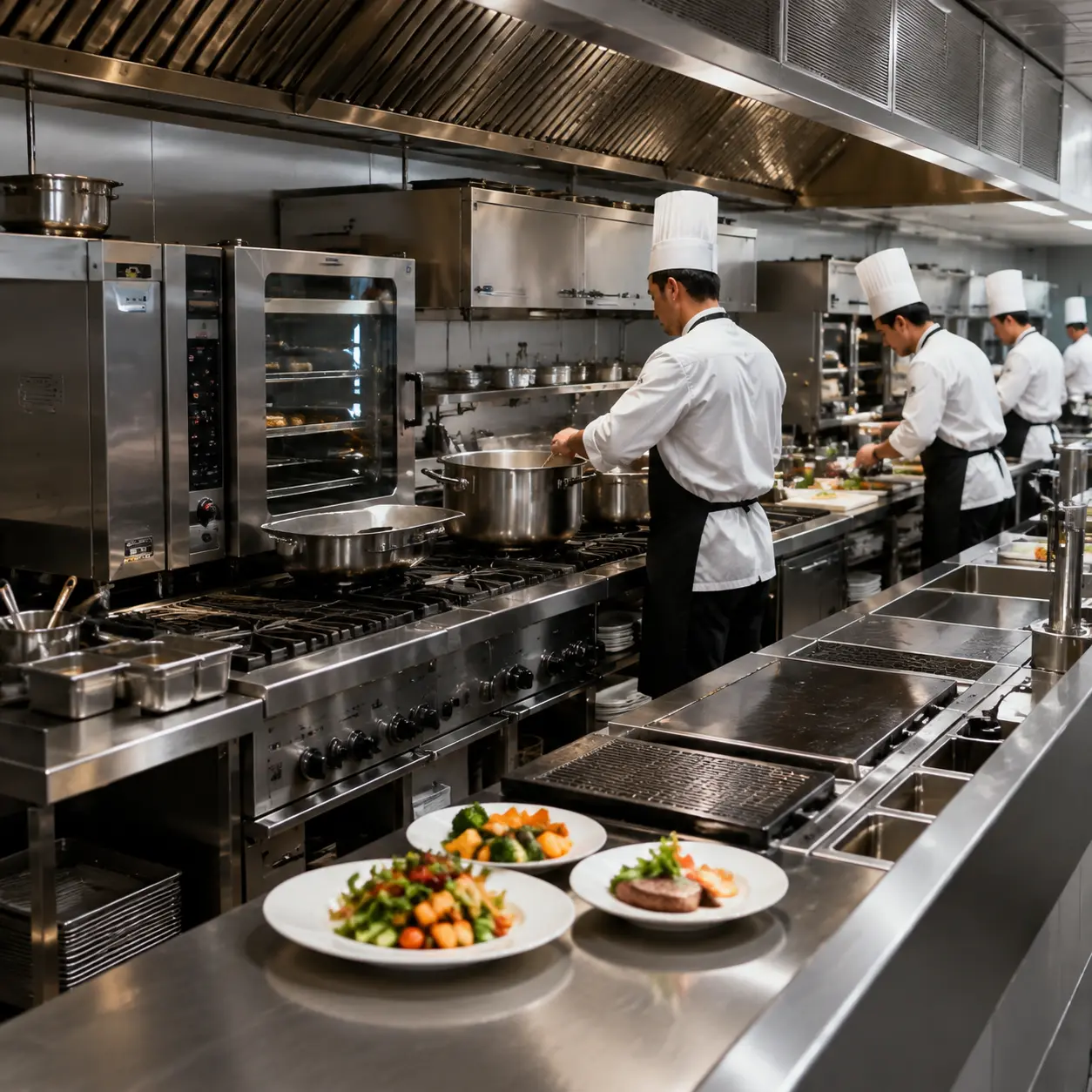
The same equipment category can serve different applications with different specifications. A hamburger shop may prioritize rapid grilling, frying, chilled ingredient storage, bun preparation, and compact counter layouts. A bakery may prioritize mixing, proofing, baking consistency, tray compatibility, and production scheduling. A snack shop may need countertop cooking, warming, display, and high-frequency cleaning. A hotel or institutional kitchen may require broader menu flexibility, larger batch production, redundancy, and coordinated service support.
Application should therefore be defined before model selection. The buyer should document menu items, expected portions per hour, peak-period demand, batch size, operating hours, available floor and counter space, staff skill level, cleaning routine, and local service capability. This information allows the supplier to recommend a configuration instead of sending a generic catalog.
For a broader review of available categories, see the GZYF Metal equipment portfolio. Buyers can also save short-listed units for later review through save equipment for later review.
Key Specification Vocabulary
- Capacity: The amount a unit can hold or process. Confirm whether it means volume, batch load, pan count, or hourly output.
- Throughput: The quantity processed over a stated period under defined operating conditions.
- Duty cycle: The expected pattern of operation, including running time, rest time, and peak use.
- Utility requirement: The electrical phase, voltage, frequency, current, gas type, gas pressure, water connection, drain, ventilation, or other service needed for operation.
- Working temperature: The normal operating range. Ask whether the stated value is a setpoint, actual product temperature, or cabinet-air temperature.
- Overall dimensions: The external size of the equipment. Request packed dimensions as well when planning freight and access.
- Net and gross weight: Net weight describes the equipment; gross weight normally includes packaging and should be used for shipping estimates.
- Food-contact material: The material that touches food. Request material grades, finish information, and cleaning instructions where relevant.
- Certification and documentation: Marks, declarations, test reports, manuals, wiring diagrams, and installation instructions. Certification must be checked for the exact model, destination market, and current applicable requirements. NSF maintains a portfolio of food equipment standards; buyers should verify the relevant standard and certification scope at the NSF food equipment standards source rather than relying on an unsupported logo or statement.
- Incoterm and landed cost: The agreed allocation of freight, insurance, export handling, import clearance, duties, delivery, installation, and other charges. A unit price alone does not show the buyer’s total acquisition cost.
- Service package: Warranty terms, response process, spare-parts list, technical support, troubleshooting materials, and the responsibilities of the importer, distributor, installer, and end user.
These terms turn a product conversation into a purchasing specification. Before requesting pricing, prepare a schedule showing each item, quantity, target performance, utility conditions, documents, packaging requirements, delivery destination, and installation assumptions. Then ask the supplier to complete the schedule and identify every deviation.
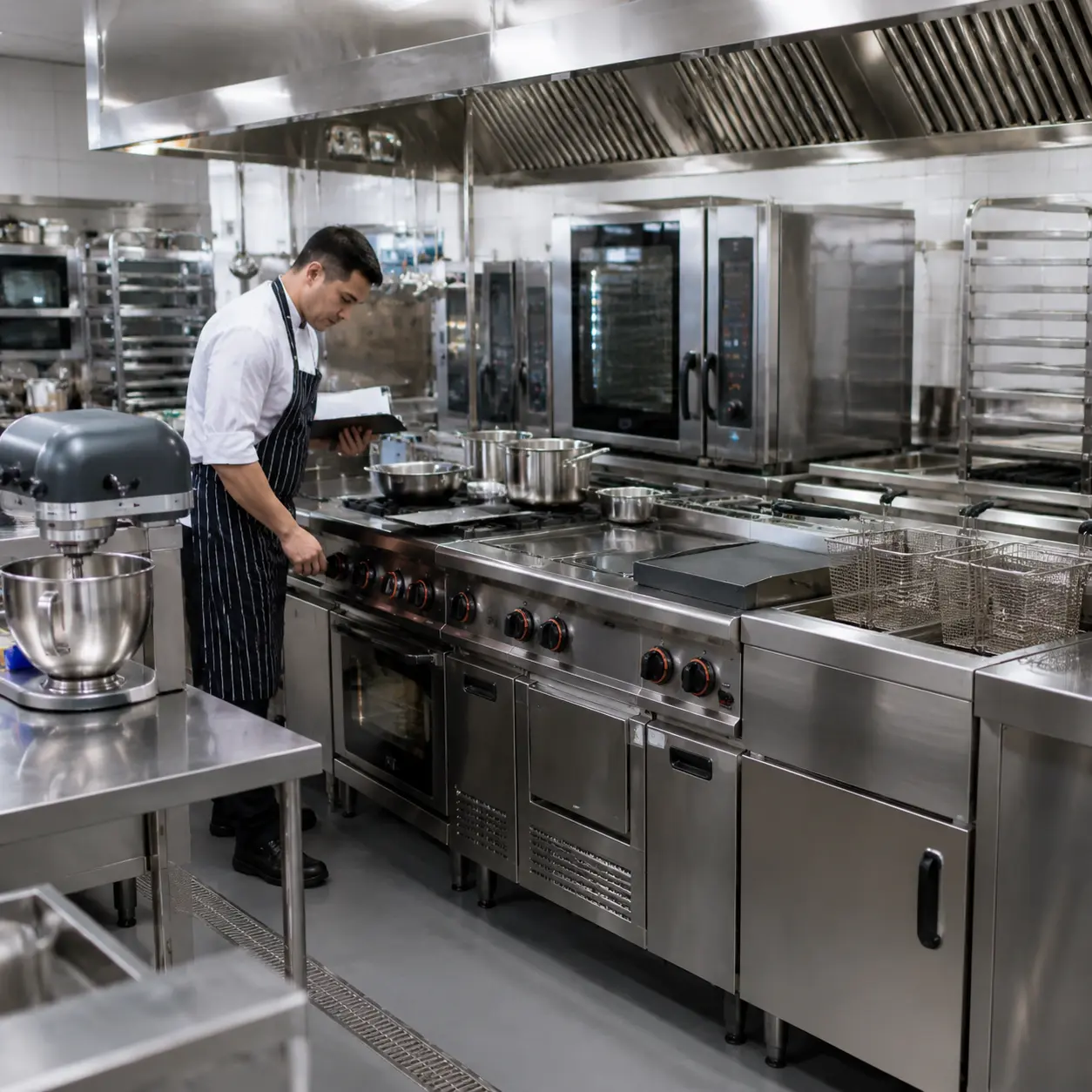
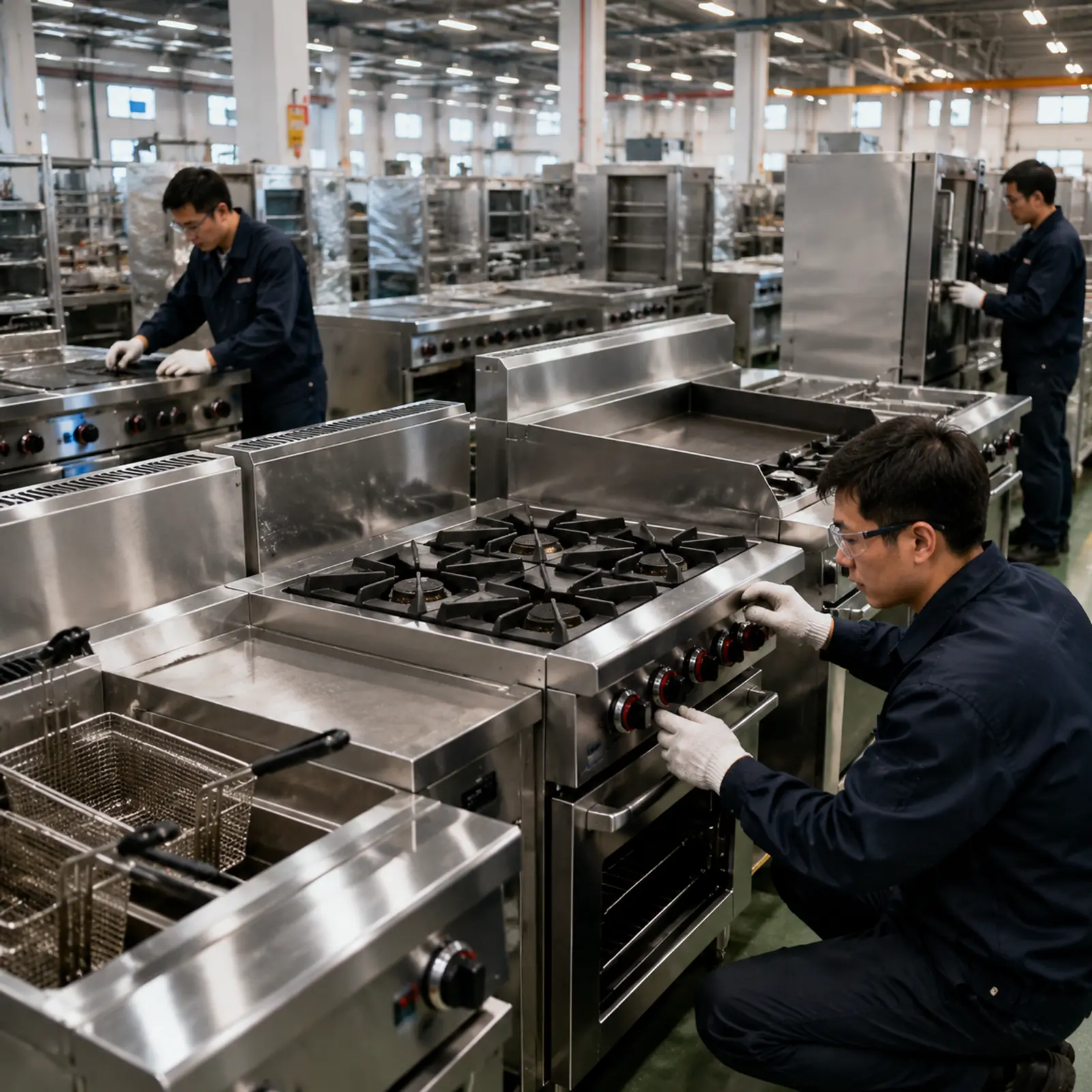
Commercial kitchen equipment for foodservice buyersGuangzhou Yifeng Metal Technology Co., Ltd. presents itself as a commercial kitchen equipment manufacturer and exporter based in Baiyun District, Guangzhou, Guangdong, China. Its website states that the company was founded in 2015 and describes a manufacturing site of approximately 20,000 square meters; these are website self-claims and should be verified during supplier qualification. The website also refers to BSCI and other certificates. Request copies, issuing bodies, validity dates, covered entities, and applicable product or facility scope before using those claims in a purchase decision.
For a quotation based on your menu, destination utilities, target quantities, and delivery location, use request a commercial kitchen equipment quote. A complete inquiry should include the specification schedule, required compliance documents, packaging expectations, spare-parts requirements, and the preferred delivery term. When the equipment list is settled, buyers can review selected equipment and complete your equipment inquiry.
How to Decide Which Commercial Kitchen Equipment You Need
Commercial kitchen equipment is selected by matching a machine or work unit to the menu, production volume, available utilities, local requirements, and service plan. A suitable item must do more than fit the floor plan: it must support the required workflow, withstand the expected duty cycle, and arrive with documentation that helps the buyer verify what was purchased.
Start with the Operating Brief
Before requesting prices, document the use case. A new hamburger shop may prioritize cooking speed, refrigeration access, prep consistency, and compact service-line placement. A bakery may need a different combination of baking, cooling, storage, and display equipment. Hotels, institutions, commissaries, snack shops, and restaurants also differ in production schedules, staffing, menu breadth, and cleaning routines.
Write down the following information for each planned item:
- The menu items or production tasks it must support.
- Expected peak-period output, expressed in a measurable unit such as portions, trays, batches, or service hours.
- Available electrical supply, gas, water, drainage, ventilation, and floor space.
- Required operating location, including front-of-house, back-of-house, preparation, storage, or dispatch.
- Cleaning access, operator skill level, and whether the equipment will run continuously or intermittently.
- Destination country, installation address, applicable inspection process, and required delivery date.
This brief gives a supplier enough context to recommend a configuration without treating a catalog description as a complete specification.
Check the Specification Before Comparing Prices
Two products can have similar names while differing materially in construction, utilities, controls, dimensions, included accessories, and intended workload. A buyer should request a dated technical data sheet or drawing for every quoted model. The document should identify the model, external dimensions, working dimensions where relevant, materials, electrical or fuel requirements, connection points, net and shipping weight, controls, operating limits, and included components. Ask the supplier to identify which fields are standard and which are configurable.
For fabricated equipment, clarify the material grade and thickness where those characteristics affect sanitation, durability, or structural performance. For powered equipment, request the nameplate information and installation requirements. For refrigeration, ask for the specified temperature range and the environmental assumptions behind it. Do not accept a general statement such as “commercial quality” as a substitute for measurable information.
GZYF Metal describes its capabilities as including research and development, design, sheet-metal processing, laser cutting, bending, laser welding, and equipment manufacturing. Those capabilities may be relevant to fabricated units or private-label projects, but the buyer should still confirm the exact process, material, tolerances, finish, testing, and inspection records for the proposed model.
Commercial kitchen equipment for foodservice buyers
Define What the Quote Includes
A low equipment price may exclude items that materially affect the delivered cost. Ask for a line-by-line commercial offer covering the product model, quantity, options, accessories, packaging, spare parts, documentation, shipping terms, and any installation or commissioning scope. Confirm whether the quote includes cords, plugs, shelves, trays, filters, hoses, casters, regulators, drain fittings, mounting hardware, control-language labels, or other items needed for operation.
Also clarify the commercial terms. The buyer should know the production lead time, inspection point, payment schedule, warranty start date, export documents, freight responsibility, insurance, and treatment of damage in transit. For a custom or private-label order, obtain an approved drawing and written change-control process before production. The final order should reference the same model revision and specification that the buyer approved.
Verify Compliance for the Destination Market
Compliance is location-specific. A product that can be manufactured or exported is not automatically approved for installation in every country. Requirements may cover electrical safety, gas components, materials in contact with food, sanitation, ventilation, noise, energy use, fire protection, labeling, and accessibility. The responsible authority may be a local inspector, utility, building department, health department, certification body, or importer of record.
NSF maintains a portfolio of food equipment standards, which illustrates that food equipment can be evaluated against specific standards rather than a single universal approval. The current standard, certification scope, and mark requirements must be checked for the exact product and market. Ask the supplier for certificates, declarations, test reports, listing details, and model numbers that match the quoted equipment. Verify the documents with the issuing organization where appropriate. Do not assume that a company-level certificate covers every product, configuration, or destination.
GZYF Metal’s website states that the company has BSCI and other certificates. This is a manufacturer-reported claim and should be checked for the certificate name, holder, validity period, covered site, audit or certification scope, and relevance to the equipment being purchased. It should not be presented as proof of product approval unless the applicable product documentation confirms that relationship.
Plan Installation, Parts, and Warranty Support
Equipment reliability depends partly on what happens after delivery. Ask for an installation manual, wiring or connection diagram, commissioning requirements, cleaning instructions, preventive-maintenance schedule, and troubleshooting procedure. Confirm who performs installation and whether local technicians need special tools, training, or authorization.
Request a recommended spare-parts list for the first operating period. It should identify part numbers, descriptions, interchangeability, expected availability, ordering process, and shipping method. For equipment with controls, motors, refrigeration components, heating elements, or specialized hardware, ask which parts are commonly replaced and whether equivalent local parts are acceptable.
Warranty language should state the coverage period, covered components, exclusions, labor responsibility, freight treatment, claim evidence, response process, and remedy. Ask what happens if a defect appears during installation, if freight damage is discovered on arrival, or if a replacement part is unavailable. These questions are especially important for importers, distributors, and buyers building a private-label catalog.
A Practical Purchase Gate
Approve a product only when four records agree: the operating brief, the technical specification, the compliance file, and the commercial quotation. For a new store opening, verify utilities and lead times before committing to the layout. For menu expansion, confirm that the proposed equipment solves the bottleneck rather than adding capacity in an unrelated station. For replacement purchases, compare the failure history, repair cost, downtime, and compatibility of the existing installation. For distributor catalog expansion, review documentation consistency across models and the availability of after-sales information.
Buyers can review commercial kitchen equipment products, compare commercial kitchen equipment, and examine the GZYF Metal equipment portfolio. Product pages should be treated as a starting point; the approved quotation and technical file should control the purchase.
Commercial Kitchen Equipment FAQ
What should I ask first when contacting a supplier?
Provide the menu, expected workload, destination market, utility conditions, dimensions, delivery target, and required documents. Then ask the supplier to identify a specific model and list all assumptions behind the recommendation.
How can I tell whether a certificate applies to my order?
Match the certificate or report to the exact model, configuration, manufacturing site, and destination requirement. Confirm its validity and scope with the issuing organization or the relevant local authority. A company certificate, audit, or general product statement may not establish approval for a particular machine.
What belongs in a commercial equipment quote?
The quote should identify the model, quantity, options, dimensions, utilities, accessories, packaging, documentation, delivery terms, lead time, warranty, and spare-parts arrangement. It should also state exclusions, installation responsibility, and the process for approving custom changes.
Should I buy equipment before confirming utilities?
No. Confirm electrical, gas, water, drainage, ventilation, heat rejection, access, and floor-loading conditions before purchase. A product that fits physically may still be unusable or noncompliant if the site cannot support its connections or operating requirements.
How do importers evaluate a manufacturer?
Review the proposed specification, production and inspection process, documentation quality, packaging, replacement-parts plan, warranty procedure, and communication during approval. GZYF Metal presents itself as a commercial kitchen equipment manufacturer and exporter with categories including baking, hamburger shop, refrigeration, snack, other kitchen equipment, and accessories. Buyers should verify the scope and evidence for the specific order.
Buyer Action Checklist
- Write the menu, workload, utilities, dimensions, market, and delivery requirements.
- Request a model-specific technical sheet, drawing, nameplate data, and accessories list.
- Obtain destination-market compliance requirements before approving the order.
- Compare quotes using total delivered cost, not unit price alone.
- Document installation, warranty, spare parts, freight damage, and service responsibilities.
- Keep the approved specification, certificate file, quotation, inspection record, and final packing list together.
For a tailored equipment inquiry, use request a commercial kitchen equipment quote. Buyers can also review the Guangzhou Yifeng Metal manufacturing background and ask for evidence that relates directly to the intended equipment and market.
Commercial kitchen equipment for foodservice buyers